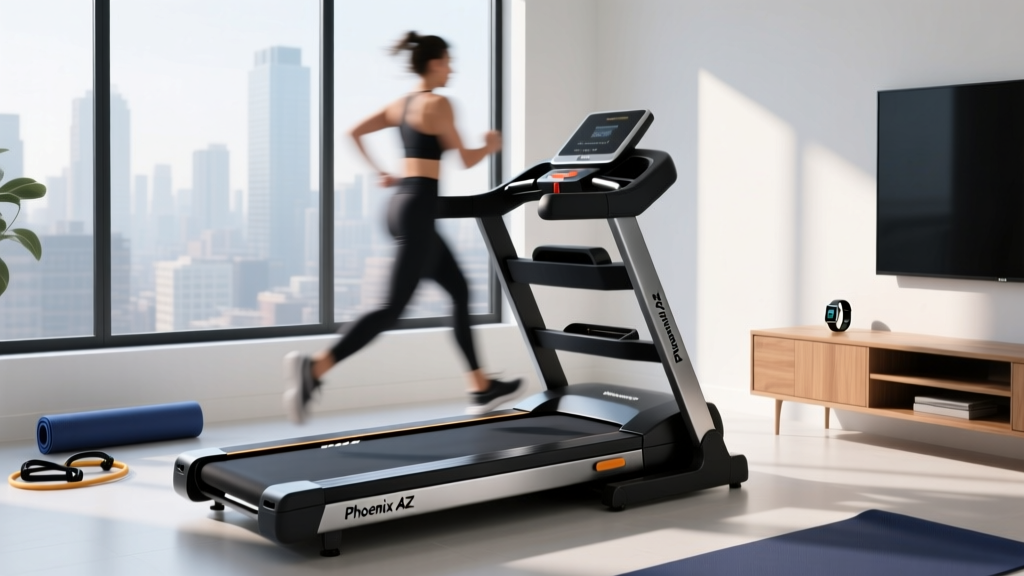
Is 30 Minutes on the Treadmill Good? 2026 Model Comparison
Is 30 minutes on the treadmill good? Yes. Discover which 2026 treadmill features matter most for daily sessions, comparing Sole, NordicTrack, and Peloton.

The Science: Is 30 Minutes on the Treadmill Good?
If you are investing in a home cardio machine, you are likely asking: is 30 minutes on the treadmill good enough to yield real cardiovascular and metabolic results? The short answer is an unequivocal yes, provided the intensity and consistency are dialed in. According to the American Heart Association, adults should aim for at least 150 minutes of moderate-intensity aerobic activity per week. This breaks down perfectly into 30-minute daily sessions, five days a week.
Furthermore, research highlighted by Harvard Health Publishing confirms that a brisk 30-minute walk or light jog significantly reduces the risk of heart disease, improves insulin sensitivity, and aids in weight management. However, the efficacy of your 30-minute session is heavily dictated by the hardware beneath your feet. A subpar treadmill deck will turn a healthy 30-minute habit into a chronic shin-splint injury within a month. In this 2026 buying guide, we break down the exact hardware features you need for daily 30-minute sessions and pit the top three market leaders head-to-head.
Expert Insight: The Impact Multiplier
During a 30-minute run at a 10-minute mile pace, your feet will strike the belt approximately 4,500 times. Each strike generates an impact force of 2.5x to 3x your body weight. Over a month, that is over 54,000 strikes. Treadmill deck elastomers and belt ply are not marketing fluff; they are critical joint-preservation metrics.
Head-to-Head: 2026’s Top Contenders for Daily Use
Not all treadmills are engineered for the rigors of a daily 30-minute grind. We have selected the three most popular models for home use in 2026 to compare how their specific features support (or hinder) a consistent half-hour routine.
1. Sole F80: The Biomechanical Cushioning King
The Sole F80 remains the gold standard for runners who prioritize joint health over flashy touchscreens. Its standout feature for the 30-minute user is the Cushion Flex Whisper Deck, which utilizes specialized elastomers to reduce joint impact by up to 40% compared to asphalt. Priced around $999 to $1,099, it features a robust 3.5 Continuous Horsepower (CHP) motor and a 2-ply, 20" x 60" belt. The 2.5-inch rollers prevent belt friction and heat buildup, which is crucial when running continuously for half an hour without the cooling breaks inherent in interval training.
2. NordicTrack Commercial 1750: The Incline & Immersion Specialist
If your 30-minute goal involves high-calorie burn via incline walking or trail simulation, the NordicTrack Commercial 1750 ($1,799 plus $396/year for iFIT) is unmatched. It offers a -3% decline to 15% incline range. The decline feature is highly underrated; it engages the anterior tibialis and quadriceps eccentrically, preventing the muscle imbalances that often plague flat-surface runners. The 14-inch HD touchscreen and ActivePulse heart-rate tracking automatically adjust the treadmill's speed and incline to keep you in your target Zone 2 or Zone 3 heart rate for the entire 30 minutes.
3. Peloton Tread: The High-Cadence Bootcamp Machine
Retailing at $3,445 (plus $44/month for the Peloton App), the Peloton Tread is designed for the user who views their 30 minutes as a high-energy, guided bootcamp. Unlike the others, it uses physical speed and incline knobs, allowing for instant, tactile adjustments during fast-paced interval classes. However, note that the standard Tread features a 3.25 HP (Peak) motor, not a Continuous Horsepower (CHP) motor. While perfectly adequate for walking and light jogging, heavy runners pushing high speeds for a full 30 minutes may cause the motor to run hotter than a 3.5 CHP equivalent.
Feature Matrix: Sole F80 vs. NordicTrack 1750 vs. Peloton Tread
| Feature Metric | Sole F80 | NordicTrack 1750 | Peloton Tread |
|---|---|---|---|
| Motor Type | 3.5 CHP | 3.5 CHP | 3.25 HP (Peak) |
| Belt Dimensions | 20" x 60" (2-Ply) | 20" x 55" (1-Ply) | 20" x 59" (Standard) |
| Incline / Decline | 0% to 15% | -3% to 15% | 0% to 12.5% |
| Deck Cushioning | Cushion Flex (High) | FlexSelect (Adjustable) | Standard (Firm) |
| Base Price (2026) | ~$999 - $1,099 | ~$1,799 | ~$3,445 |
| Mandatory Sub? | No (Free basic UI) | Yes (iFIT required for auto-adjust) | Yes (Peloton App for full library) |
Hidden Hardware: What Brochures Won't Tell You
When evaluating a treadmill for a strict 30-minute daily regimen, manufacturers' spec sheets often hide critical failure points. Here is what you must verify before purchasing:
- CHP vs. Peak HP: Continuous Horsepower (CHP) measures what the motor can sustain indefinitely without overheating. Peak HP measures the absolute maximum output for a few seconds. If you weigh over 200 lbs and plan to run for 30 minutes straight, a 3.0 CHP motor will outlast a 4.0 Peak HP motor, which may trigger thermal shutoffs halfway through your workout.
- Roller Diameter: Look for rollers that are at least 2.5 inches in diameter. Smaller rollers (1.9 inches) force the belt to wrap around a tighter radius, increasing friction, stretching the belt, and degrading the motor's lifespan during long, unbroken runs.
- Belt Ply and Lubrication: A 2-ply belt with an internal lubricant layer (like those on premium Sole models) requires zero maintenance. Cheap 1-ply belts require manual silicone lubrication every 130 to 150 miles. If you run 3 miles a day (roughly 30 minutes), you will need to manually lubricate a 1-ply belt every six weeks to prevent deck scorching.
Spatial & Electrical Edge Cases for Home Installation
A common mistake buyers make is ignoring the physical and electrical environment required for a 30-minute high-incline session. According to physical therapy guidelines noted by the Mayo Clinic, maintaining proper posture and avoiding ceiling strikes is vital for safety.
"The Ceiling Clearance Rule: Take the height of the tallest user in your home and add 15 inches. If your ceiling is 8 feet (96 inches) and you are 6 feet tall (72 inches), you only have 24 inches of clearance. At a 15% incline, the deck rises significantly, and your head will strike the ceiling during a brisk walk or run."
Furthermore, a 3.5 CHP motor pulling a heavy user up a 15% incline creates a massive initial amperage spike. Plugging these machines into a shared 15-amp bedroom circuit alongside an air conditioner or space heater will trip the breaker. For uninterrupted 30-minute sessions, ensure your treadmill is on a dedicated 20-amp circuit.
Final Verdict: Matching the Machine to Your 30-Minute Goal
So, is 30 minutes on the treadmill good? It is exceptional, but only if the machine supports your specific biomechanical and motivational needs.
Choose the Sole F80 if your 30 minutes consist of steady-state running and you prioritize joint longevity and zero-subscription hardware. Choose the NordicTrack 1750 if you want to maximize calorie burn in a short window using high-incline hiking and automated heart-rate zone tracking. Finally, choose the Peloton Tread if you need the external motivation of a live instructor to ensure you actually complete your 30 minutes, day after day.
More gear to consider
All reviews
Upright & Recumbent Bike Care: Lessons From a Treadmill Animated GIF

GymKit Treadmill to Rower: Buying Guide and Technique Mistakes

Timothy Treadmill vs Stationary Bike Types: Space Optimization Layout Guide

Horizon 7.4 AT Treadmill Install & Rowing Machine Guide

Office Cardio: Under Desk Treadmill vs NordicTrack Series 10 Treadmill