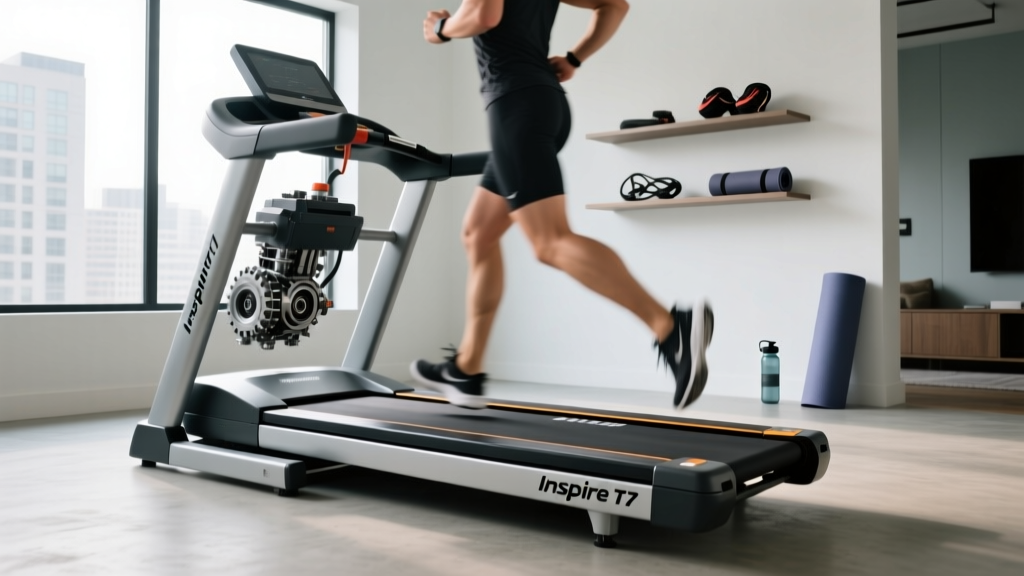
Inspire T7 Treadmill Motor Guide: Sizing & HP Troubleshooting
Master Inspire T7 treadmill motor troubleshooting. Learn HP vs. CHP sizing, fix belt stuttering, and prevent motor burnout with our expert guide.

The Hidden Cost of Ignoring Motor Specifications
There are few things more frustrating in a home gym than a treadmill that stutters, hesitates, or completely shuts down in the middle of a workout. When evaluating mid-tier cardio equipment, the Inspire T7 treadmill is a popular choice for home users seeking an affordable entry into indoor walking and light jogging. However, a significant percentage of the technical support tickets and premature machine failures we see in 2026 stem from a fundamental misunderstanding of treadmill motor size and horsepower.
Consumers frequently confuse marketing terminology with engineering realities, leading to mismatched expectations and catastrophic motor burnout. This comprehensive troubleshooting guide and motor sizing matrix will dissect the Inspire T7's drivetrain, explain the physics of continuous horsepower, and provide actionable diagnostic steps to save your machine from the scrapyard.
The Horsepower Illusion: Peak HP vs. Continuous Duty (CHP)
The most common mistake buyers make is looking exclusively at the "Peak HP" number plastered on the box. According to Runner's World Treadmill Guide, Peak Horsepower is essentially a vanity metric. It measures the absolute maximum output the motor can achieve for a fraction of a second before the thermal breaker trips or the windings melt.
Expert Insight: Continuous Horsepower (CHP) is the only metric that matters. CHP measures the power the motor can sustain indefinitely during a normal workout without overheating. A motor rated at "3.0 Peak HP" might only deliver 1.25 CHP under a continuous load.
When you step onto the belt, your body weight creates a massive friction load. The motor must generate enough continuous torque to pull the belt and your mass over the deck. If the CHP is insufficient, the motor controller forces the motor to draw excess amperage to compensate, generating intense heat and degrading the internal copper windings.
Inspire T7 Treadmill Motor Profile: Real-World Limits
The Inspire T7 treadmill is generally equipped with a 2.0 HP (Peak) DC motor, which translates to approximately 1.25 to 1.5 CHP in real-world continuous output. This specific drivetrain configuration dictates strict operational boundaries:
- Ideal User Profile: Walkers and light joggers weighing under 180 lbs.
- Maximum Sustained Speed: 4.5 mph for walking; brief intervals up to 7.0 mph for jogging.
- Thermal Limit: 45 to 60 minutes of continuous use before requiring a cool-down period.
When a 220 lb user attempts to run at 6.5 mph on the Inspire T7, the 1.5 CHP motor is forced to operate at 110% of its continuous capacity. The Pulse Width Modulation (PWM) motor controller detects the voltage drop and spikes the amperage. Within 20 minutes, the internal thermal overload switch will trip, shutting the machine down to prevent a fire hazard.
Troubleshooting Matrix: Motor Symptoms and Fixes
Use the diagnostic table below to identify the root cause of your Inspire T7 treadmill motor issues. Do not immediately assume a dead motor requires a full replacement; often, the issue lies in the controller or belt friction.
| Symptom | Probable Cause | Diagnostic Step | Solution & 2026 Cost Estimate |
|---|---|---|---|
| Belt hesitates or "stutters" exactly when your foot strikes the deck. | Insufficient CHP for user weight; excessive belt-to-deck friction. | Check belt lubrication. Measure amp draw under load. | Lubricate with 100% silicone. If amp draw >12A, machine is undersized for user. (Lube: $15) |
| Machine shuts off abruptly after 20-30 minutes of use; won't restart for an hour. | Thermal overload breaker tripping due to motor overheating. | Feel the motor housing. Check for blocked cooling fans or heavy dust buildup. | Clean motor compartment with compressed air. Reduce workout duration. (Free) |
| Burning ozone or hot plastic smell; belt stops completely but console stays on. | PWM Motor Controller failure or shorted motor windings. | Use a multimeter to test motor leads for continuity and check for shorts to the chassis. | Replace lower control board or DC motor. (Board: $90-$140 / Motor: $150-$220) |
| Console displays an "E1" or "LS" (Loss of Signal) error code upon startup. | Optical speed sensor misalignment or failed reed switch. | Inspect the sensor near the front roller or motor flywheel for dust or misalignment. | Realign sensor to within 3mm of the magnet/target. Clean with isopropyl alcohol. (Free) |
Advanced Diagnostics: Testing Amp Draw and PWM Voltage
To truly troubleshoot the Inspire T7 treadmill motor like a certified technician, you need a digital multimeter. Here is the step-by-step procedure for testing the electrical health of the drivetrain:
1. The No-Load Amp Draw Test
Unplug the treadmill and remove the motor hood. Locate the red and black wires leading from the lower control board to the motor. Clamp a multimeter (set to DC Amps) around the red wire. Plug the machine in and start the belt at 3.0 mph with no one standing on it. A healthy 1.5 CHP motor should draw between 2.0 and 4.0 amps under no load. If it draws over 6.0 amps with no weight on the belt, your belt/deck friction is critically high, which will inevitably kill the motor.
2. The PWM Voltage Test
Set your multimeter to DC Voltage. Place the probes on the motor's positive and negative terminals. As you increase the speed on the console from 1.0 mph to 5.0 mph, the voltage should scale linearly, typically rising from 20 VDC up to 85 VDC. If the voltage spikes erratically or drops to zero when the belt is under physical load, the PWM controller is failing to regulate power and must be replaced.
The Physics of Belt Friction: Why Undersized Motors Burn Out
As highlighted in Wirecutter's comprehensive treadmill testing, the number one killer of home treadmill motors is not manufacturing defects, but neglected deck lubrication. The coefficient of friction between a dry walking belt and a wooden/MDF deck increases exponentially over time.
When friction increases, the motor must work harder to maintain the set RPM. Because the Inspire T7 utilizes a smaller 1.5 CHP motor, it lacks the thermal mass and copper winding volume of a 3.0 CHP commercial motor to dissipate this extra heat. The result is a cascading failure: the heat degrades the insulation on the motor's copper windings, leading to an internal short circuit that instantly fries the PWM control board. Replacing the motor without addressing the dry deck will simply result in the new motor burning out within three months.
Motor Sizing Guide: Matching CHP to Your Biomechanics
If you are evaluating whether the Inspire T7 is the right fit for your home gym, or if you are looking to upgrade after burning out your current motor, use this 2026 sizing framework based on biomechanical impact and continuous load:
Walkers (Under 4.0 mph)
Required Motor: 1.5 CHP to 2.0 CHP.
Verdict: The Inspire T7 is perfectly sized for dedicated walkers. The continuous load remains well within the motor's thermal limits, ensuring a lifespan of 7 to 10 years with basic maintenance.
Joggers (4.0 mph to 6.0 mph)
Required Motor: 2.5 CHP to 2.75 CHP.
Verdict: The Inspire T7 will struggle with users over 170 lbs at jogging speeds. Expect thermal shutdowns during workouts exceeding 30 minutes. Consider upgrading to a mid-tier machine with a true 2.5 CHP drivetrain.
Runners (6.0 mph+ / Sprint Intervals)
Required Motor: 3.0 CHP to 4.0 CHP (AC Motor preferred).
Verdict: Do not use the Inspire T7 for sustained running. The high-impact foot strikes require instantaneous torque that a 1.5 CHP DC motor cannot provide without severe belt hesitation and rapid component degradation.
Preventative Maintenance Protocol to Maximize Motor Life
To protect the Inspire T7 treadmill motor and ensure it operates within its designed amperage limits, implement this strict maintenance schedule:
- Monthly Lubrication: Apply exactly 1 oz of 100% pure silicone treadmill lubricant under the belt. Never use WD-40, petroleum jelly, or household oils, as these will dissolve the belt backing and destroy the deck.
- Quarterly Tension Check: With the machine off, lift the belt from the center of the deck. It should lift exactly 2 to 3 inches. If it lifts higher, the belt is too loose (causing slipping). If it lifts less, the belt is over-tensioned, which places immense lateral strain on the motor bearings and roller shafts.
- Bi-Annual Vacuuming: Remove the motor hood and use a soft brush attachment to vacuum dust, pet hair, and lint from the motor cooling fan and the PWM board heat sink. Dust acts as a thermal insulator, trapping heat inside the motor housing.
Final Thoughts on Drivetrain Longevity
Troubleshooting the Inspire T7 treadmill motor requires looking past the console and understanding the physical demands placed on the drivetrain. By respecting the limits of a 1.5 CHP motor, maintaining a frictionless deck, and utilizing a multimeter to diagnose electrical faults before they cascade, you can extract years of reliable service from your equipment. Remember that horsepower is a measure of continuous work, not peak marketing claims; align your workout intensity with the machine's engineering, and your home gym will remain a place of progress, not frustration.
More gear to consider
All reviews
Expert Treadmilling Belt Maintenance & Top Lubricant Picks
Air Bike vs Assault Bike Space Guide: ProForm 745 CS Treadmill Fit

Stationary Bike Types vs Sole F80 Treadmills: 2026 Market Trends
Treadmill Belt Costs: What Is 12 Incline on Treadmill in Numbers?

2026 Trends: Stationary Bike Types vs. a 7.5 Treadmill Pace
