How to Turn On a Treadmill for Beginners & Troubleshoot Cardio Noise
Learn how to turn on a treadmill for beginners safely, troubleshoot startup noises, and compare decibel levels across top cardio machines for your home gym.

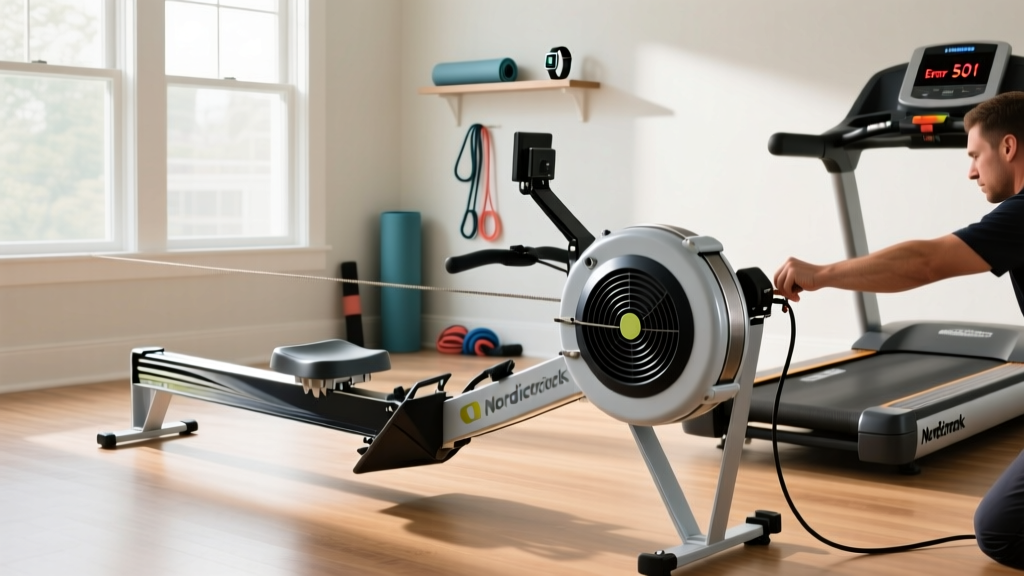
Unboxing a new piece of fitness equipment is exciting, but the moment you plug it in, anxiety can set in. Is it supposed to sound like that? For new home gym owners, understanding how to turn on a treadmill for beginners goes far beyond just flipping a power switch. It involves ensuring electrical safety, properly calibrating the console, and recognizing the difference between normal operational acoustics and mechanical failure.
Furthermore, if you are building a shared living space gym, noise is a primary constraint. A treadmill that sounds like a jet engine will quickly alienate your family or neighbors. In this guide, we will walk through the exact startup sequence for modern treadmills, troubleshoot common beginner mistakes that cause excessive noise, and provide a comprehensive decibel (dB) comparison matrix of the most popular cardio machines in 2026.
The Correct Sequence: How to Turn On a Treadmill for Beginners
Many beginners simply plug the machine into the nearest wall outlet and press "Start" on the console. This is the most common mistake and can lead to motor strain or console errors. Follow this precise sequence:
- Verify the Circuit: Ensure the treadmill is plugged directly into a dedicated 15-amp or 20-amp wall outlet. According to the Electrical Safety Foundation International (ESFI), sharing a circuit with high-draw appliances (like refrigerators or space heaters) causes voltage drops that can damage sensitive electronics.
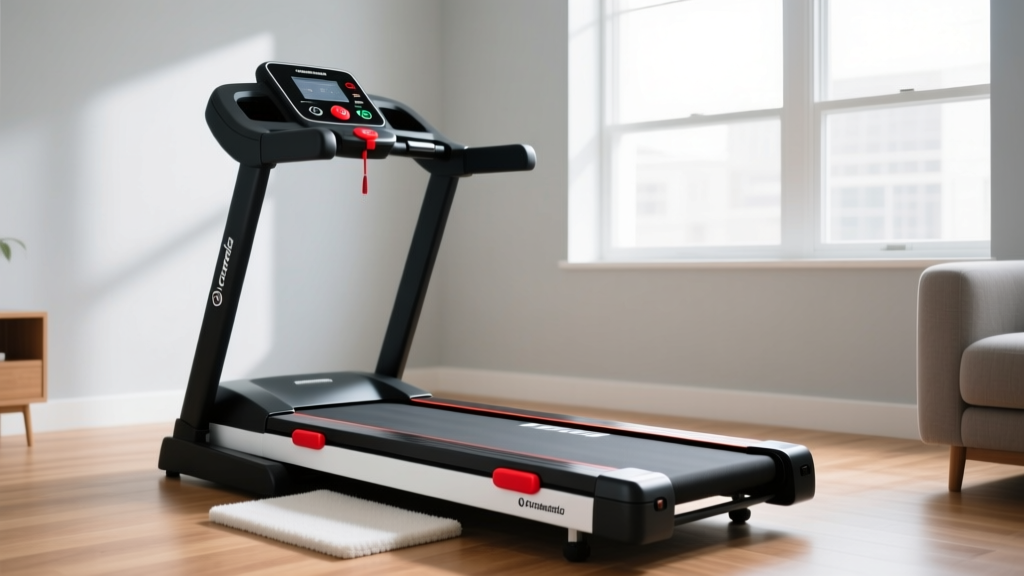
- Locate the Master Power Switch: Most motorized treadmills (such as the Sole F80 or NordicTrack Commercial 1750) have a red rocker switch located near the floor, adjacent to the power cord. Flip this to the "I" (On) position.
- Insert the Safety Key: The console will remain in standby mode until the magnetic safety key is snapped onto the designated yellow or red sensor pad.
- Allow the Boot Sequence: Modern touchscreens run on Android or proprietary OS platforms. Wait 30 to 60 seconds for the system to boot and connect to your home Wi-Fi before pressing any buttons.
- Perform Incline Calibration: Before your first run, press and hold the "Stop" and "Speed Up" buttons simultaneously (varies by brand) to force the machine to cycle through its full incline range. This establishes the baseline for the incline motor and prevents grinding noises later.
Never use a standard 16-gauge household extension cord. The voltage drop over the length of the cord starves the DC motor of power, causing it to run hotter, work harder, and emit a high-pitched mechanical whine. If you must extend the cord, use a heavy-duty 12-gauge, 3-prong appliance cord rated for at least 15 amps.
Troubleshooting Startup and Operational Noises
When you first start the belt, you will hear a combination of sounds. Here is how to diagnose what you are hearing and fix it before it causes permanent damage:
1. The Rhythmic "Slap-Slap" or Thumping
The Cause: The running belt is either too loose, or the deck lacks lubrication. In brand-new treadmills, the belt seam can also create a mild thumping sound as it passes over the front roller during the first 50 miles of the "break-in" period.
The Fix: Check belt tension. You should be able to lift the center of the belt about 2 to 3 inches off the deck. If it lifts higher, tighten the rear roller adjustment bolts a quarter-turn clockwise on each side. If tension is correct, apply exactly 1 oz (30ml) of 100% silicone treadmill lubricant under the belt.
2. High-Pitched Squealing on Startup
The Cause: A slipping drive belt (the small ribbed belt connecting the motor to the front roller) or a dry motor pulley.
The Fix: Unplug the machine, remove the motor hood (usually 4 to 6 Phillips-head screws), and inspect the drive belt. If it shows glazing or fraying, it needs replacement (typically a $15-$25 part). If it is just loose, consult your manual for motor-mount tensioning procedures.
3. Loud Grinding During Incline Changes
The Cause: Debris in the incline gear rack or lack of white lithium grease on the incline screw.
The Fix: Vacuum around the incline motor housing. Apply a small amount of white lithium grease to the threaded incline shaft. Never use WD-40, as it attracts dust and creates a grinding paste that will eventually seize the motor.
Cardio Machine Noise Level Comparison Matrix
Not all cardio machines are created equal when it comes to acoustics. If you live in an apartment or have sleeping family members, choosing the right machine is critical. Below is a decibel (dB) comparison based on standardized testing at a 3-foot distance during moderate-to-vigorous use.
| Machine Type | Top Model Example | Average Price | Noise Level (dB) | Primary Noise Source |
|---|---|---|---|---|
| Motorized Treadmill | NordicTrack Commercial 1750 | $2,499 | 72 - 78 dB | DC Motor hum, footfall impact, belt friction |
| Air Rower | Concept2 RowErg | $1,195 | 70 - 82 dB | Air displacement through the flywheel fan cage |
| Magnetic Elliptical | Bowflex Max Trainer M9 | $2,299 | 55 - 62 dB | Minor drivetrain whir, footpad impact |
| Air Bike | Rogue Echo Bike (Belt Drive) | $895 | 65 - 75 dB | Wind resistance fan, belt drivetrain |
| Manual Curved Treadmill | AssaultRunner Elite | $3,499 | 50 - 58 dB | Footfalls on slat belt (no motor) |
As noted in Consumer Reports' extensive treadmill testing, motorized treadmills inherently generate more low-frequency noise due to the continuous rotation of the heavy flywheel and the physical impact of the runner's stride. If noise is your absolute highest priority, a manual curved treadmill or a magnetic resistance elliptical will keep your home gym virtually silent.
Apartment Living: Soundproofing Your Cardio Setup
If you are restricted to an apartment or a room directly above a living space, structural vibration is your biggest enemy. Low-frequency sounds (like the thud of a footstrike on a treadmill deck) travel through floor joists much easier than high-frequency sounds (like the whir of an elliptical fan).
- Decoupling the Machine: Never place a treadmill directly on hardwood or tile floors. This creates an acoustic echo chamber. Always use a high-density, 3/8-inch to 1/2-inch thick rubber equipment mat (costing around $40-$60) to absorb low-frequency vibrations.
- Mass Loaded Vinyl (MLV): For extreme soundproofing, place a layer of MLV beneath your rubber mat. MLV is dense and specifically designed to block sound wave transmission through floors.
- Uneven Leveling: If your machine rocks even a millimeter when you step on it, the frame will twist during use, causing metal-on-metal squeaks in the uprights. Use the adjustable leveling feet at the base of the machine and a carpenter's level to ensure the deck is perfectly flat.
When to Stop and Call Warranty Service
While many noise issues can be fixed with basic maintenance, some sounds indicate catastrophic failure. If you hear a loud popping or snapping sound followed by the belt stopping abruptly, the motor drive belt has likely snapped or the front roller bearing has seized. Similarly, if the console emits a continuous clicking relay sound and displays an "E1" or "Speed Sensor" error code, the optic sensor near the motor flywheel is misaligned or dead.
"Regular maintenance, including belt alignment and deck lubrication, is the single most effective way to extend the life of your treadmill and keep operational noise to a minimum. Neglecting these basics voids many manufacturer warranties."
— American Council on Exercise (ACE) Home Equipment Guidelines
By mastering how to turn on a treadmill for beginners correctly and understanding the acoustic profile of your equipment, you can ensure a smooth, quiet, and safe workout environment for years to come. Always refer to your specific model's user manual for exact calibration codes and lubrication schedules.
More gear to consider
All reviews
YPOO Treadmill Motor Size Guide: HP vs CHP Explained

Elliptical vs Treadmill Longevity: How to Jog on a Treadmill Safely

Is Walking on a Treadmill the Same as Walking Outside? (Noise Guide)

How Many Miles is 10k Steps on Treadmill? Curved vs Motorized Guide

Can Using a Treadmill Help Lose Weight vs Upright, Recumbent, and Spin Bikes?