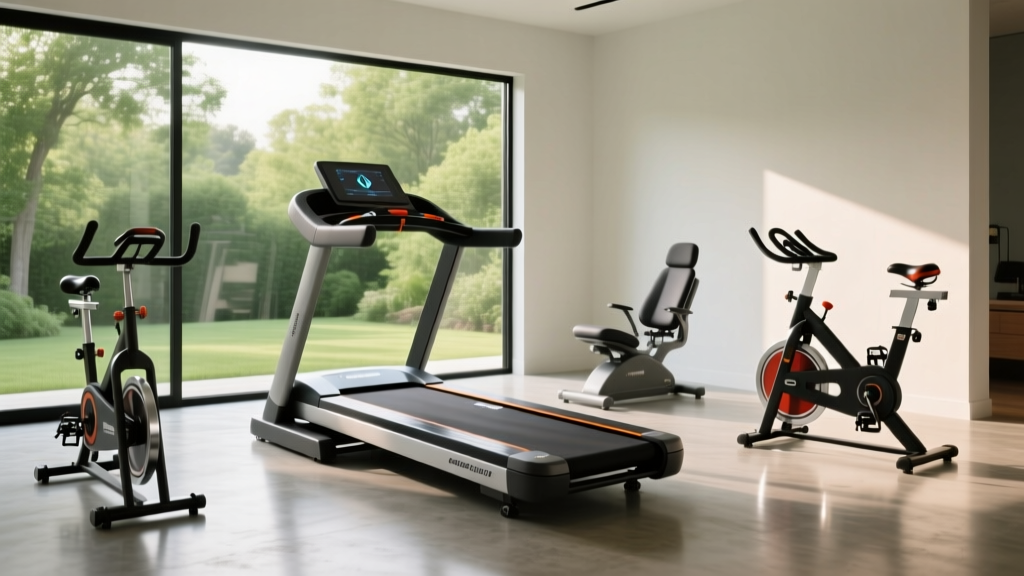
How Does an Anti-Gravity Treadmill Work vs Budget Stationary Bikes?
Discover how anti-gravity treadmills work and compare their costs against budget-friendly upright, recumbent, and spin stationary bikes for joint health.

The Allure of Unweighting: Anti-Gravity Treadmill Mechanics
When dealing with severe joint degradation, post-operative rehabilitation, or chronic pain, many fitness enthusiasts and physical therapy patients eventually search for an anti gravity treadmill how does it work to find a pain-free cardio solution. The technology, pioneered by NASA and commercialized by brands like AlterG, is undeniably fascinating. But is it a viable investment for the home gym, or should you pivot to budget-friendly stationary bike types?
The $35,000 Reality Check
Anti-gravity treadmills utilize Differential Air Pressure (DAP). You wear specialized neoprene shorts that zip into a sealed, airtight enclosure surrounding the treadmill deck. As the machine pressurizes the enclosure, it creates an upward lifting force, effectively reducing your body weight impact by up to 80%. However, as of 2026, commercial models like the AlterG Via range from $35,000 to $75,000, requiring dedicated 220V electrical circuits and annual calibration maintenance.
For 99% of home users, the financial barrier of DAP technology is insurmountable. Fortunately, the biomechanical goal—low-impact, joint-preserving cardiovascular conditioning—can be achieved for a fraction of the cost by selecting the right stationary bike. According to the American Academy of Orthopaedic Surgeons, low-impact exercises like cycling are critical for maintaining joint mobility without the destructive ground reaction forces associated with running.
Stationary Bike Types: A Budget and Value Breakdown
To replicate the joint-sparing benefits of an unweighting treadmill, we must analyze the three primary categories of stationary bikes: Recumbent, Upright, and Spin (Indoor Cycles). Each offers a distinct value proposition, footprint, and long-term cost of ownership.
1. Recumbent Bikes: The Biomechanical Safe Haven
If your primary goal is spinal decompression and knee rehabilitation, the recumbent bike is the closest home equivalent to the therapeutic benefits of an anti-gravity environment. The bucket seat positions your legs in front of your body, eliminating axial loading on the lumbar spine.
- Top Budget Pick: Schwinn 270 (Approx. $899). Features 29 resistance levels and a dual-track LCD.
- Premium Value Pick: Sole R92 (Approx. $1,499). Offers a heavier 20lb flywheel, superior pedal Q-factor (width between pedals), and a robust lifetime frame warranty.
- Common Failure Modes: On sub-$1,000 models, the horizontal seat rail relies on nylon rollers. If left in the exact same position under heavy user weight for months, these rollers can develop flat spots, causing a rhythmic bumping during adjustments. Additionally, the magnetic brake assembly can accumulate household dust, requiring occasional compressed-air cleaning to prevent resistance stuttering.
2. Upright Bikes: The Traditional Compromise
Upright bikes mimic the geometry of a standard road bike but with a wider, more forgiving saddle and a stationary base. They require more core engagement than recumbents but occupy a significantly smaller footprint, making them ideal for apartments.
- Top Budget Pick: NordicTrack EXP 7i (Approx. $799). Includes basic incline capabilities and iFIT integration.
- Premium Value Pick: ProForm Sport 8.5 (Approx. $1,199). Features a heavier flywheel and enhanced console telemetry.
- Common Failure Modes: The pedal crank arms on budget uprights often use cotterless square-taper interfaces. If a user attempts high-torque, out-of-the-saddle climbing (which uprights are not structurally designed for), the aluminum crank arm can strip the steel spindle. Furthermore, console potentiometers (the physical resistance dials) are prone to oxidation if exposed to high-humidity environments like unventilated basement gyms.
3. Spin Bikes (Indoor Cycles): High-Intensity, Low-Impact
Spin bikes prioritize performance, heavy flywheels, and aggressive riding geometries. While they are low-impact regarding joint strike forces, they demand high hip flexor mobility and do not offer the back support of a recumbent.
- Top Budget Pick: Schwinn IC4 (Approx. $999). Uses magnetic resistance and connects seamlessly to third-party apps like Zwift and Peloton.
- Premium Value Pick: Keiser M3i (Approx. $2,395). Utilizes eddy-current magnetic resistance (no physical magnet rubbing against the flywheel) and a rear-mounted flywheel to protect against sweat corrosion.
- Common Failure Modes: The biggest killer of budget spin bikes is sweat corrosion. Saline drip onto the flywheel and brake pad causes severe pitting, leading to inconsistent resistance and a grinding noise. Belt-drive tensioners on cheaper models also stretch over 1,000+ miles, requiring manual recalibration.
2026 Value Analysis Matrix: Cost vs. Joint Preservation
When evaluating cardio equipment, the initial purchase price is only one metric. The table below compares the clinical gold standard against the best home alternatives based on a 5-year Total Cost of Ownership (TCO).
| Equipment Type | Upfront Cost (2026) | 5-Yr Maintenance & Subs | Impact Reduction | Space Required |
|---|---|---|---|---|
| AlterG Via (DAP Treadmill) | $45,000+ | $10,000 (Calibration/Parts) | Up to 80% Unweighting | 120 sq ft (220V) |
| Sole R92 (Recumbent) | $1,499 | $0 | 100% (Zero Strike Impact) | 25 sq ft (Standard 110V) |
| Schwinn IC4 (Spin) | $999 | $1,080 (JRNY/Peloton App Subs) | 100% (Zero Strike Impact) | 15 sq ft (Standard 110V) |
| NordicTrack EXP 7i (Upright) | $799 | $900 (iFIT Sub) | 100% (Zero Strike Impact) | 12 sq ft (Standard 110V) |
Hidden Costs and the Subscription Trap
When building your budget breakdown, you must factor in the modern fitness ecosystem's shift toward Software-as-a-Service (SaaS). While an anti-gravity treadmill requires expensive physical maintenance, modern spin and upright bikes often require digital maintenance.
If you purchase a $999 smart bike but subscribe to a $15-to-$40 monthly interactive programming service, your 5-year cost increases by $900 to $2,400. Recumbent bikes, largely favored by an older demographic or those strictly focused on physical therapy rather than gamified fitness, typically bypass this subscription trap. Users can simply pedal while watching television or reading, preserving the machine's status as a one-time capital expenditure.
Expert Verdict: Where Should Your Budget Go?
"While differential air pressure treadmills are miraculous for elite athletes returning from ACL tears or stress fractures, the average consumer seeking joint-friendly cardio does not need to spend the price of a luxury car. A high-quality recumbent bike provides the exact same zero-impact cardiovascular stimulus for the lower extremities, with the added benefit of lumbar support."
According to guidelines published by the Arthritis Foundation, consistency in low-impact movement is far more critical than the complexity of the machine. If you are working within a standard home fitness budget of $500 to $2,000, abandon the search for unweighting treadmill technology.
The Final Decision Framework:
- Choose a Recumbent Bike (Sole R92) if you have lower back pain, sciatica, or are recovering from lower-body joint surgery. It offers the highest therapeutic ROI.
- Choose a Spin Bike (Schwinn IC4) if you are cleared for high-intensity interval training (HIIT), want a smaller footprint, and enjoy third-party virtual cycling apps.
- Choose an Upright Bike only if space is severely restricted and you prefer a traditional seated posture without the aggressive forward lean of a spin bike.
Ultimately, understanding the mechanics of high-end rehab equipment is valuable for setting biomechanical goals, but executing those goals at home requires pragmatic, budget-conscious choices. Stationary bikes remain the undisputed champions of accessible, low-impact cardiovascular health in 2026.
For more information on safe exercise routines as you age, refer to the National Institute on Aging for comprehensive guides on adapting your cardio routines to your current fitness level.
More gear to consider
All reviews
Elliptical vs Treadmill: Sole F85 Treadmill Older Model Analysis

Preventing Treadmill Murder: 2026 Belt Care Market Trends
Air Bike vs Assault Bike: Budget & Treadmill Measurements Space Guide
Elliptical vs Treadmill: Are Treadmills Accurate for Distance?

Air Bike vs Assault Bike: Treadmill Speeds to Mile Pace
