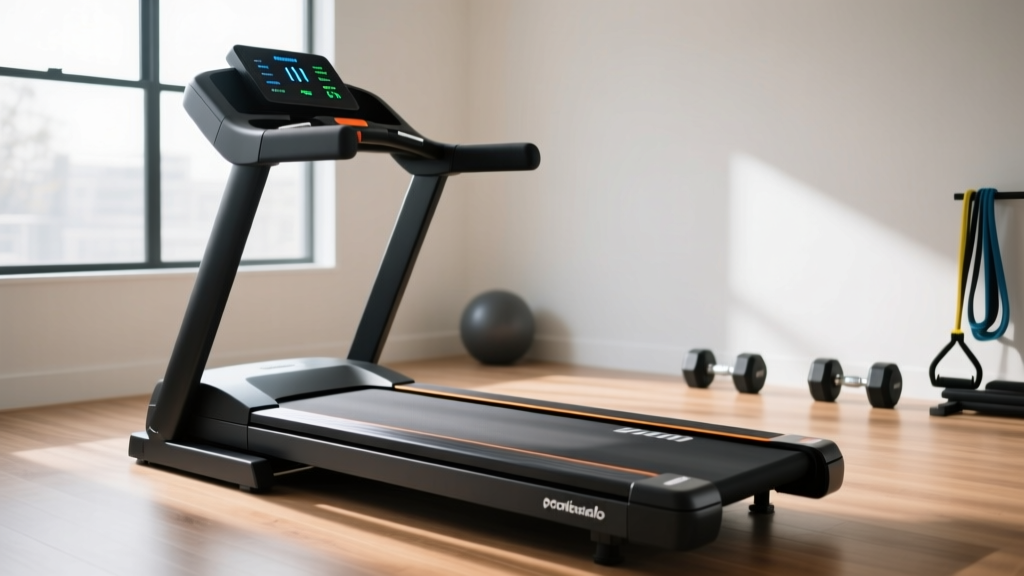
How to Use a Treadmill at the Gym: Noise & Troubleshooting Guide
Learn how to use a treadmill at the gym quietly. Compare cardio machine noise levels and troubleshoot loud belts, motors, and deck friction issues.

The Acoustic Reality of the Gym Floor
When figuring out how to use a treadmill at the gym for the first time, most beginners focus entirely on the console, obsessing over speed, incline, and heart rate zones. However, experienced gym-goers and facility managers know that a machine's acoustic footprint is one of the most critical indicators of its health, maintenance needs, and user biomechanics. In 2026, commercial fitness facilities are heavily focused on noise pollution, not just for member comfort, but to comply with occupational safety standards regarding prolonged exposure to high-decibel environments. According to OSHA noise standards, prolonged exposure to environments exceeding 85 decibels (dB) requires hearing conservation programs—a threshold that a poorly maintained gym floor full of treadmills can easily breach.
Understanding the noise profiles of different cardio machines is essential for both home gym builders and commercial facility managers. Furthermore, learning how to troubleshoot abnormal treadmill noises will save you from catastrophic motor failures and expensive deck replacements. Below, we break down the exact decibel ranges of modern cardio equipment and provide a master troubleshooting guide for the most common treadmill noise complaints.
Cardio Machine Noise Level Comparison Matrix
Not all cardio machines are created equal when it comes to acoustic output. The table below compares the average operational noise levels of the most popular cardio machines found in modern gyms, measured at a distance of three feet from the console at moderate user output.
| Machine Type | Average dB Range | Primary Noise Source | Commercial Model Example (2026) |
|---|---|---|---|
| Treadmill | 75 - 88 dB | Foot strike impact, belt friction, motor fan | Life Fitness Integrity Series |
| Elliptical Cross-Trainer | 55 - 65 dB | Drive belt tension, pivot joint friction | Precor EFX885 |
| Air Bike (Assault/Echo) | 70 - 82 dB | Air displacement fan, chain/belt drive | Assault AirBike ProX |
| Magnetic Rower | 50 - 60 dB | Seat rollers on rail, magnetic resistance hum | Technogym Skillrow |
| Air Rower | 75 - 85 dB | Flywheel air displacement, chain slapping | Concept2 RowErg |
| Stair Climber | 65 - 75 dB | Alternator whine, pedal arm pivots | StairMaster StepMill 7000PT |
As the data illustrates, treadmills and air-displacement machines (like air bikes and air rowers) are the primary acoustic offenders on the gym floor. While an air bike's noise is a byproduct of its wind-resistance design, a treadmill's noise is largely a combination of user biomechanics and mechanical maintenance.
Common Mistakes: Why Your Treadmill Sounds Like a Freight Train
If you are learning how to use a treadmill at the gym and notice the machine is excessively loud, you are likely witnessing one of two common mistakes: poor user biomechanics or deferred mechanical maintenance.
Mistake 1: The Heel-Strike Amplification Effect
The American College of Sports Medicine (ACSM) frequently highlights the importance of proper running mechanics to reduce joint loading. What is less discussed is how biomechanics affect machine acoustics. A heavy heel-strike running pattern generates a sharp, high-impact acoustic spike that resonates through the treadmill's steel frame and phenolic deck. This 'thumping' sound is often mistaken for a broken machine. By shifting to a mid-foot strike and increasing your cadence to roughly 170-180 steps per minute, you can reduce the acoustic impact spike by up to 40%, resulting in a smoother, quieter glide.
Mistake 2: Ignoring the Deck Lubrication Schedule
The most common cause of a high-pitched whining or squealing treadmill belt is excessive friction between the running belt and the wooden deck. In commercial settings, maintenance staff often over-tighten the belt to stop it from slipping, which only increases friction and strains the drive motor. The correct fix is applying 100% silicone treadmill lubricant. Using petroleum-based products like WD-40 will melt the synthetic backing of the belt and ruin the deck, leading to a $400 to $650 replacement bill.
⚠️ Critical Maintenance Warning: Never use household oils or aerosol sprays on a treadmill deck. Only use manufacturer-approved 100% liquid silicone lubricant (typically costing $12 to $18 per bottle). Apply exactly 15ml under the belt every 130 miles or every 3 months in a commercial setting.Troubleshooting Specific Treadmill Noises (Diagnostic Flow)
When a treadmill starts making an unfamiliar noise, do not immediately assume the motor is dead. Follow this step-by-step diagnostic flow to identify the exact failure mode based on the acoustic signature.
- The 'Thumping' or 'Slapping' Sound (Rhythmic with Belt Rotation):
- Diagnosis: The running belt has stretched unevenly or the deck has developed a warped seam.
- Fix: Check belt tracking. If the belt is centered but still thumping, flip the deck (most commercial reversible decks have a second usable side) or replace the belt if the seam is visibly frayed.
- The High-Pitch 'Chirp' or 'Squeal' (Occurs on Foot Strike):
- Diagnosis: Drive belt slip or dry running belt.
- Fix: First, lubricate the deck. If the chirp persists, inspect the motor drive belt (the ribbed belt connecting the motor pulley to the front roller). If it is glazed or cracked, replace it (Part cost: ~$25-$40).
- The Low-Pitch 'Rumble' or 'Grinding' (Constant while belt moves):
- Diagnosis: Roller bearing failure. The sealed bearings inside the front or rear steel rollers have dried out or shattered.
- Fix: Remove the belt and spin the rollers by hand. If you feel resistance or hear a grinding sensation, the entire roller assembly must be replaced. Do not attempt to oil sealed bearings.
- The Electrical 'Crackling' or 'Humming' (From the Motor Hood):
- Diagnosis: Worn motor brushes or static discharge.
- Fix: If the treadmill is grounded properly but still crackles, inspect the carbon motor brushes. On commercial DC motors, these must be replaced every 5,000 hours. If the brushes are shorter than 3/8 of an inch, swap them out immediately to prevent the commutator from scoring.
Gym Etiquette: Selecting the Right Machine for Shared Spaces
For those building a home gym in a shared living space, or apartment dwellers trying to maintain good relations with neighbors below, understanding how to use a treadmill at the gym quietly translates directly to equipment selection. Treadmills transmit low-frequency impact vibrations through the floor joists, which is often more disruptive than the actual airborne decibel level.
Acoustic Mitigation Strategies:
- Anti-Vibration Mats: Invest in a high-density rubber treadmill mat (at least 3/8-inch thick, costing around $60-$90). This decouples the machine from the subfloor, absorbing the low-frequency impact waves.
- Equipment Selection: If impact noise is a dealbreaker, pivot to an elliptical cross-trainer or a magnetic resistance rower. Both machines keep your feet planted or gliding, eliminating the high-decibel impact spike entirely, keeping ambient room noise well below 60 dB.
- Placement: Never place a treadmill directly over a floor joist span. Position the machine so its feet rest directly over load-bearing walls or structural beams to minimize floor flex and resonant amplification.
Frequently Asked Questions
Why does the treadmill at my gym smell like burning rubber?
A burning rubber smell is an immediate red flag indicating severe friction. This happens when the running belt is either completely dry of silicone lubricant or tensioned far too tightly against the deck. Stop using the machine immediately. Continued use will cause the motor to overheat, potentially tripping the thermal breaker or permanently damaging the motor windings, resulting in a $600+ repair.
Is it normal for a new treadmill to make a squeaking noise?
No. While a brand-new treadmill might require a slight break-in period for the belt to stretch and seat properly, it should not squeak. Squeaking on a new machine usually indicates that the factory pre-lubrication was insufficient or that the motor hood plastic casing is vibrating against the steel frame. A quick application of silicone lube or tightening the hood screws will resolve this.
How can I reduce the noise of my treadmill during apartment workouts?
Beyond using a thick rubber isolation mat, focus on your running form. Adopting a forefoot or midfoot strike and keeping your knees slightly bent upon landing will drastically reduce the impact force transferred into the floor. Additionally, keeping your treadmill's speed under 6.0 mph for walking or light jogging will keep the motor fan and belt friction noise at a minimum.
More gear to consider
All reviews
Max Sprint Speed on Treadmill: Folding Models Reviewed
Escape the Treadmill to Oblivion: Space-Saving Stationary Bikes

Under Desk Treadmill Review: Does a Treadmill Help With Belly Fat?

NordicTrack T6.5 S Treadmill: 2026 Small Space Value Review

Air Bike vs Assault Bike: Beating Treadmills with Interval Training
