
What Treadmills Do Gyms Use? Buying Guide & Feature Comparison
Discover what treadmills gyms use, compare commercial vs. residential features, and troubleshoot common buying mistakes and hardware faults.

If you have ever wondered what treadmills do gyms use and why they feel so much smoother and more durable than standard home models, you are not alone. Commercial health clubs invest heavily in equipment that can withstand 12 to 16 hours of daily abuse from hundreds of users. For home gym builders, replicating this experience requires navigating a minefield of marketing jargon, misleading horsepower claims, and structural compromises.
This comprehensive buying guide and feature comparison breaks down the exact specifications of commercial-grade treadmills, highlights the most common mistakes buyers make when chasing "gym-quality" machines, and provides a master troubleshooting guide for the hardware faults that plague poorly chosen models.
The Core Question: What Treadmills Do Gyms Use?
Walk into any premium commercial facility—whether it is an Equinox, a Life Time Fitness, or a university recreation center—and you will predominantly see three brands: Life Fitness, Precor, and Technogym. Specifically, the workhorses of the industry are the Life Fitness Integrity Series, the Precor TRM 731, and the Technogym Excite Run line. These machines share a common DNA: alternating current (AC) motors, reversible phenolic decks, and heavy-gauge steel frames weighing upwards of 350 pounds.
⚠️ The "Gym-Quality" Marketing Myth: Many residential brands slap a "commercial-grade" badge on their $1,200 treadmills. True commercial treadmills are built to endure 20,000+ miles annually. If a treadmill weighs under 200 lbs and costs less than $3,000, it is a residential machine, regardless of the marketing copy.Commercial vs. Residential: A Feature Comparison Matrix
Understanding the physical differences is critical before making a high-ticket purchase. The table below contrasts true commercial specifications (like those found on a Life Fitness commercial treadmill) with standard residential models.
| Feature | True Commercial (e.g., Precor TRM 731) | Standard Residential |
|---|---|---|
| Motor Type | AC (Alternating Current) - 4.0+ HP | DC (Direct Current) - 2.5 to 3.5 HP |
| Running Surface | 22" x 60" (4-ply urethane belt) | 20" x 55" (2-ply standard belt) |
| Deck Material | Reversible Phenolic Resin (Wax-infused) | MDF (Medium-Density Fiberboard) |
| Frame Weight | 350 lbs - 450 lbs | 130 lbs - 180 lbs |
| Average Cost | $6,500 - $12,000+ | $800 - $2,500 |
Top 3 Buying Mistakes When Chasing Gym-Grade Treadmills
When consumers research what treadmills gyms use, they often try to find a shortcut to commercial durability at a residential price point. This leads to critical purchasing errors.
Mistake 1: Confusing Peak Horsepower with Continuous Duty (CHP)
Residential brands frequently advertise "4.0 Peak HP." Peak horsepower measures the maximum output the motor can hit for a fraction of a second before the breaker trips. Commercial gyms use Continuous Duty Horsepower (CHP). A Precor commercial treadmill utilizes a 3.0 to 4.0 CHP AC motor, meaning it can sustain that exact output 24/7 without thermal throttling. Fix: Only buy treadmills that explicitly state "CHP" and verify if the motor is AC or DC.
Mistake 2: Ignoring the Motor Control Board (MCB) Amp Rating
The motor is only half the equation; the MCB dictates how power is delivered. Gym treadmills feature high-amperage MCBs that push consistent torque to the belt, preventing the "hesitation" or "stuttering" you feel when your foot strikes a cheap residential treadmill. If a user weighing 220+ lbs runs intervals on a low-amp MCB, the board will overheat and fail within six months.
Mistake 3: Overlooking Deck Lubrication Systems
Standard home treadmills require manual silicone lubrication every 150 miles. Commercial machines utilize wax-infused belts or precision automated lubrication systems that distribute microscopic amounts of wax onto a phenolic deck. Buying a residential machine and forgetting to lubricate it causes extreme friction, which spikes the motor's amp draw and eventually fries the lower control board.
Troubleshooting Common Commercial Treadmill Failures
If you have invested in a refurbished commercial unit or a high-end light-commercial model for your home gym, you must know how to troubleshoot the specific error codes these machines generate. Unlike residential models that simply shut off, commercial boards provide diagnostic codes.
💡 Pro-Tip for Refurbished Buyers: Always locate the engineering mode access codes for your specific brand before purchasing a used gym treadmill. This allows you to run automated calibration tests.Precor TRM Series: Error 22 (Incline Lift Fault)
The Symptom: The console displays Error 22, and the deck refuses to move up or down, or it moves erratically. The Cause: The lift motor is functioning, but the potentiometer (the sensor that tells the board the deck's exact angle) is sending corrupted data, or the lift tube is stripped. The Fix:
- Access Precor Engineering Mode (Press and hold STOP, then type 6, 5, 0, 1 on the keypad).
- Navigate to the Incline Calibration test.
- If the numbers on the screen jump erratically while the deck is stationary, replace the potentiometer.
- If the numbers are stable but the deck doesn't move, test the lift motor capacitor with a multimeter.
Life Fitness Integrity: Error 1 (Speed Sensor Fault)
The Symptom: The belt starts, runs for 3 to 5 seconds, stops abruptly, and throws Error 1. The Cause: The optical speed sensor on the motor flywheel is misaligned, covered in dust, or the wiring harness has a micro-fracture. The Fix:
- Unplug the machine and remove the motor hood.
- Locate the optical sensor bracket near the motor flywheel.
- Ensure there is exactly a 1/8-inch gap between the sensor and the flywheel fins.
- Wipe the sensor lens with isopropyl alcohol. If the error persists, check the continuity of the 3-pin connector leading to the lower board.
Matrix T7x Series: COMM ERR (Communication Error)
The Symptom: The console boots up but displays "COMM ERR" and none of the buttons respond. The Cause: Data loss between the upper console board and the lower motor control board. The Fix: Unplug the 14-pin ribbon cable connecting the uprights. Inspect the pins for oxidation or bent contacts. Reseat the cable firmly. If the cable has been pinched by the upright frame during assembly, it must be replaced.
Light-Commercial Alternatives for the Home Gym
True commercial treadmills require dedicated 20-amp electrical circuits and weigh too much for standard upper-floor home gyms. If you want gym-level biomechanics without the commercial footprint and electrical requirements, look into Light-Commercial models. According to biomechanical analyses by Technogym's research division, shock absorption and belt tracking are the primary indicators of joint safety and machine longevity.
- Sole F85: Features a 4.0 CHP DC motor and heavy-duty steel rollers. Priced around $2,999, it bridges the gap between residential and commercial.
- Horizon 7.4: Utilizes a rapid-charge Bluetooth system and a 3.5 CHP motor engineered for interval training. Priced around $1,799.
- Matrix T7x (Home Variant): Offers the exact same running surface and deck flex as the gym version but utilizes a DC motor to comply with standard 15-amp home outlets. Priced around $4,500.
Maintenance Protocols to Match Gym Standards
Gym technicians perform preventative maintenance weekly. To keep your high-end home treadmill running like a commercial unit, adopt this strict protocol:
"A treadmill is a friction machine. Your goal is to manage that friction. If you can smell burning rubber or ozone, you are already damaging the motor control board." — Commercial Fitness Equipment Technician
- Monthly Belt Tension Check: Lift the belt in the center of the deck. It should rise exactly 2 to 3 inches. If it lifts higher, tighten the rear roller bolts by a quarter-turn on each side.
- Quarterly Deck Inspection: Feel the underside of the belt and the top of the deck. If you feel deep grooves or "burn spots," the deck is compromised. If you own a commercial model with a reversible phenolic deck, simply unbolt it, flip it over, and install a new belt.
- Bi-Annual Vacuuming: Remove the motor hood and use a soft brush attachment to vacuum carbon dust from the motor brushes and the lower control board heat sink. Carbon buildup is the number one cause of short circuits in home environments.
Understanding what treadmills gyms use is only the first step. By comparing the actual hardware features, avoiding the trap of misleading horsepower metrics, and knowing how to troubleshoot commercial error codes, you can build a home cardio setup that genuinely rivals the health club floor—without the monthly membership fees.
More gear to consider
All reviews
Before You Hit the Treadmill: Motor Horsepower Guide

YMCA Treadmills vs Rowers: 2026 Buying & Technique Guide

NordicTrack C2000 Treadmill vs Home Stair Climbers: 2026 Guide

How to Disassemble a NordicTrack Treadmill & Air Bike vs Assault Bike
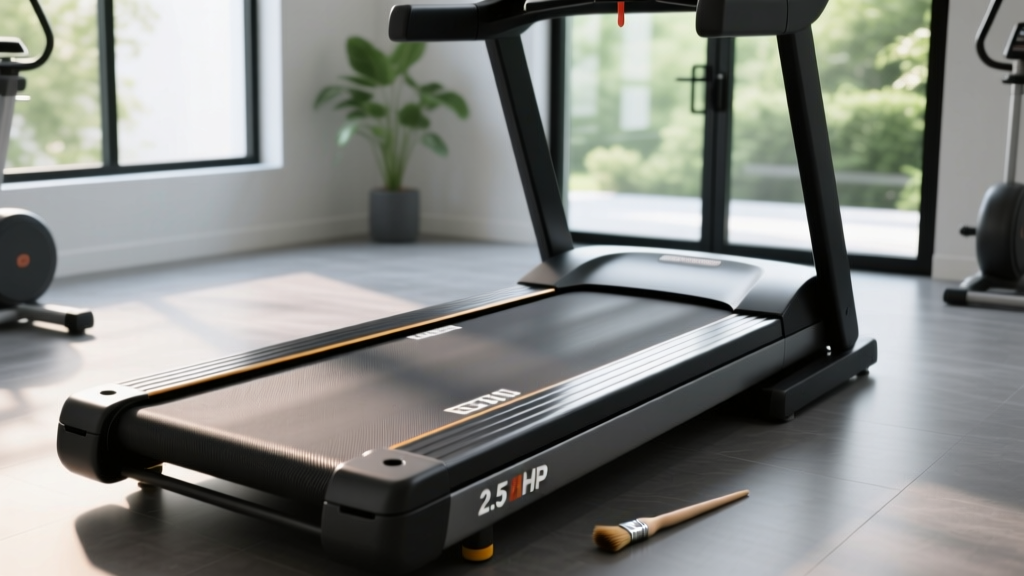
2.5 HP Treadmill Belt Maintenance: Lubrication & Longevity Guide
