
Folding Treadmill Review: Small Spaces & Beginner Interval Training
Discover the best folding treadmills for small spaces. We review compact models ideal for beginner interval training, covering layout, clearance, and specs.

The Small-Space Cardio Paradox
Urban living and compact home layouts often force fitness enthusiasts into a frustrating compromise: sacrifice floor space for a high-performance machine, or settle for a flimsy walking pad that cannot handle elevated heart rates. Navigating the market as an interval training treadmill beginner means balancing the need for a responsive, heat-dissipating motor with the physical constraints of an apartment, spare bedroom, or studio.
Interval training—alternating between higher-intensity bursts and active recovery—is highly effective for cardiovascular health. According to the American Heart Association, interval routines can improve VO2 max and metabolic rate more efficiently than steady-state cardio. However, executing these speed and incline fluctuations requires a treadmill with a robust Continuous Horsepower (CHP) motor and advanced shock absorption. When you add the requirement of a folding mechanism for small spaces, the pool of viable candidates shrinks dramatically. In this 2026 layout and equipment guide, we evaluate the best compact folding treadmills that actually survive the rigors of beginner HIIT (High-Intensity Interval Training) without dominating your living space.
Spatial Blueprint: Clearance & Layout Rules
Before purchasing a folding treadmill, you must map your 'Cardio Zone.' Many buyers measure the folded footprint but completely ignore the operational clearance required for safety and biomechanics. The Mayo Clinic's home gym safety guidelines emphasize the necessity of unobstructed fall zones, which is critical when beginners are pushing their limits during interval sprints.
📐 The 2026 Small-Space Clearance Formula:- Sides: Minimum 24 inches on both sides for arm swing and emergency bailouts.
- Rear: 30 inches of clear space behind the deck to prevent impact injuries if you fall off the back during a sprint interval.
- Ceiling Height: Standard treadmills elevate you 8 to 10 inches. If your ceiling is 8 feet (96 inches), a user who is 6 feet tall needs a 'low-profile' deck (under 6 inches step-up height) to avoid head strikes during incline intervals.
Engineering for Intervals: What Beginners Actually Need
Not all folding treadmills are built for interval training. The mechanical stress of repeatedly accelerating from 3.0 mph to 7.0 mph generates immense heat and belt friction. Here is what separates a true interval machine from a basic walking pad:
1. CHP vs. Peak HP
Marketing materials often boast about 'Peak HP.' Ignore this. For interval training, you must look at CHP (Continuous Horsepower). A 2.0 HP motor will overheat and stutter during rapid speed changes. For beginners doing 1:1 or 2:1 work-to-rest ratios, a minimum of 2.5 CHP is mandatory to ensure smooth acceleration and motor longevity.
2. Deck Cushioning Systems
Beginner runners are highly susceptible to shin splints and joint fatigue when introducing high-impact intervals. Compact treadmills often use thin, 1-inch elastomer pucks. Look for variable-response cushioning (softer at the strike zone, firmer at the toe-off) to protect your joints without sacrificing the stability needed for sprinting.
3. Console Quick-Keys
Fumbling with up/down arrows while trying to hit a 30-second sprint target ruins the interval. Dedicated 1-touch speed and incline buttons on the console or handgrips are non-negotiable for effective interval programming.
2026 Compact Treadmill Reviews: Space vs. Performance
Horizon Fitness T101 (The Balanced Compact)
Price: $699 | Motor: 2.5 CHP | Footprint (Active): 70" L x 28" W
The Horizon T101 remains the gold standard for small-space interval training. Its hydraulic 'SoftDrop' folding system allows you to release the deck safely without it slamming onto your hardwood floors. Crucially for spatial planning, the T101 has a step-up height of just 5.5 inches, making it one of the safest options for rooms with standard 8-foot ceilings. The 2.5 CHP motor handles 1-minute jog / 1-minute walk intervals flawlessly, and the 10% motorized incline adds resistance without requiring the user to sprint at unsafe speeds in a confined room.
ProForm Carbon TL (The Guided Interval Pick)
Price: $599 | Motor: 2.6 CHP | Footprint (Active): 70" L x 30" W
If you are an interval training treadmill beginner who needs coaching, the ProForm Carbon TL leverages iFIT integration to automatically adjust your speed and incline based on expert-led workouts. The 2.6 CHP motor provides a slightly faster ramp-up time than the Horizon. However, its 30-inch width makes it slightly more cumbersome in narrow galley-style home offices. The folding mechanism is manual and requires a bit more upper-body strength to lift the deck into the locked position compared to hydraulic alternatives.
Sunny Health & Fitness SF-T7516 (The Ultra-Budget Micro-Fold)
Price: $389 | Motor: 2.0 HP (Peak) | Footprint (Active): 63" L x 26" W
The Sunny SF-T7516 is incredibly popular for ultra-small apartments due to its 26-inch width and sub-$400 price tag. However, we must note a critical failure mode for interval training. Because it uses a smaller motor and lacks advanced heat dissipation, it is not suited for high-speed sprint intervals (above 7.5 mph). It is, however, excellent for 'walking intervals' (e.g., 3 minutes brisk walk at 3.5 mph, 1 minutes slow recovery at 2.0 mph) and offers 12 levels of incline to increase heart rate without requiring high speeds.
Head-to-Head Specs & Footprint Matrix
| Model | Active Footprint | Folded Depth | Motor (CHP/HP) | Step-Up Height | Best For |
|---|---|---|---|---|---|
| Horizon T101 | 70" x 28" | 18" | 2.5 CHP | 5.5" | Low Ceilings & Jog Intervals |
| ProForm Carbon TL | 70" x 30" | 22" | 2.6 CHP | 7.0" | Guided iFIT Intervals |
| Sunny SF-T7516 | 63" x 26" | 15" | 2.0 HP | 6.5" | Micro-Spaces & Walk Intervals |
Layout Hacks: Integrating Cardio into Multi-Use Rooms
When your treadmill shares a room with a home office or living area, visual clutter and acoustic resonance become major barriers to consistent training. Implement these spatial design strategies:
- The 'Behind-the-Door' Niche: If your room door swings inward, measure the clearance between the open door and the wall. Many folding treadmills (like the Sunny SF-T7516 with its 15-inch folded depth) can slide perfectly into this dead space when not in use.
- Acoustic Decoupling: Interval training involves heavy foot strikes. Place a 3/4-inch thick vulcanized rubber mat (specifically designed for horse stalls or heavy gym equipment, typically costing $60-$90) beneath the treadmill. This not only protects hardwood but reduces low-frequency vibration transfer to downstairs neighbors by up to 40%.
- Visual Screening: Use a tension rod with a heavy canvas curtain to create a 'closet' effect. When the workout is over, fold the deck, and pull the curtain. Out of sight, out of mind—preserving the psychological tranquility of your multi-use space.
Frequently Asked Questions
Can a walking pad handle beginner interval training?
Generally, no. Most walking pads max out at 4.0 to 6.0 mph and lack the belt length (usually under 45 inches) required for a natural running stride. Attempting high-intensity intervals on a walking pad increases the risk of stepping off the rear edge. For true run/walk intervals, a dedicated folding treadmill with a minimum 50-inch belt length is required.
How often should I lubricate a folding treadmill used for intervals?
The stop-and-go friction of interval training degrades belt lubrication faster than steady-state walking. Check your owner's manual, but generally, silicone-based lubrication should be applied every 130 to 150 miles, or roughly every 3 months for active beginners.
Is a 2.5 CHP motor loud in a small apartment?
Modern brushless DC motors (found in the Horizon and ProForm models reviewed above) are surprisingly quiet, typically emitting between 65 and 70 decibels at a jogging pace—comparable to a normal conversation. The noise you hear is usually footfall impact, which is why a high-density rubber mat is a mandatory accessory for apartment dwellers.
The FitGearPulse Verdict: Space optimization should never compromise biomechanical safety. For the interval training treadmill beginner, the Horizon T101 offers the most mathematically sound balance of a low-profile deck, adequate continuous horsepower, and a manageable folded footprint, ensuring your living space remains functional and your joints remain protected.
More gear to consider
All reviews
Deer Run Treadmill Coupon Code vs Rowing Machine: Cardio Guide
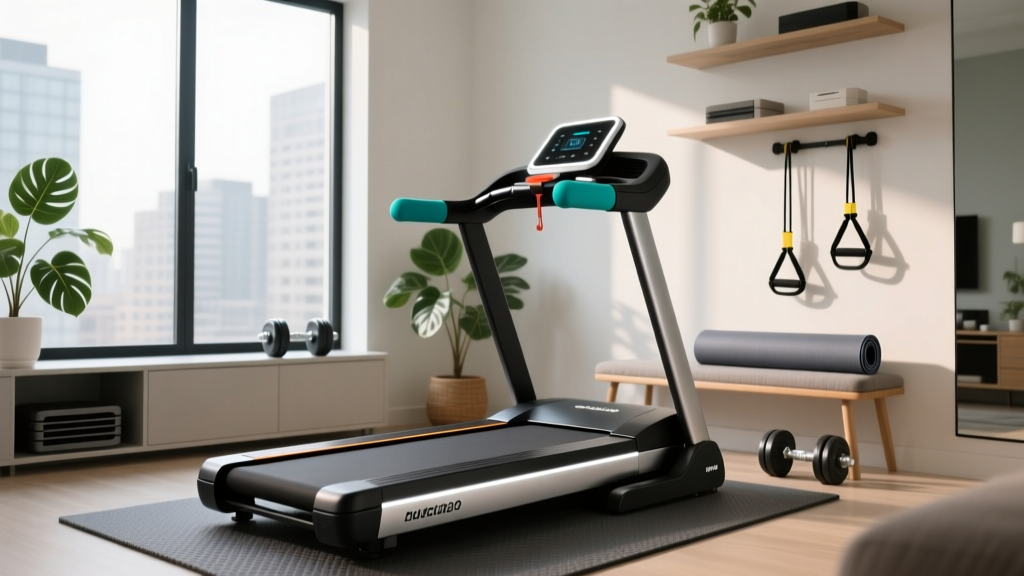
2026 Vibration Plate Treadmill Combos for Small Spaces
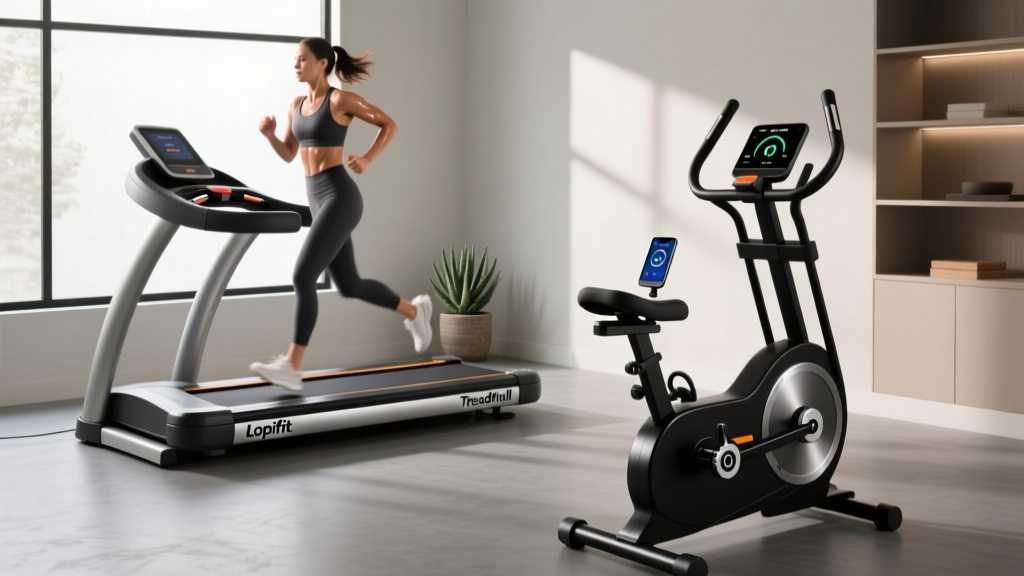
Curved vs Motorized Treadmill Setup & Lopifit Treadmill Bike Guide
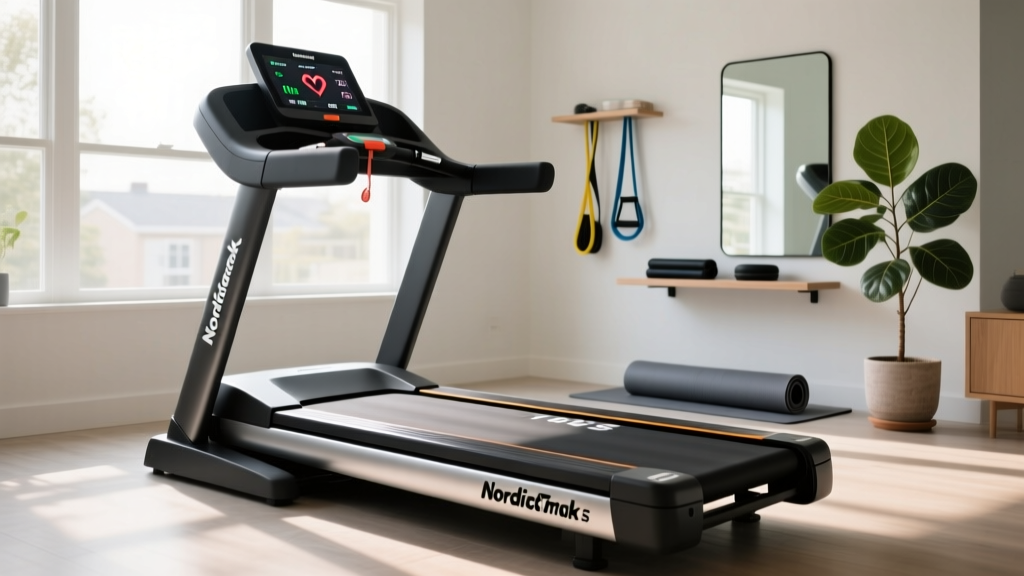
Elliptical vs Treadmill 2026: NordicTrack T 6.5 S Treadmill Review

2026 Rowing Machine Buying Guide & Cadence Treadmill Comparison
