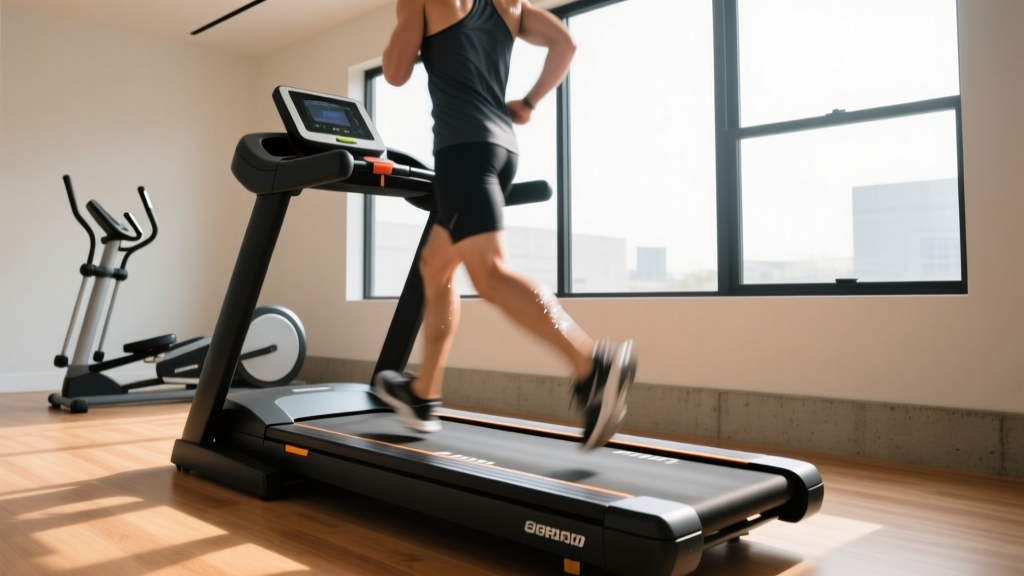
Elliptical vs Treadmill: Preserving Advantages of Treadmill Exercise
Compare elliptical vs treadmill maintenance. Learn how to preserve the advantages of treadmill exercise with expert care tips for home gym longevity.

The Biomechanical and Mechanical Divide
When building a home gym in 2026, the debate between purchasing an elliptical or a treadmill remains one of the most common dilemmas for fitness enthusiasts. Both machines offer exceptional cardiovascular benefits, but they operate on fundamentally different mechanical principles. According to the Mayo Clinic, ellipticals provide a low-impact, gliding motion that spares the joints, while treadmills simulate natural walking and running mechanics, engaging stabilizing muscles and bone-density-building impact.
However, from a maintenance and longevity perspective, this biomechanical difference translates into a massive divergence in mechanical wear-and-tear. When evaluating the advantages of treadmill exercise—such as precise pace control, dynamic incline simulation, and high caloric burn—home gym owners often overlook the mechanical friction and impact forces that degrade these benefits over time. A treadmill is essentially a high-torque motor dragging a friction belt beneath a human load, whereas an elliptical relies on momentum, flywheels, and sealed bearings. Understanding how to maintain both is critical to protecting your investment and ensuring your machine survives the decade.
Elliptical vs. Treadmill: The Maintenance Matrix
To understand the true cost of ownership, we must look beyond the initial purchase price. Below is a comparative matrix detailing the maintenance realities of premium home cardio machines, such as the Sole F80 Treadmill and the Sole E95 Elliptical.
| Machine Type | Primary Wear Component | Maintenance Task | Frequency | Est. 10-Year Cost | Common Failure Mode |
|---|---|---|---|---|---|
| Treadmill | Running Belt & Deck | Silicone lubrication & tensioning | Every 150 miles / 3 months | $150 - $300 | Deck warping, belt snapping |
| Treadmill | Motor & Control Board | Vacuuming dust, static mitigation | Bi-annually | $400 - $800 | MOSFET burnout, overheating |
| Elliptical | Pivot Points & Bearings | Greasing joints, tightening bolts | Annually | $50 - $100 | Squeaking, lateral play |
| Elliptical | Drive Belt & Flywheel | Poly-V belt tensioning | Every 3-5 years | $80 - $150 | Slipping resistance, jerky motion |
Preserving the Advantages of Treadmill Exercise
The primary reason users abandon treadmills is not a lack of motivation, but a degradation in the running experience. A poorly maintained treadmill feels jerky, smells like burning rubber, and eventually throws an error code. To preserve the smooth, high-performance advantages of treadmill exercise, you must adhere to a strict mechanical care regimen.
1. The Art of Belt Lubrication
Friction is the enemy of your treadmill’s motor. The running belt must glide over the deck with minimal resistance. You must use 100% pure silicone lubricant—never petroleum-based products, WD-40, or household oils, which will melt the belt backing and destroy the deck.
- Application: Loosen the rear roller bolts using the provided hex key. Lift the belt and apply exactly 1 to 3 ounces of silicone in a zig-zag pattern across the center of the deck.
- Distribution: Tighten the bolts back to their original position, turn the machine on at 2.0 MPH, and walk on it for two minutes to distribute the silicone evenly.
- Warning Sign: If you notice the belt hesitating when your foot strikes, or if the motor housing is hot to the touch, your deck is running dry.
2. Protecting the Motor Hood and Electronics
Modern 2026 treadmill motors (typically 3.0 to 4.0 Continuous Horsepower) generate significant heat. The motor hood is designed to pull in cool air, but it also acts as a vacuum for household dust, pet hair, and lint. When dust coats the motor fins and the lower control board, it acts as an insulator, leading to thermal shutdowns or catastrophic MOSFET (transistor) burnout on the circuit board. Every three months, unplug the machine, remove the three to four Phillips-head screws on the motor hood, and use a can of compressed air and a soft brush to clear the debris.
3. Deck Inspection: Phenolic vs. MDF
High-end treadmills use phenolic resin-coated decks, while budget models use compressed MDF (Medium-Density Fiberboard). MDF decks will warp and splinter if exposed to high humidity or excessive sweat. Always use a machine mat and wipe down the deck edges after heavy use to prevent sweat corrosion.
Elliptical Longevity: Managing Momentum and Pivots
While ellipticals lack the high-friction belt system of a treadmill, they possess dozens of moving pivot points that endure repetitive lateral and vertical stress. The American Heart Association notes that consistent aerobic exercise is vital for cardiovascular health, and an elliptical's smooth motion is excellent for sustaining long-term routines without joint degradation. However, mechanical neglect will turn that smooth motion into a symphony of squeaks and wobbles.
Expert Callout: The Poly-V Belt
Most rear-drive ellipticals use a ribbed Poly-V belt to connect the flywheel to the pedals. Over time, this belt stretches. If your elliptical feels like it is "slipping" at the top of the stride, you do not necessarily need a new belt. Locate the tensioner bracket near the flywheel and loosen the mounting bolts to slide the bracket outward, increasing tension. Re-tighten and test.
Essential Elliptical Care Steps
- Fastener Audits: The harmonic vibration of an elliptical in motion slowly backs out hex bolts. Every six months, take a multi-tool and tighten every visible bolt on the pedal arms, mast, and stabilizer feet.
- Track and Roller Cleaning: If you own a suspension elliptical with rails, wipe the aluminum tracks with a damp microfiber cloth weekly. Dust embedded in the track will pit the polyurethane wheels, causing permanent flat spots.
- Pivot Point Greasing: Do not use liquid oils on pivot joints; they attract dust and form an abrasive paste. Use a white lithium grease or PTFE (Teflon) spray on the shoulder bolts connecting the pedal arms to the crank.
Environmental Killers: Static and Humidity
One of the most non-obvious failure modes for home cardio equipment—particularly treadmills—is static electricity. In dry, winter environments, the friction of the running belt against the deck can generate a massive static charge. If the machine is not properly grounded, this static arcs into the console, instantly frying the memory chips or the display board.
Pro-Tip: Never plug a treadmill into an ungrounded outlet or use a two-prong adapter. Furthermore, treating the treadmill belt with an anti-static silicone spray and maintaining a basement or gym humidity level above 35% will virtually eliminate static arcing.
The Verdict: Which Machine Survives Your Routine?
If your primary goal is minimizing maintenance and maximizing joint longevity, the elliptical is the undisputed winner. Its sealed bearings and lack of high-friction surfaces mean it can often run for a decade with nothing more than an annual bolt-tightening and a drop of grease.
However, if you prioritize the specific advantages of treadmill exercise—namely, the ability to train for outdoor races, utilize steep inclines, and engage in high-impact bone-density work—you must accept the maintenance tax. By committing to a strict schedule of silicone lubrication, motor hood vacuuming, and static mitigation, a premium treadmill will easily outlast its warranty and remain the centerpiece of your home gym for years to come.
More gear to consider
All reviews
Under Desk Treadmill Review: Essential Treadmill Adjustment & Care
Assault Bike vs Air Bike: Layouts & Treadmill Stand Swaps

Under Desk Treadmill Review: Budget & Treadmill Safety Lock Truths

Treadmill vs Bicycle Exercise: The Ultimate Home Noise Comparison
Stair Climber Setup Guide & Bowflex BXT116 Treadmill Review
