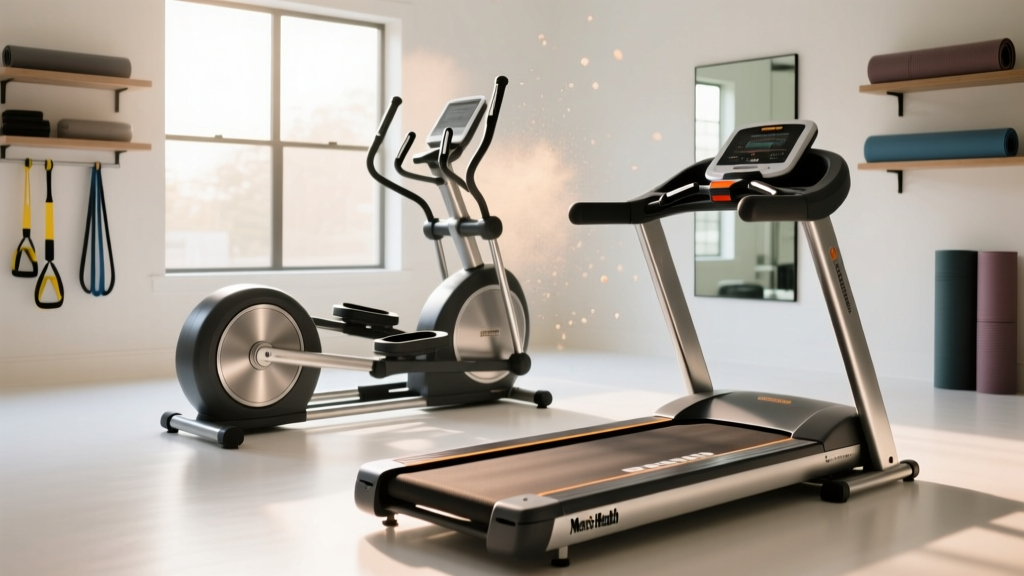
Elliptical vs Treadmill Longevity: Beyond Feier Treadmill Reviews
Discover the real long-term costs of ellipticals vs treadmills. We analyze maintenance, repair data, and longevity beyond standard Feier treadmill reviews.

The Mechanical Reality: Treadmills vs. Ellipticals
When outfitting a home gym, consumers often spend hours comparing digital consoles and incline features. If you have been browsing countless Feier treadmill reviews online, you have likely noticed a heavy emphasis on upfront pricing, compact folding designs, and basic app connectivity. However, as a fitness equipment technician analyzing long-term home cardio investments, I look past the initial unboxing experience to the mechanical realities of year five and beyond. The true cost of a cardio machine is not just its retail price; it is the cumulative expense of maintenance, part replacements, and energy efficiency over a decade of use.
Choosing between an elliptical and a treadmill for home cardio requires a deep understanding of how these machines handle friction, user impact, and environmental stressors. While a budget-friendly treadmill might seem like a steal today, its long-term upkeep can easily eclipse the cost of a mid-tier elliptical. In this comprehensive 2026 longevity guide, we break down the exact maintenance schedules, failure modes, and repair costs of both machine types to help you make an informed, decade-long investment.
Quick Decision Matrix:- Choose a Treadmill if: You are committed to a strict bi-annual maintenance schedule, have a dedicated 20-amp electrical circuit, and prioritize bone-density-building impact exercises.
- Choose an Elliptical if: You want a 'set it and forget it' machine with minimal routine maintenance, lower joint impact, and a smaller electrical footprint.
Treadmill Maintenance: Friction, Belts, and Motors
Treadmills are inherently high-friction environments. Every step you take generates kinetic energy, heat, and lateral force. According to Consumer Reports, the most common cause of premature treadmill failure in home units is not the console or the electronics, but the catastrophic breakdown of the drive system due to neglected deck lubrication.
The Lubrication Imperative
The walking belt must glide over the wooden deck with minimal resistance. If you are using a budget or mid-tier model—frequently the subject of entry-level Feier treadmill reviews—the manufacturer likely recommends 100% liquid silicone lubrication every 3 to 6 months, or every 150 miles of use. Failure to apply $15 to $25 worth of silicone annually increases the amp-draw on the motor. Over time, this excess electrical draw generates intense heat, which slowly cooks the lower motor control board and eventually burns out the motor windings.
Step-by-Step Belt Tension and Lubrication:
- The Paper Test: Slide a standard piece of printer paper under the belt at the center of the deck. If you can pull it out with zero resistance, your belt is properly lubricated. If it snags, it is time for maintenance.
- Application: Loosen the rear roller adjustment bolts using a 6mm hex key (exactly three full turns counter-clockwise).
- Distribution: Apply half an ounce of 100% pure silicone treadmill lube directly onto the deck in a zig-zag pattern.
- Re-Tensioning: Tighten the bolts exactly three turns clockwise. Run the machine at 3.0 MPH for five minutes to distribute the silicone evenly.
Motor Dust and Deck Degradation
Treadmill motors act as massive vacuums, pulling in pet dander, dust, and carpet fibers. This debris coats the motor's internal fan, leading to thermal throttling. A quarterly vacuuming of the motor hood is mandatory. Furthermore, the wooden deck itself is a wear item. By year four or five, the high-pressure laminate coating on the deck will wear through to the raw wood. When this happens, the friction coefficient spikes, and the walking belt will begin to fray and melt. Replacing a treadmill deck and belt combo in 2026 typically costs between $180 and $320, plus two hours of labor.
Elliptical Longevity: Bearings, Pivots, and Drive Systems
Ellipticals operate on a fundamentally different mechanical principle. Instead of high-friction sliding surfaces, they rely on rotational bearings, pivot joints, and drive belts. The Mayo Clinic notes that ellipticals are exceptional for low-impact cardiovascular conditioning, but from a mechanical standpoint, their longevity is defined by the quality of their pivot points and the integrity of their magnetic resistance systems.
Pivot Joints and Polyurethane Bushings
Every time the pedal arm swings, it rotates on a pivot joint. Budget ellipticals use polyurethane bushings, which are essentially dense rubber grommets. These are quiet and cheap to manufacture, but they compress and deform over time. After roughly 2,000 hours of use, you will notice 'lateral play'—a side-to-side wobble in the pedals. While the bushings themselves only cost about $25 for a full kit, replacing them requires disassembling the pedal arms, which can be a tedious weekend project.
Premium ellipticals (typically priced above $1,500) upgrade to sealed steel ball bearings. These are virtually maintenance-free and are rated for 10,000+ hours of use. However, if a sealed bearing does fail, it requires a bearing puller tool and a hydraulic press to replace, often necessitating a professional service call that costs around $150 in labor.
Rail and Roller Maintenance
For rear-drive ellipticals with wheel tracks, the rails must be kept pristine. Unlike treadmills, you should never use liquid lubricants on elliptical rails. Liquid lubricants attract dust, creating an abrasive paste that will grind down the polyurethane wheels. Instead, wipe the aluminum rails with a dry microfiber cloth after every third workout to remove acidic sweat residue, which can pit and corrode the metal over time.
"The silent killer of home gym electronics is the power surge. Never plug a modern magnetic-resistance elliptical or a digital treadmill directly into a wall outlet. Always use a dedicated surge protector rated for at least 2,000 Joules to protect the delicate eddy-current braking systems and LED consoles from micro-surges." - Home Fitness Equipment Repair Association Guidelines
Head-to-Head Lifespan & Repair Cost Matrix
To provide a clear financial picture, we have compiled a comparative matrix based on average 2026 home repair data for mid-range treadmills (similar to those found in popular online reviews) versus mid-range front-drive ellipticals.
| Maintenance / Repair Item | Mid-Range Treadmill | Mid-Range Elliptical |
|---|---|---|
| Routine Maintenance Frequency | Every 3-6 Months (Lubrication) | Every 12 Months (Bolt tightening) |
| Wear Item: Drive/Belt | $180 - $250 (Every 4-6 years) | $45 - $80 (Internal drive belt, 7+ years) |
| Wear Item: Deck / Rails | $150 - $300 (Deck replacement) | N/A (Rails rarely require replacement) |
| Wear Item: Joints / Bearings | N/A | $25 - $60 (Bushings/Bearings) |
| Motor / Brake Failure Cost | $350 - $600 (DC Motor replacement) | $200 - $350 (Magnetic brake assembly) |
| Estimated 10-Year Upkeep Cost | $450 - $800 | $100 - $250 |
Environmental Factors: Sweat, Humidity, and Power
According to Harvard Health, the environment in which you place your home gym equipment plays a massive role in its lifespan. Treadmills and ellipticals react differently to environmental stressors.
The Sweat Corrosion Factor
Human sweat is highly acidic and corrosive. On a treadmill, sweat drips directly onto the motor hood and the console overlay. Over time, this acid eats through the plastic membrane of the console buttons and corrodes the exposed wiring harnesses near the incline motor. Ellipticals, due to their upright posture and different user positioning, tend to channel sweat onto the pedal arms and the central mast. While less likely to destroy the console, sweat pooling in the pedal arm pivot points will rapidly degrade unsealed bushings and cause squeaking.
Humidity and Static Electricity
Treadmills generate massive amounts of static electricity as the rubber belt rubs against the deck. In low-humidity environments (below 30%), this static charge builds up and can discharge into the user or, worse, into the machine's own lower control board, frying the microprocessors. Maintaining a room humidity level between 40% and 50% is a non-negotiable requirement for treadmill longevity. Ellipticals do not suffer from static buildup, making them far more resilient in dry, climate-controlled basements or arid climates.
Final Verdict: Which Machine Survives the Decade?
If your primary goal is to purchase a machine, plug it in, and never think about mechanical maintenance for the next ten years, the elliptical is the undisputed champion of longevity. The lack of a high-friction walking belt and the absence of a heavy-duty drive motor mean there are simply fewer catastrophic failure points. The routine maintenance is limited to wiping down rails and occasionally tightening the crank arm bolts.
However, if you require the biomechanical specificity of running and are willing to treat your equipment like a vehicle that requires scheduled servicing, a treadmill remains an invaluable tool. The key takeaway from analyzing both premium brands and the myriad of budget Feier treadmill reviews is that upfront savings are quickly negated by poor maintenance. Whether you choose the low-impact glide of an elliptical or the high-calorie burn of a treadmill, committing to the specific maintenance protocols outlined above will ensure your home cardio investment easily survives the decade and beyond.
More gear to consider
All reviews
Compact Portable Cardio vs Super Runners Shop Gait Analysis Treadmill

ProForm 380 E Treadmill Maintenance & Folding Space-Saver Review

Curved vs Motorized: NordicTrack Commercial 1750 Treadmill with iFIT

Stair Climber Setup: Outperforming the Treadmill for Belly Fat Loss

Under Desk Treadmill Review: Office Picks & ProForm Treadmill Fix
