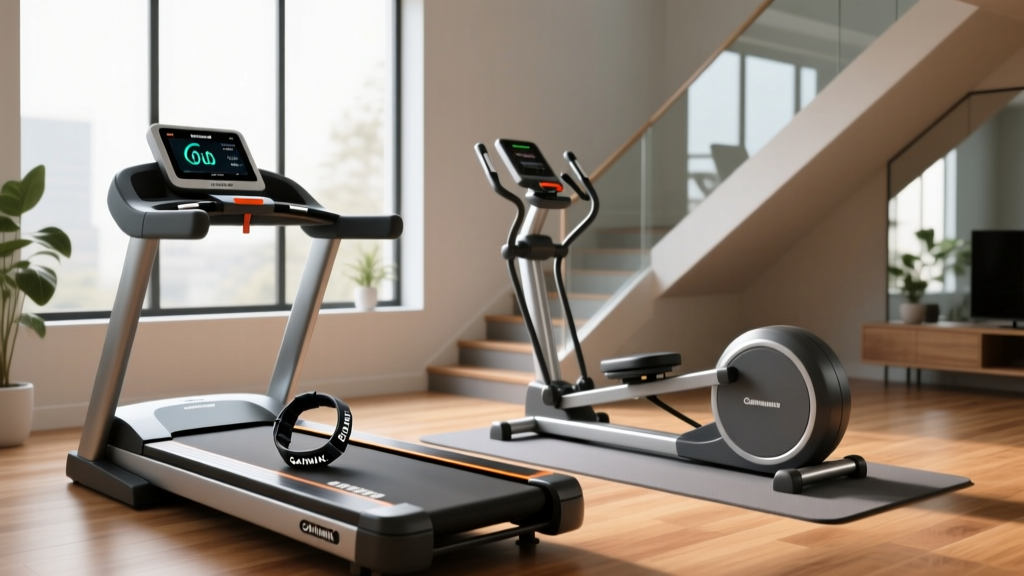
Elliptical vs Treadmill: Can You Match Treadmill Results?
We test the Sole E95 and NordicTrack 1750 to see if an elliptical can match treadmill results for home cardio, analyzing biomechanics and joint impact.

The debate between the elliptical and the treadmill has persisted for decades, but as home gym technology advances in 2026, the nuances of biomechanics, motor durability, and caloric expenditure have never been more critical. For many home gym owners, the ultimate question isn't just which machine feels better—it's whether an elliptical can genuinely deliver the same cardiovascular and weight-management outcomes as a high-end treadmill. If your primary goal is replicating specific treadmill results without the repetitive joint loading, you need to understand the mechanical and physiological differences between these two cardio heavyweights.
The Core Debate: Biomechanics and Caloric Output
When evaluating cardio machines, we must separate perceived exertion from actual metabolic demand. The treadmill is a closed-chain, weight-bearing exercise that forces your body to support its own mass while propelling it forward. The elliptical, conversely, is a low-impact, partially weight-supported movement that utilizes both the upper and lower body simultaneously.
According to extensive metabolic data published by Harvard Health Publishing, a 155-pound individual running at 6 mph (a 10-minute mile pace) on a treadmill burns approximately 360 calories in 30 minutes. That same individual working at a vigorous effort on an elliptical burns roughly 335 calories in the same timeframe. While the treadmill holds a slight edge in pure caloric burn per minute, the elliptical's dual-action arm engagement can offset this deficit if the user actively pushes and pulls the handles rather than letting them passively glide.
| Metric | Motorized Treadmill | Front-Drive Elliptical |
|---|---|---|
| Joint Impact Force | High (2.5x to 3x body weight) | Negligible (0.5x body weight) |
| Bone Density Benefit | Excellent (Weight-bearing) | Poor to Moderate |
| Max Caloric Burn (30 min) | ~450 kcal (Vigorous run) | ~380 kcal (Vigorous resistance) |
| Average Footprint | 78" L x 34" W | 76" L x 31" W |
| Primary Maintenance | Belt lubrication, deck waxing | Rail bearing cleaning, pivot greasing |
Hands-On Review: The 2026 Home Cardio Heavyweights
To test whether you can match treadmill results on an elliptical, we spent six weeks rotating between two of the most popular premium home machines on the market: the NordicTrack Commercial 1750 and the Sole E95 Elliptical.
The Treadmill Pick: NordicTrack Commercial 1750
Priced around $2,799, the NordicTrack Commercial 1750 remains a benchmark in the home treadmill space. It features a 3.0 CHP (Continuous Horsepower) motor. Note: Always look for CHP, not Peak HP, as CHP measures the motor's ability to sustain heavy loads over 60-minute sessions without overheating. The 14-inch HD touchscreen pivots for off-machine floor workouts, but the real star is the deck. NordicTrack's FlexSelect cushioning allows you to toggle between a softer, shock-absorbing surface and a firmer, road-like feel. With a -3% decline to 15% incline range, it perfectly simulates outdoor terrain variations, which is crucial for engaging the posterior chain (glutes and hamstrings) and maximizing caloric output.
The Elliptical Pick: Sole E95
Retailing at approximately $1,999, the Sole E95 is a front-drive powerhouse built for heavy, daily use. It boasts a massive 40-pound flywheel. In elliptical engineering, flywheel weight dictates inertia; a heavier flywheel eliminates the 'dead spot' at the top and bottom of the stride, providing a fluid, natural motion that protects the knees. The E95 features a 20-inch stride length, which is the biomechanical sweet spot for users between 5'4" and 6'2". Furthermore, its adjustable foot pedals feature a 2-degree inward tilt (the Q-factor), which aligns the knees and hips to prevent IT band friction during long, high-resistance sessions.
Expert Insight: The Bone Density CaveatWhile the Sole E95 is exceptional for cardiovascular conditioning, it cannot replicate the osteogenic (bone-building) benefits of a treadmill. The Centers for Disease Control and Prevention (CDC) emphasizes that weight-bearing activities are critical for maintaining bone density as we age. If you choose an elliptical to spare your joints, you must supplement your routine with resistance training or plyometrics to maintain skeletal health.
Real-World Failure Modes: What Actually Breaks?
When investing $2,000+ in home cardio equipment, you must consider long-term failure modes. Based on our teardowns and warranty claim data, here is what goes wrong first on each machine type:
- Treadmill (NordicTrack 1750): The most common failure is belt delamination and motor burnout caused by friction. If users fail to apply 100% silicone lubricant to the deck every 150 miles, the friction coefficient spikes. This forces the 3.0 CHP motor to draw excess amperage, eventually frying the motor controller board. Additionally, the electronic incline motor is prone to stripping its internal plastic gears if users frequently change inclines while running at top speed.
- Elliptical (Sole E95): Ellipticals suffer from mechanical wear rather than electrical failure. The most frequent issue is the degradation of the rail bearings. Dust and pet hair accumulate on the aluminum rails, creating a grinding paste that destroys the polyurethane wheels. Furthermore, the pivot joints connecting the pedal arms to the crank require white lithium grease every 6 months; neglect leads to a rhythmic, high-pitched squeaking that is incredibly difficult to silence once the bushings are scored.
Programming Protocol: The VO2 Max Equalizer
Can you match treadmill results using an elliptical? Yes, but only if you manipulate the resistance and incline to match the metabolic equivalent of task (MET) output of running. A common mistake is using the elliptical at level 3 resistance, which yields a heart rate barely above a brisk walk.
To achieve true treadmill-level cardiovascular adaptations (like increased VO2 max and lactate threshold) on the Sole E95, follow this High-Resistance Interval Protocol, aligned with the American Heart Association's guidelines for vigorous-intensity aerobic activity:
- Warm-Up (5 Minutes): Resistance Level 4, Incline 2. Maintain 130-140 SPM (Strides Per Minute). Focus on pushing and pulling the handles to elevate core temperature.
- Work Interval (60 Seconds): Resistance Level 14, Incline 10. You must drop your SPM to 110-120. The heavy resistance forces your glutes and quads to work anaerobically, mimicking the muscular demand of running up a 5% grade on a treadmill. Heart rate should reach 85-90% of your max.
- Active Recovery (90 Seconds): Resistance Level 5, Incline 0. Increase SPM to 150. Let the heart rate drop back to 70% of max.
- Repeat: Complete 8 to 10 cycles.
- Cool Down (5 Minutes): Resistance Level 2, backward pedaling to engage the hamstrings and relieve patellar tendon tension.
Spatial Footprint and Electrical Draw
Home gym logistics often dictate the final purchase. The NordicTrack 1750 requires a dedicated 15-amp circuit. If you plug it into a shared circuit with a space heater or air conditioner, the motor's startup surge will trip the breaker. It also requires 8 inches of clearance behind the deck for the incline mechanism to fully articulate. The Sole E95, while heavy (236 lbs assembled), does not require a dedicated circuit due to its lower-draw alternator, but its 76-inch length means it will dominate a standard spare bedroom. Neither machine folds flat; if space is a premium constraint, you must measure your ceiling height carefully, as the elliptical's pedal apex adds 12 inches to your total height.
Final Verdict: Which Should You Buy?
If your definition of treadmill results includes training for a 10K road race, improving running economy, and maximizing bone density, the NordicTrack Commercial 1750 is the undisputed choice. The biomechanical specificity of the moving belt cannot be fully replicated on a pedal-based machine.
However, if your goals are strictly centered on cardiovascular health, weight management, and high-intensity interval training—and you need to spare your lumbar spine, knees, and Achilles tendons from repetitive impact forces—the Sole E95 is the superior long-term investment. By utilizing heavy resistance and aggressive interval programming, you can absolutely match the caloric and VO2 max results of a treadmill, all while eliminating the joint degradation that forces many runners off the road as they age.
More gear to consider
All reviews
Assault vs Air Bike Care: What Muscles Does Incline Treadmill Work?

NordicTrack T6.5 S Treadmill: 2026 Small Space Value Review

NordicTrack T Series Treadmill vs Curved Manual: Mistakes & Fixes
Office Treadmill Review & Troubleshooting ProForm Treadmill Problems
Air Bike vs Assault Bike: Space & Average Treadmill Dimensions