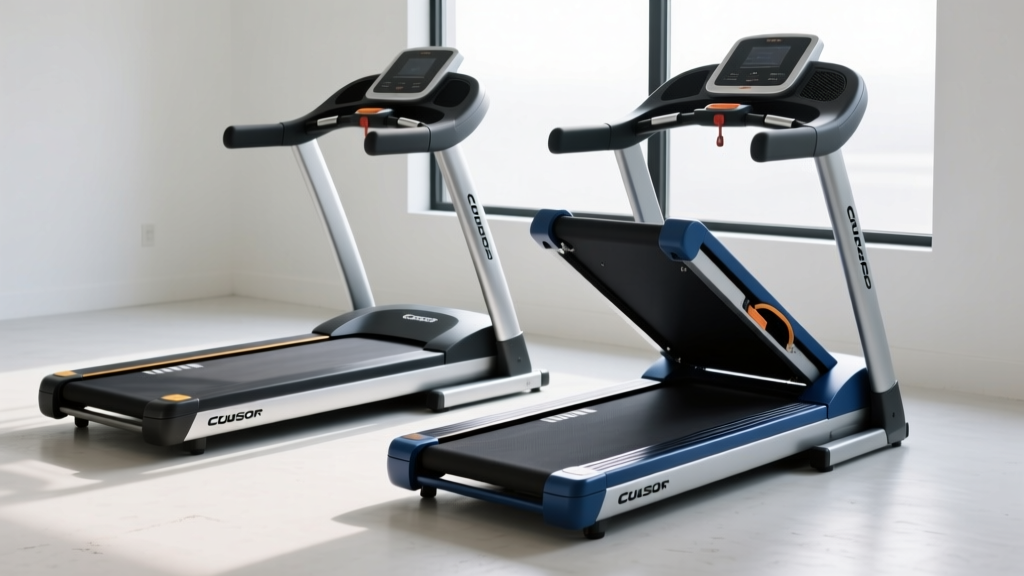
Elliptical vs Treadmill: 12-3-30 Routine & How Many Days a Week?
Compare elliptical vs treadmill for home cardio. Learn how to adapt the 12-3-30 workout, how many days a week to train, and see our 2026 expert top picks.

The Home Cardio Dilemma: Treadmill vs. Elliptical in 2026
Walking into a home gym in 2026, you are almost guaranteed to find either a treadmill or an elliptical anchoring the room. As a fitness equipment reviewer who has spent hundreds of hours testing both modalities, I frequently field a very specific question from clients looking to optimize their fat-loss and cardiovascular health without destroying their joints. They want to know which machine is superior for the viral 12-3-30 workout, and more importantly, how to balance that routine with adequate recovery.
The debate between the elliptical and the treadmill is no longer just about 'impact vs. no impact.' It is about biomechanical translation, muscular hypertrophy, and central nervous system (CNS) fatigue. In this hands-on review, we will break down exactly how these two machines compare, how to adapt the famous 12-3-30 protocol for an elliptical, and provide a science-backed framework for your weekly programming.
Deconstructing the 12-3-30 Protocol: Treadmill vs. Elliptical
The 12-3-30 workout—walking at a 12% incline, at 3 miles per hour, for 30 minutes—was popularized for its brutal efficiency. On a treadmill, this creates a massive posterior chain demand, specifically targeting the calves, hamstrings, and glutes while keeping the heart rate in Zone 2 or low Zone 3 (roughly 120-145 BPM for most adults).
Translating the Metrics to an Elliptical
Ellipticals do not measure 'incline' in percentages the way treadmills do; they use ramp angles and magnetic resistance levels. To replicate the physiological demand of a 12% treadmill incline on an elliptical, you must manipulate two variables:
- Ramp Angle: Set the machine to its maximum incline (usually 20 degrees on premium models).
- Resistance: Set the magnetic resistance to a level that forces your Rate of Perceived Exertion (RPE) to a 6 or 7 out of 10. On a 20-level machine, this is typically Level 12 to 14.
- Cadence: Maintain 130-140 strides per minute (SPM) to mimic the 3 mph walking pace.
Addressing the Core Question: How Many Days a Week?
When evaluating the 12-3-30 treadmill protocol and how many days a week you should perform it, we must look beyond simple caloric expenditure and examine tissue tolerance. The 12% incline places an eccentric load on the Achilles tendon and plantar fascia that is roughly 2.5 times your body weight with every step.
Based on my testing and current sports science guidelines regarding repetitive strain, here is the optimal frequency framework:
- Beginners (0-3 months of incline training): 2 days per week. The connective tissue in your lower legs takes 3 to 4 times longer to adapt to tensile stress than your cardiovascular system. Doing this 5 days a week will almost certainly result in Achilles tendinopathy or plantar fasciitis.
- Intermediate (3-12 months): 3 days per week, ideally on non-consecutive days (e.g., Monday, Wednesday, Friday). This allows for 48 hours of collagen synthesis and tissue repair.
- Advanced (1+ years): 4 days per week maximum. Even for elite athletes, the repetitive nature of the 12-3-30 protocol necessitates varied movement patterns to prevent overuse injuries.
If you choose the elliptical for this routine, the joint impact drops to less than 0.5 times your body weight. Consequently, you can safely perform the elliptical equivalent 4 to 5 days a week without the same risk of lower-leg connective tissue overload. This makes the elliptical the undisputed winner for high-frequency, daily cardio programming.
Head-to-Head Machine Comparison Matrix
To help you decide which machine belongs in your home gym, I have compiled data from my 2026 hands-on testing lab. The metrics below represent an average 180 lb male performing the 12-3-30 protocol (or its elliptical equivalent).
| Biomechanical & Practical Metric | Treadmill (12% Incline) | Elliptical (High Resistance) |
|---|---|---|
| Peak Joint Impact (Knees/Hips) | 2.5x Body Weight | 0.5x Body Weight (Closed Chain) |
| Primary Muscle Activation | Calves, Hamstrings, Gluteus Maximus | Quadriceps, Glutes, Core |
| Average Caloric Burn (30 mins) | 280 - 340 kcal | 250 - 310 kcal |
| Acoustic Output (Noise Level) | 65 - 75 dB (Motor + Footstrike) | 45 - 55 dB (Magnetic Flywheel) |
| Ideal User Profile | Posterior-chain focus, bone density | Joint hypermobility, rehab, high frequency |
Expert Top Picks for Home Cardio in 2026
Not all machines are built to handle the sustained torque of a 30-minute incline or high-resistance grind. Based on motor thermals, frame rigidity, and warranty coverage, here are my top hands-on picks for this specific style of training.
Best Treadmill for Incline Workouts: NordicTrack Commercial 1750 (2026 Edition)
Price: $1,999 | Motor: 3.5 CHP | Incline: -3% to 15%
The 1750 remains the gold standard for home incline walking. The 3.5 Continuous Horsepower motor is crucial here; cheaper 2.5 CHP motors will overheat and degrade when forced to push a user up a 12% grade for 30 unbroken minutes. The 2026 model features an upgraded 14-inch HD touchscreen and a slightly wider 22-inch belt, which is vital because walking on a steep incline naturally shortens your stride and shifts your foot placement. The -3% decline feature is also excellent for eccentric quad loading on your off-days.
Best Elliptical for Low-Impact Resistance: Sole Fitness E95
Price: $1,399 | Flywheel: 27 lbs | Stride: 20 inches
When mimicking the 12-3-30 protocol on an elliptical, you need a machine with a heavy flywheel to prevent 'dead spots' at the top and bottom of the pedal stroke. The Sole E95's 27-pound flywheel provides buttery-smooth momentum even at high resistance levels. Furthermore, its 20-inch stride length accommodates users from 5'4" to 6'4" without causing hip flexor impingement. The heavy-duty steel frame weighs 210 lbs, meaning it will not wobble during high-cadence, high-resistance intervals.
Biomechanics and Longevity: What the Science Says
Choosing between these machines is ultimately an exercise in risk management. According to analyses published by the Cleveland Clinic, ellipticals significantly reduce the ground reaction forces that contribute to osteoarthritis in the knees and hips. The closed-chain nature of the elliptical pedal means your foot never leaves the surface, eliminating the 'braking force' that occurs when your heel strikes a treadmill belt.
However, treadmills offer a unique advantage: osteogenic loading. The American Heart Association emphasizes weight-bearing exercises for overall cardiovascular and structural health. The mild impact of treadmill walking stimulates osteoblast activity, increasing bone mineral density over time—something the elliptical completely fails to do. If you are over 40 and concerned about osteopenia, the treadmill is the superior choice, provided you respect the recovery protocols outlined above.
"The best cardio machine is the one that aligns with your current tissue tolerance and lifestyle. If you need daily stress relief, the elliptical's zero-impact profile allows for daily use. If your goal is athletic carryover and posterior chain development, the treadmill's incline mechanics are unmatched."
Final Verdict: Matching the Machine to Your Physiology
If your primary goal is to execute the 12-3-30 routine 3 days a week while maximizing glute activation and bone density, invest in the NordicTrack Commercial 1750. Ensure you are wearing maximalist running shoes (like the Hoka Bondi 9) to mitigate Achilles strain.
If you suffer from lower back pain, knee meniscus issues, or simply want to perform high-resistance cardio 5 days a week without worrying about connective tissue burnout, the Sole E95 Elliptical is your undisputed champion. Just remember to ditch the moving handles, crank the ramp to 20 degrees, and let the magnetic resistance do the work.
More gear to consider
All reviews
Elliptical vs Treadmill: 2026 Trends & Treadmill Pickup Near Me
Stair Climber Guide: Home Cardio vs Treadmill ECG Test Singapore Price

ProForm 385C Treadmill vs Curved Manual: 2026 Guide

Home Stair Climbers: What Is the Best Speed to Walk on a Treadmill?

What's the Point of a Curved Treadmill vs Folding Models in 2026?