Elliptical vs Treadmill: Echelon Treadmill Reviews & Budget Breakdown
We analyze elliptical vs treadmill value, using Echelon treadmill reviews to compare hidden costs, joint impact, and 5-year ROI for home cardio.

Choosing between an elliptical and a treadmill for home cardio is no longer just a debate about calorie burn or personal preference. In 2026, with shifting equipment prices and the rising cost of digital fitness subscriptions, the decision is fundamentally a financial one. To uncover the true value of these machines, we are conducting a comprehensive budget breakdown and total cost of ownership (TCO) analysis. By synthesizing data from hundreds of Echelon treadmill reviews and comparing them against similarly priced elliptical benchmarks, we will reveal the hidden costs, mechanical failure modes, and long-term ROI of your home gym investment.
The 2026 Value Analysis Framework: Beyond the Sticker Price
When consumers shop for cardio equipment, they typically anchor their budget to the upfront retail price. However, a true value analysis requires calculating the Total Cost of Ownership (TCO) over a standard 5-year lifespan. The TCO formula for home cardio includes:
- Upfront Hardware Cost: The retail price of the machine, including shipping and assembly.
- Digital Subscriptions: Monthly fees for interactive programming, live classes, and scenic routes.
- Energy Consumption: The electrical draw of the machine based on average weekly usage.
- Maintenance and Repairs: Routine upkeep (lubricants, belt replacements) and out-of-warranty part replacements.
- Depreciation and Resale: The estimated recovery value if you sell the machine after five years.
Decoding Echelon Treadmill Reviews: The Treadmill Budget Reality
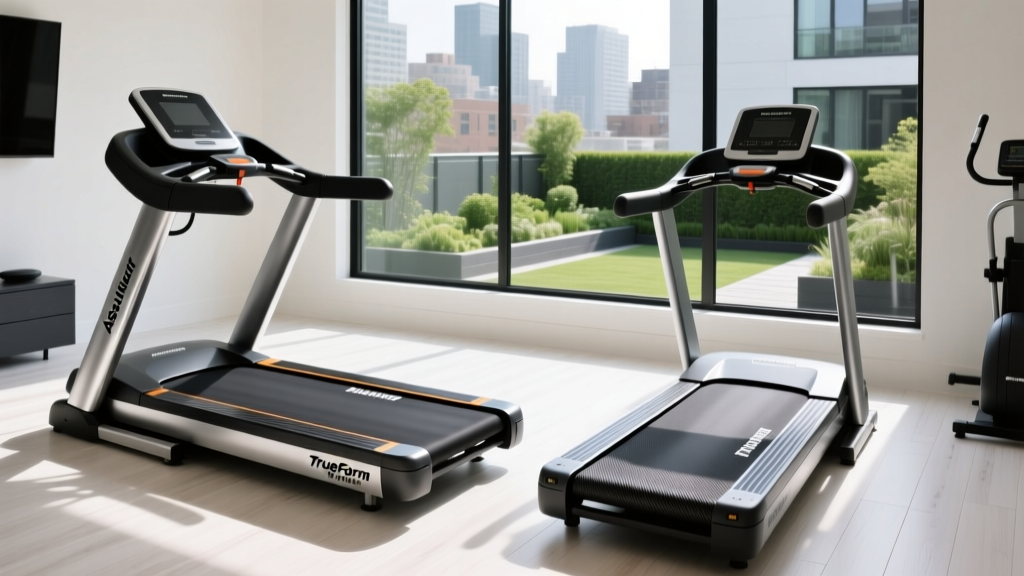
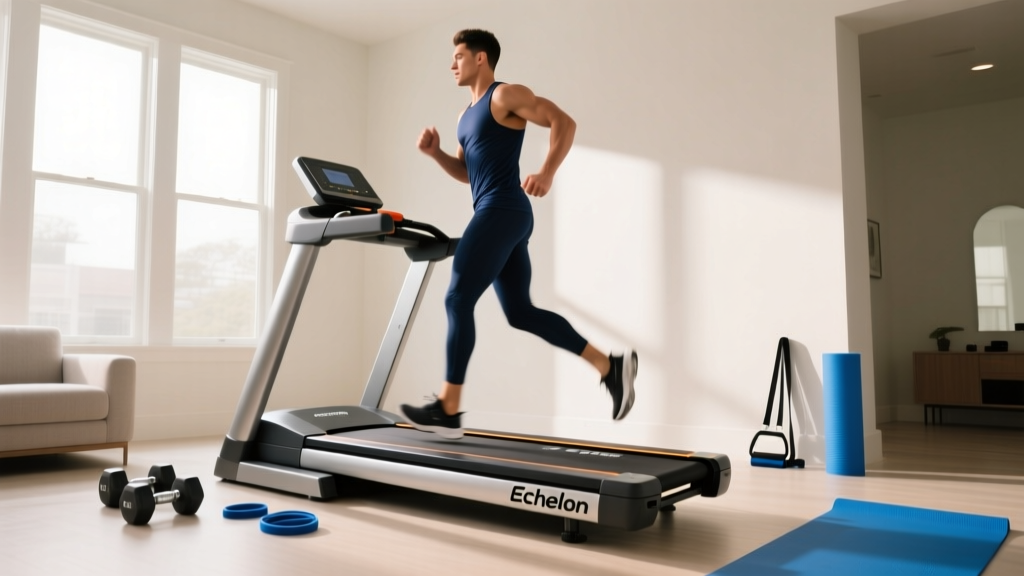
Echelon has dominated the budget-to-mid-tier home fitness market, but an objective look at Echelon treadmill reviews reveals a distinct divide between upfront savings and long-term durability. Let us examine the Echelon Stride ($399) and the auto-folding Echelon Stride-S ($599).
The Motor Limitation and User Weight Dynamics
Both the Stride and Stride-S utilize a 1.25 Horsepower (HP) motor. While sufficient for walking or light jogging for users under 160 lbs, this motor size is a primary point of friction in critical Echelon treadmill reviews. For users exceeding 200 lbs, a 1.25 HP motor must work significantly harder to maintain belt momentum, leading to micro-stutters, increased heat generation, and premature wear on the motor controller. In contrast, a mid-range elliptical like the Echelon EX3 ($799) relies on a manual 16 lb flywheel and magnetic resistance, completely eliminating the risk of motor burnout regardless of user weight.
Hidden Treadmill Costs: Electricity and Upkeep
Treadmills are the most energy-hungry machines in a home gym. A motorized treadmill drawing 600 to 700 watts during a vigorous run will consume approximately 210 kWh per year (assuming 300 hours of annual use). At the 2026 national average electricity rate of $0.16 per kWh, that is roughly $33.60 annually, or $168 over five years. Furthermore, treadmill decks require 100% silicone lubrication every 3 to 6 months to prevent friction damage to the belt and motor—a $15 recurring cost that elliptical owners never pay.
The Elliptical Counterweight: Evaluating the Echelon EX3
To provide a fair budget comparison, we must look at the elliptical equivalent in the same ecosystem. The Echelon EX3 retails for $799, which is $200 more than the Stride-S treadmill. However, the mechanical simplicity of the EX3 alters the long-term financial equation.
Because the EX3 uses electromagnetic resistance, its electrical draw is limited to the console display and the magnetic brake system, pulling less than 50 watts. Over 300 hours of annual use, the EX3 consumes a mere 15 kWh per year, costing just $2.40 annually. Additionally, the absence of a motorized belt means there is no deck to lubricate, no belt to tension, and no motor capacitor to replace.
5-Year Total Cost of Ownership (TCO) Matrix
The following table breaks down the estimated 5-year costs for a budget treadmill (Echelon Stride-S), a mid-range elliptical (Echelon EX3), and a premium treadmill benchmark (NordicTrack T Series 10) to illustrate how initial savings can be erased by operational costs.
| Cost Factor (5 Years) | Budget Treadmill (Echelon Stride-S) |
Mid-Range Elliptical (Echelon EX3) |
Premium Treadmill (NordicTrack T10) |
|---|---|---|---|
| Upfront Hardware Cost | $599 | $799 | $799 |
| App Subscription (Echelon Fit / iFIT) | $2,400 ($39.99/mo) | $2,400 ($39.99/mo) | $2,388 ($39/mo) |
| Electricity (300 hrs/yr) | $168 | $12 | $192 |
| Maintenance (Lube, Belts, Parts) | $120 | $30 | $85 |
| Estimated 5-Year TCO | $3,287 | $3,241 | $3,464 |
Note: If you opt out of the premium app subscriptions and use the machines in manual/free-ride mode, subtract $2,400 from the treadmill TCO and $2,400 from the elliptical TCO. In a 'hardware-only' scenario, the elliptical wins the budget war by a landslide due to lower energy and maintenance costs.
Biomechanics, Joint Health, and Hidden Medical Costs
A purely financial analysis ignores the physiological toll of the equipment. According to the American Academy of Orthopaedic Surgeons, low-impact exercises like elliptical training are highly recommended for preserving joint cartilage and preventing overuse injuries, particularly for individuals with pre-existing knee or lower back conditions.
When running on a treadmill, the impact force on your joints can reach 1.5 to 3 times your body weight. Over thousands of strides, this repetitive loading can lead to shin splints, plantar fasciitis, or patellofemoral pain syndrome. The physical therapy required to treat a running-induced knee injury can easily cost $500 to $1,500 out-of-pocket, instantly obliterating any upfront savings you gained by buying a cheaper treadmill over an elliptical. Conversely, the American Heart Association recommends at least 150 minutes of moderate-intensity aerobic activity per week; an elliptical allows you to hit these cardiovascular targets while keeping the impact force near zero.
Maintenance Schedules and Mechanical Failure Modes
To maximize the ROI of your cardio machine, you must understand how they fail. Here is a breakdown of the most common mechanical breakdowns for both machine types:
Treadmill Failure Modes
- Motor Controller Burnout: Dust is drawn into the motor housing by the cooling fan. Over time, this dust coats the heat sink on the motor controller board, causing it to overheat and short out. Replacement cost: $150 - $250.
- Belt Fraying and Deck Scoring: If the user neglects to apply silicone lubricant every 90 days, the friction between the belt and the wooden deck generates immense heat. This melts the belt backing and scores the deck, requiring a full belt/deck replacement. Cost: $100 - $180.
- Incline Motor Gear Stripping: Budget treadmills with automatic incline (like the Stride-S) use small plastic gears in the incline actuator. Heavy users stepping on the deck while the machine is inclining can strip these gears.
Elliptical Failure Modes
- Pivot Joint Wear: The pedal arms connect to the flywheel via pivot joints lined with nylon or Teflon bushings. After 3 to 4 years of heavy use, these bushings degrade, resulting in a persistent clicking or grinding noise. Replacing the bushings is cheap ($20), but requires mechanical aptitude.
- Console Ribbon Cable Fatigue: The constant vibration of the elliptical frame can cause the internal ribbon cables connecting the console to the resistance brake to loosen or fray, leading to unresponsive resistance levels.
Final Verdict: Which Machine Wins Your Budget?
When aggregating the data from extensive Echelon treadmill reviews and comparing it against elliptical benchmarks, the winner of the budget breakdown depends entirely on your household profile and usage habits.
- Choose the Budget Treadmill (Echelon Stride-S) IF: You are a walker or light jogger under 180 lbs, you have limited space (the auto-fold feature is a massive spatial ROI), and you prefer the biomechanics of outdoor running. Just be diligent about your 90-day lubrication schedule to protect the 1.25 HP motor.
- Choose the Mid-Range Elliptical (Echelon EX3) IF: You weigh over 200 lbs, you have a history of joint pain, or you plan to use the machine for high-resistance, low-impact interval training. The EX3 offers superior long-term financial value due to its lack of a drive motor, virtually eliminating the most expensive failure point found in budget treadmills.
Ultimately, the smartest financial move in 2026 is to purchase the machine you will actually use for 150+ minutes a week. A $799 elliptical gathering dust in the corner has an infinite cost-per-use, while a $599 treadmill used daily yields an unbeatable return on investment.
More gear to consider
All reviews
ProForm 6.0 RT Treadmill vs Top Walking Pads: 2026 Compact Cardio Showdown
Treadmill Conversion to Rowing: 2026 Rower Buying Guide & Technique

Rowing Machine Guide & Technique: Vision Fitness Treadmill vs Rower
Budget Bikes vs Interval Sprints on Treadmill: Spin & Upright Value

Maintaining Spin, Upright & Recumbent Bikes, Dogs and Treadmills