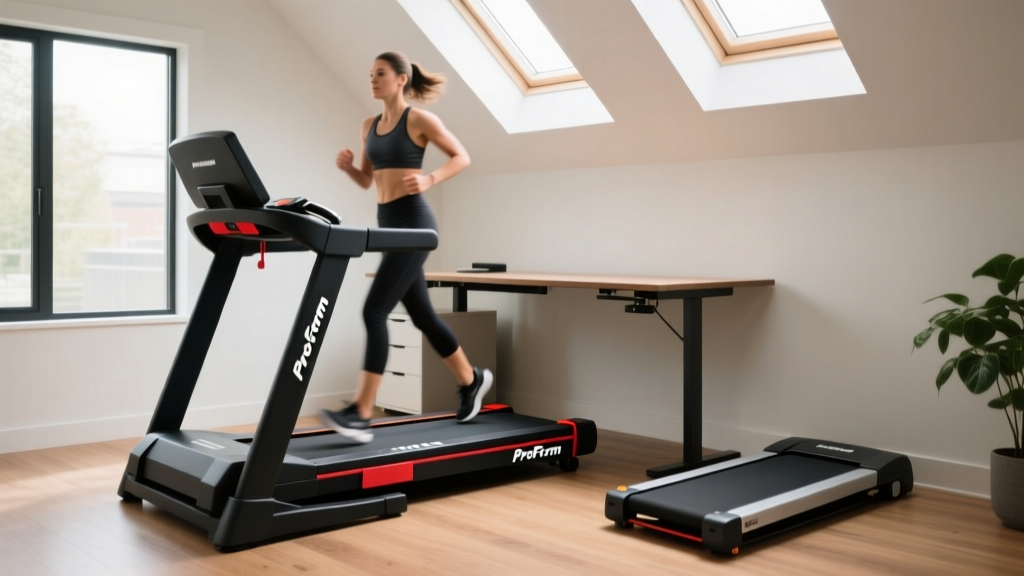
Echelon Folding Treadmill vs Elliptical: Home Cardio Maintenance
Compare elliptical vs treadmill maintenance. Expert care tips for your Echelon folding treadmill and home ellipticals to maximize longevity.

The Hidden Cost of Home Cardio: Friction vs. Pivot Mechanics
When debating the merits of an elliptical vs treadmill for home cardio, most buyers focus exclusively on joint impact, calorie burn, and spatial footprint. However, as a senior equipment technician reviewing home fitness gear in 2026, I look at a metric that rarely makes the marketing brochures: mechanical longevity and maintenance overhead. The biomechanical differences between these two machines dictate entirely different wear patterns, failure modes, and upkeep schedules.
According to the Mayo Clinic's comparative analysis on cardiovascular machines, ellipticals offer a low-impact, closed-chain kinetic movement, while treadmills involve high-impact, open-chain striking. This biomechanical reality translates directly to the hardware. A treadmill relies on high-friction sliding surfaces (belt and deck), whereas an elliptical relies on low-friction pivot joints and rolling tracks. To illustrate these maintenance realities, we will use the highly popular Echelon folding treadmill (specifically the Stride and FIT series) as our treadmill benchmark, contrasting it against standard front-drive home ellipticals like the Sole E35.
Echelon Folding Treadmill Care: Managing the Hinge and Belt
Folding treadmills are marvels of space-saving engineering, but the introduction of a folding hinge creates structural vulnerabilities that stationary treadmills simply do not possess. The Echelon folding treadmill lineup typically utilizes a 1.5 to 2.5 CHP motor and a 20-inch by 55-inch running belt. Maintaining this specific architecture requires a targeted approach.
The Folding Mechanism Vulnerability
The pivot point on an Echelon folding treadmill bears the brunt of the machine's 100+ pound frame every time you raise or lower the deck. Over time, the factory-applied grease degrades, leading to metal-on-metal micro-abrasions and a dangerous 'slip' when lowering the deck.
- The Fix: Every 6 months, wipe the central hinge pin with a degreaser and apply a high-viscosity white lithium grease. Do not use WD-40, which is a solvent and will strip remaining lubrication.
- Edge Case: If you own the auto-folding Echelon Stride, inspect the gas-strut or motorized lift housing for dust accumulation. Dust mixed with ambient humidity creates a sludge that can stall the lift motor, leading to a $120+ replacement cost.
Belt Tracking and Deck Friction
Treadmill decks generate immense heat. Precor's commercial maintenance guidelines note that unlubricated treadmill decks can reach surface temperatures exceeding 140°F under heavy load, which warps the MDF deck and burns out the motor control board. Because the Echelon folding treadmill uses a slightly smaller motor housing to accommodate the fold, heat dissipation is already at a premium.
Pro-Tip for Echelon Owners: You must use 100% pure silicone treadmill lubricant. Apply exactly 1 ounce in a zig-zag pattern under the belt every 3 months or 150 miles. After folding the Echelon, always let the deck 'breathe' in the upright position for 10 minutes post-run to allow trapped heat and sweat moisture to evaporate before locking it away.Elliptical Longevity: Rail and Joint Preservation
Conversely, an elliptical machine eliminates the belt-to-deck friction entirely. The wear and tear on a home elliptical is localized to the pedal arm bearings, the drive belt, and the track wheels. While the motor works significantly less than a treadmill motor (often drawing 30% less amperage), the mechanical joints require meticulous cleanliness.
Track and Roller Maintenance
Front-drive ellipticals are notorious for accumulating microscopic debris on the aluminum guide rails. When sweat drops onto the rails and mixes with household dust, it forms an abrasive paste that flattens the polyurethane track wheels.
- The Fix: Wipe the rails down with a damp microfiber cloth after every use. Once a month, apply a light coat of PTFE (Teflon) dry lubricant to the rails. Never use wet silicone sprays, as they will attract dust and gum up the wheel bearings.
Pivot Joint and Crank Arm Integrity
The crank arms on an elliptical endure lateral torque, especially when users pedal with uneven foot placement. Annually, you must use a hex key to check the tension on the pedal arm bolts. A loose crank arm will strip the threading on the main flywheel shaft—a catastrophic failure that usually totals the machine, as replacement flywheel shafts are rarely sold to consumers.
5-Year Maintenance & Failure Matrix
Understanding the long-term financial and temporal investment of your cardio equipment is crucial. Below is a comparative matrix detailing the expected maintenance realities of an Echelon folding treadmill versus a standard home elliptical over a 5-year period.
| Maintenance Metric | Echelon Folding Treadmill | Standard Home Elliptical |
|---|---|---|
| Primary Wear Component | Running Belt & MDF Deck | Track Wheels & Pivot Bearings |
| Routine Upkeep Frequency | Silicone lube every 3 months; Belt alignment checks | Rail wiping daily; Joint grease annually |
| Avg. 5-Year Part Costs | $85 (1 Replacement Belt + Lubricant) | $45 (Set of Polyurethane Track Wheels) |
| Catastrophic Failure Risk | Motor Control Board ($149) due to heat/friction | Stripped Flywheel Shaft (Machine Total Loss) |
| Dust Vulnerability | High (Motor fan pulls dust into housing) | Moderate (Localized to exposed rails) |
According to Consumer Reports' treadmill reliability testing, the most common cause of premature treadmill death is not the motor itself, but the motor control board frying due to excessive amp-draw caused by a dry, high-friction walking belt. Ellipticals bypass this issue entirely by utilizing magnetic resistance that places near-zero drag on the drive motor.
Environmental & Space Factors: The Dust Dilemma
Where you place your machine dictates its lifespan. The Echelon folding treadmill is designed to be tucked into a closet or folded against a wall. However, folding the machine exposes the underside of the deck and the motor housing to different ambient temperatures and dust traps. When folded, the motor's cooling vents often face the wall, restricting passive airflow. If you fold your Echelon immediately after a high-intensity interval training (HIIT) session, the residual heat trapped against a wall can degrade the internal wiring insulation over time.
Ellipticals, being stationary and vertically oriented, do not suffer from folding-hinge dust traps, but their open flywheel designs (often located at the front base) act as magnets for pet hair. If you have pets, an elliptical's drive belt will require vacuuming every two months to prevent rubber degradation and slipping.
Essential Home Gym Maintenance Toolkit
To properly maintain either machine, abandon the idea of using household multi-purpose sprays. Assemble a dedicated cardio maintenance kit:
- 100% Pure Silicone Spray: Exclusively for treadmill belt/deck lubrication.
- PTFE (Teflon) Dry Lube: For elliptical guide rails and exposed track wheels.
- White Lithium Grease: For the Echelon folding treadmill hinge pin and heavy-duty metal joints.
- Socket Wrench & Hex Key Set: For tensioning treadmill rear-roller bolts and tightening elliptical crank arms.
- Microfiber Cloths & Isopropyl Alcohol: For safely removing sweat salts from electronic consoles and metal rails without causing rust.
The Verdict: Which Machine Survives Your Routine?
If your primary goal is minimal mechanical maintenance and you are willing to dedicate the permanent floor space, the elliptical wins the longevity war. The lack of high-friction surfaces means the motor runs cooler, draws fewer amps, and requires zero chemical lubrication. Your only real chore is wiping down the rails to protect the wheels.
However, if space constraints demand an Echelon folding treadmill, you can absolutely achieve a 7-to-10-year lifespan from the machine by respecting its mechanical limits. The secret lies in religious adherence to the 90-day silicone lubrication schedule, keeping the folding hinge properly greased, and allowing the motor housing to cool in an open position before folding it away. By understanding the unique friction and pivot mechanics of your chosen machine, you protect your investment and ensure your home cardio setup remains reliable for years to come.
More gear to consider
All reviews
Inspire T7S Treadmill Motor Guide: Sizing, CHP, and Rivals
Treadmill Conversion to Rowing: 2026 Rower Buying Guide & Technique
Setup Guide: Curved vs Motorized Treadmill Workouts

Famistar Treadmill T532A Setup and Walking Pad Review
Treadmill Before and After: 2026 Buying Guide & Feature Comparison