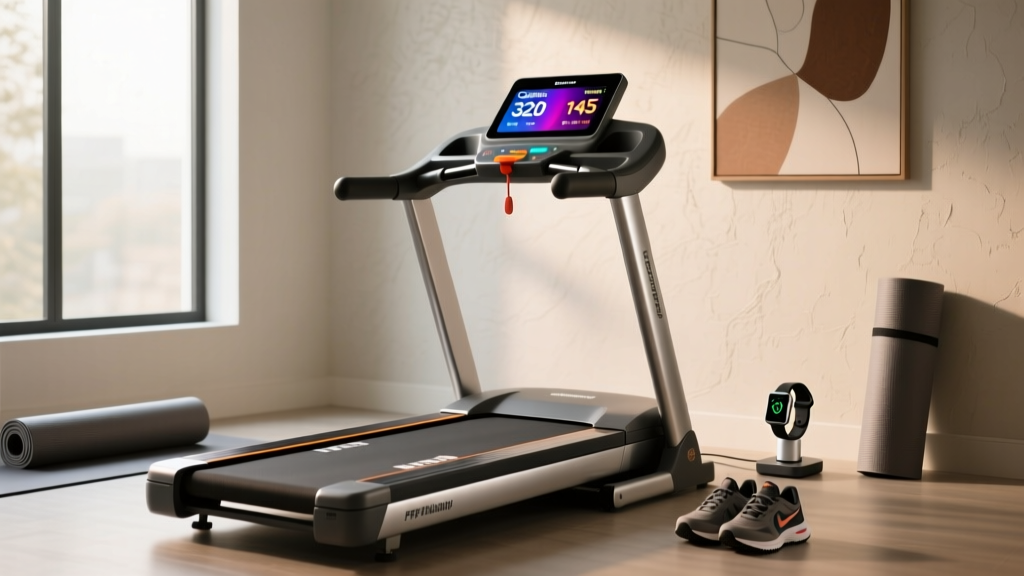
DeerRun Treadmill Z10 Pro Motor Guide: HP & Sizing Explained
Learn how treadmill motors work with our beginner guide. We analyze the DeerRun Treadmill Z10 Pro HP specs to help you choose the right motor size.

The Beginner's Guide to Treadmill Motors: Sizing, HP, and the DeerRun Z10 Pro
Shopping for your first home cardio machine can feel like trying to read a foreign language. You are bombarded with acronyms like CHP, DC, and Peak HP, alongside aggressive marketing claims. As we navigate the compact fitness equipment market in 2026, the line between under-desk walking pads and traditional treadmills continues to blur, making motor specifications more confusing than ever.
If you are considering a compact, budget-friendly option like the DeerRun Treadmill Z10 Pro, you are likely wondering if its motor is powerful enough for your daily routine. This step-by-step guide will demystify treadmill motor sizing, explain the engineering behind horsepower ratings, and help you determine exactly what size motor you need based on your body weight and fitness goals.
Beginner Tip: Never buy a treadmill based solely on the 'Max HP' number printed on the box. As we will explore below, marketing teams often use 'Peak HP' to make smaller, budget-friendly motors sound like commercial-grade powerhouses.Step 1: Decoding the Alphabet Soup (HP vs. CHP vs. Peak HP)
Before we analyze specific models, you must understand the three ways manufacturers measure motor power. According to Runner's World treadmill buying guidelines, understanding these terms is the single most important factor in avoiding buyer's remorse.
1. Horsepower (HP)
This is a generic, outdated term that simply measures the rate at which work is done. In the fitness industry, seeing just 'HP' on a spec sheet is a red flag, as it does not tell you how the motor performs under a sustained load.
2. Continuous Horsepower (CHP)
This is the gold standard for treadmill motors. CHP measures the power the motor can sustain continuously during a standard workout without overheating. If a machine has a 3.0 CHP motor, it can deliver 3.0 horsepower all day long. True CHP motors are heavy, expensive, and typically found in machines costing $1,200 or more.
3. Peak Horsepower (Peak HP)
This is where budget brands get creative. Peak HP measures the absolute maximum power the motor can generate for a fraction of a second before it trips the circuit breaker or overheats. Many compact treadmills, including models in the $200 to $400 range, advertise '2.5 HP' or '3.0 HP', but this is almost always Peak HP. The actual continuous output is often closer to 1.0 to 1.5 CHP.
Step 2: Matching Motor Size to Your Body Weight and Stride
A treadmill motor does not just move the belt; it must constantly fight the friction generated by your body weight pressing down on the deck. The heavier the user, the higher the amp draw on the motor. If you exceed the motor's continuous capacity, the lower control board's MOSFETs will overheat and fail—a common failure mode in poorly matched budget treadmills.
| User Weight | Activity Level | Minimum Required CHP | Ideal Motor Type |
|---|---|---|---|
| Under 150 lbs | Walking (2-4 mph) | 1.5 CHP | Compact DC Motor |
| 150 - 200 lbs | Light Jogging (4-6 mph) | 2.0 - 2.5 CHP | Standard DC Motor |
| 200 - 250 lbs | Running (6+ mph) | 3.0 CHP | Heavy-Duty DC / AC |
| Over 250 lbs | Any Pace | 3.5 - 4.0 CHP | Commercial AC Motor |
Step 3: Case Study - Analyzing the DeerRun Treadmill Z10 Pro Motor
Let us apply this knowledge to a real-world example. The DeerRun Treadmill Z10 Pro is a highly popular compact treadmill designed for small apartments and home offices. It typically retails between $250 and $350, making it an accessible entry point for beginners.
The Specs vs. Reality
Marketing materials for compact treadmills in this class often highlight a '2.5 HP' motor. Based on our Step 1 definitions, you now know this refers to Peak HP. The actual continuous output of the Z10 Pro's DC motor is engineered for walking and very light jogging, effectively operating in the 1.2 to 1.5 CHP range.
Who is the Z10 Pro Motor Built For?
- The Daily Walker: If you weigh under 200 lbs and plan to walk at 2.0 to 4.0 mph while working at your standing desk, the Z10 Pro's motor will run cool, quiet, and efficiently for years.
- The Light Jogger: Users under 160 lbs can comfortably use this machine for 20-30 minute jog intervals (up to 6-7 mph) without triggering thermal overload protections.
- The Heavy Runner: If you weigh over 220 lbs and intend to run at 7+ mph for 45 minutes, this motor is not the right size for you. The high amp draw will cause the motor to overheat, potentially warping the internal magnets or frying the control board.
Expert Insight: Compact treadmills like the DeerRun Z10 Pro use physically smaller motor housings. In engineering terms, this means they have less 'thermal mass'—they cannot absorb and dissipate heat as effectively as the massive 15-pound flywheels found on $2,000 commercial treadmills. Respecting the machine's duty cycle is critical.
Step 4: Recognizing Motor Strain and Overheating
How do you know if your treadmill motor is too small for your needs, or if it is working too hard? Watch for these specific failure modes and warning signs:
- Belt Hesitation (The 'Stutter'): If the belt pauses for a microsecond every time your foot strikes the deck, the motor is struggling to overcome the friction of your body weight. This is a classic sign of an undersized motor or a severely dry belt.
- Console Dimming: On budget DC treadmills, the motor and the console share the same power supply. If the motor draws too many amps to keep the belt moving, the voltage drops, causing the LED console to flicker or dim.
- The 'Hot Plastic' Smell: A faint warm smell is normal for the first few uses as factory residues burn off. However, a persistent acrid smell of melting insulation means the motor windings are overheating. Stop immediately and let the machine cool for 30 minutes.
- Thermal Shutoff: If the machine abruptly stops and will not restart for 10-15 minutes, the internal thermal breaker has tripped to prevent a fire. This means you are exceeding the motor's continuous duty rating.
Step 5: Maintenance Steps to Prolong Motor Life
You can effectively 'increase' the lifespan and efficiency of a smaller motor like the one in the DeerRun Z10 Pro by reducing the friction it has to fight. According to Consumer Reports treadmill maintenance guidelines, proper lubrication is the single most effective way to prevent premature motor death.
Warning: Never use WD-40, petroleum jelly, or household oils on your treadmill belt. These will destroy the PVC belt and degrade the deck. Use only 100% liquid silicone treadmill lubricant.Step-by-Step Lubrication Guide:
- Check the Friction: Slide your hand under the belt in the center of the deck. If it feels completely dry, it is time to lubricate. (Aim to do this every 40-60 hours of use).
- Loosen the Belt (Optional): If your treadmill has adjustable rear rollers, use the included Allen key to loosen the belt just enough to slide your hand underneath comfortably.
- Apply Silicone: Squeeze exactly one half-ounce (about one tablespoon) of 100% silicone lubricant in a zig-zag pattern directly onto the wooden deck, under the belt.
- Distribute the Lube: Turn the treadmill on to 2.0 mph and let it run for 3 minutes. Walk gently on the belt to help spread the silicone evenly across the entire deck surface.
- Retension: If you loosened the belt, tighten it back to the factory specification. A belt that is too tight will put massive, unnecessary strain on the motor bearings.
Frequently Asked Questions (FAQ)
Can I upgrade the motor on my DeerRun Treadmill Z10 Pro later?
No. Treadmill motors are matched to the specific lower control board, flywheel size, and deck dimensions. Swapping a 1.5 CHP motor for a 3.0 CHP motor would require replacing the control board, the wiring harness, and potentially the motor mount, which would cost more than buying a new, heavier-duty treadmill.
Does a heavier treadmill always mean a better motor?
Generally, yes. Heavier treadmills utilize larger steel frames to support massive DC or AC motors with heavy copper windings and large flywheels. If a treadmill weighs under 60 lbs (like most folding walking pads), it physically cannot house a true 3.0 CHP commercial motor.
Is a DC motor worse than an AC motor?
Not necessarily; they just serve different purposes. DC (Direct Current) motors are standard for 95% of home treadmills, including the Z10 Pro. They are quieter, smaller, and offer excellent low-speed torque for walking. AC (Alternating Current) motors are used in commercial gym treadmills; they are incredibly durable and can run 24/7, but they are loud, heavy, and require a massive starting capacitor.
Final Verdict: Is the Motor Size Right for You?
Understanding treadmill horsepower is about matching the machine's engineering to your biological reality. The DeerRun Treadmill Z10 Pro features a motor perfectly sized for its intended demographic: walkers, light joggers, and those with limited space who need a reliable, low-profile machine for daily step counts. By understanding the difference between Peak HP and CHP, and by committing to a strict silicone lubrication schedule, you can ensure your compact treadmill delivers years of safe, effective cardio without motor burnout.
More gear to consider
All reviews
Manual vs Motorized Treadmill: 2026 Compact Value Guide

DeerRun Treadmill Oil Mistakes & Cardio Noise Comparison
Bowflex T16 Treadmill vs Under Desk Models: 2026 Office Review

Stationary Bike Types & Hand Walking on Treadmill: Budget Analysis
Walking Pad vs. Cats Treadmill: 2026 Compact Cardio Comparison