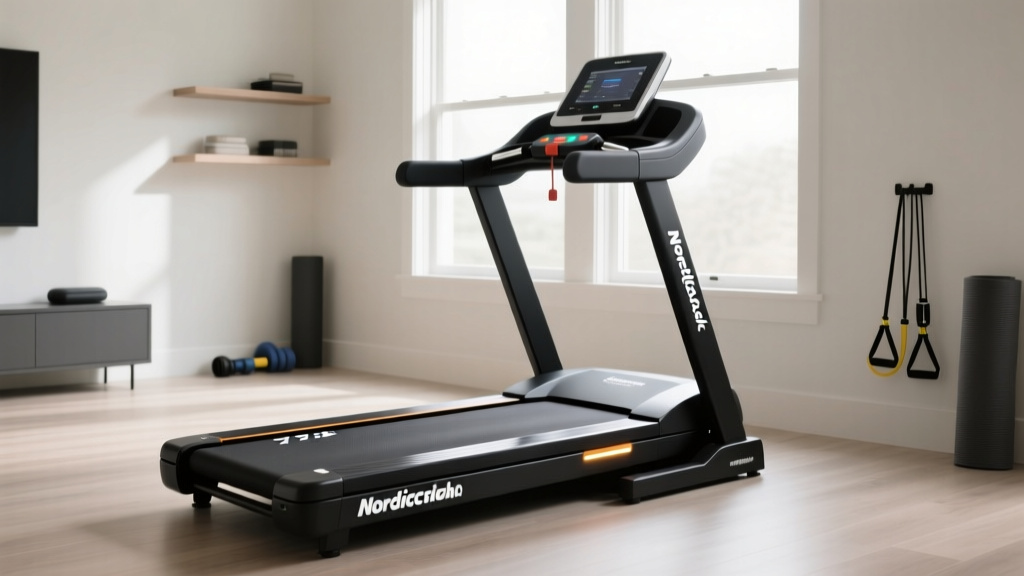
Curved vs Motorized: Precor TRM 731 Treadmill & Top Alternatives
Compare curved manual and motorized treadmills. We analyze the Precor TRM 731 treadmill against top manual models to help you choose the right cardio gear.

The debate between curved manual treadmills and traditional motorized models has fundamentally shifted how athletes and home-gym owners approach indoor cardio. While manual curved runners have surged in popularity for high-intensity interval training (HIIT) and biomechanical purity, premium motorized decks remain the undisputed kings of long-distance pacing and joint preservation. In this 2026 in-depth buying guide, we dissect the biomechanical and mechanical differences between these two categories, using the commercial-grade Precor TRM 731 treadmill as our gold-standard motorized benchmark against top curved alternatives like the Woodway Curve and AssaultRunner Elite.
The Biomechanics: Manual Curves vs. Motorized Belts
To make an informed purchasing decision, you must first understand the ground reaction forces (GRF) and muscle recruitment patterns inherent to each design. According to research highlighted by the American College of Sports Medicine (ACSM), the propulsion mechanics on a treadmill drastically alter metabolic demand.
Curved Manual Treadmills: The Posterior Chain Driver
Curved non-motorized treadmills require the user to drive the belt backward using the ball of the foot. This design forces an anterior pelvic tilt and increases hip extension. Electromyography (EMG) studies indicate that curved treadmills increase hamstring and glute activation by up to 200% compared to flat motorized belts. Furthermore, the lack of a motor pulling the user's foot backward results in a caloric expenditure that is approximately 30% higher at the same perceived pace.
Motorized Treadmills: The Pacing and Cadence Standard
Motorized treadmills pull the belt under the user, which slightly alters the natural gait cycle by reducing the need for aggressive hip extension. However, high-end motorized models mitigate this through advanced deck flex and speed-matching algorithms, making them vastly superior for marathon pacing, steady-state Zone 2 cardio, and rehabilitation where exact speed control is non-negotiable.
Expert Insight: The 30% Rule
When transitioning from a motorized treadmill to a curved manual treadmill, runners typically experience a 20% to 30% drop in their top-end sprint speed and a massive spike in heart rate during the first three weeks of adaptation. Factor this neuromuscular learning curve into your training schedule if you are prepping for a timed race.
Benchmarking the Motorized Standard: Precor TRM 731 Treadmill Deep Dive
When evaluating the ceiling of motorized engineering, the Precor TRM 731 treadmill stands out in the commercial and luxury home market. Priced between $11,500 and $13,500 depending on the console configuration (P80 or P84), this machine is engineered to solve the exact gait-alteration issues inherent to cheaper motorized models.
- Motor: 4.0 HP Continuous Duty AC Motor (peaks much higher, designed for 24/7 gym use without thermal throttling).
- Running Surface: 22" x 60" commercial-grade belt, offering 15% more lateral width than standard home models.
- Integrated Footplant Technology (IFT): This is Precor's proprietary game-changer. IFT features micro-adjustments that match the belt speed to the user's natural stride length variations, effectively bridging the gap between the 'pulled' feel of standard motorized decks and the organic feel of a manual curve.
- Incline/Decline: 0% to 15% incline, crucial for simulating outdoor hill resistance.
As noted in the engineering specifications via Precor Official, the TRM 731 utilizes an aluminum extrusion frame that absorbs high-frequency impact vibrations, significantly reducing the tibial shock that plagues rigid steel-frame home treadmills.
Head-to-Head Comparison Matrix
Below is a direct specification and performance comparison between the motorized benchmark and the two leading curved manual treadmills on the market.
| Feature | Precor TRM 731 (Motorized) | Woodway Curve (Manual) | AssaultRunner Elite (Manual) |
|---|---|---|---|
| Approx. Price | $12,500 | $7,200 | $3,499 |
| Drive System | 4.0 HP AC Motor + IFT | Magnetic Resistance / Curve | Friction / Curve |
| Top Speed | 12 MPH (Exact pacing) | 23+ MPH (User limited) | 20+ MPH (User limited) |
| Deck Surface | 22" x 60" PVC Belt | 26" x 63" Vulcanized Slats | 17" x 63" Rubber Slats |
| Incline Capability | 0% - 15% Motorized | Fixed Curve (Simulates ~8%) | Fixed Curve (Simulates ~8%) |
| Best Use Case | Marathon prep, Zone 2, Rehab | CrossFit, Sprints, HIIT | Budget HIIT, Home Garages |
Real-World Failure Modes and Maintenance Costs
Buying a $3,000 to $12,000 piece of fitness equipment requires a clear understanding of long-term maintenance. The American Council on Exercise (ACE) frequently emphasizes that equipment downtime is the primary disruptor of fitness consistency. Here is what actually breaks on these machines.
Motorized Failure Modes (Precor TRM 731)
While the TRM 731 is a commercial tank, motorized treadmills inherently possess more failure points. The most common issues include:
- Control Board Degradation: Power surges can fry the lower control board. Replacements cost between $350 and $600.
- Deck Friction and Belt Wear: Even with wax-infused belts, the phenolic deck will eventually wear down after 15,000 to 20,000 miles. A deck/belt replacement kit runs roughly $450.
- Dust Ingestion: The cooling fan on the 4.0 HP motor pulls in ambient dust. Failing to vacuum the motor hood every 6 months leads to thermal shutdowns and blown capacitors.
Curved Manual Failure Modes (Woodway & Assault)
Manual treadmills eliminate the motor and control board, but they introduce mechanical wear points related to the slat belt system:
- Bearing Seizure: Each rubber slat is attached via ball bearings. In high-humidity environments or if sweat drips directly onto the belt, unsealed bearings (common on budget models) will corrode and seize, creating a 'dead spot' on the curve.
- Drive Belt Slippage: The internal Kevlar drive belts that connect the front and rear rollers can stretch or snap under extreme sprinting torque. Replacing them requires a specialized tensioning tool and costs around $150 in parts.
- Slat Tearing: Aggressive sprinting with improper footwear (like cross-training shoes with hard rubber edges) can tear the vulcanized rubber slats over a 3-to-5 year period.
Warning: Never use silicone-based liquid lubricants on a curved slat treadmill. Unlike flat motorized belts that require deck lubrication, curved slats rely on dry bearing friction. Applying liquid silicone will attract dust, create a slipping hazard on the running surface, and void your warranty.
The Decision Framework: Which Should You Buy?
Choosing between a curved manual treadmill and a premium motorized model like the Precor TRM 731 treadmill comes down to your specific physiological goals, space constraints, and training modalities.
Buy a Curved Manual Treadmill If:
You are an athlete focused on explosive power, sprint mechanics, and HIIT. If your programming involves Tabata sprints, CrossFit WODs, or you want to maximize caloric burn in under 20 minutes, the posterior chain recruitment of a Woodway Curve or AssaultRunner Elite is unmatched. They also require zero electrical outlets, making them ideal for garage gyms.
Buy the Precor TRM 731 Motorized Treadmill If:
You are training for endurance events (half-marathons, marathons, triathlons) where locking into an exact pace (e.g., 8:15 min/mile) for 90 minutes is required. The IFT technology on the TRM 731 provides a natural stride feel without the overwhelming muscular fatigue of a curved deck, allowing you to focus on cardiovascular output rather than leg drive. Furthermore, if the treadmill will be used by multiple family members of varying fitness levels, the motorized incline and automated speed controls offer a much safer, more accessible entry point for beginners and seniors.
More gear to consider
All reviews
Best Ergonomic Treadmill for Under-Desk Office Layouts (2026)

Fitnation Slimline Treadmill Manual & 2026 Belt Care Trends
2026 Trend Report: Portable Cardio vs Dedicated Outlet for Treadmill
NordicTrack Commercial 1750 Treadmill NTL17125: Folding Small Space Review
Treadmill Belt Maintenance to Delay Donation Pick Up