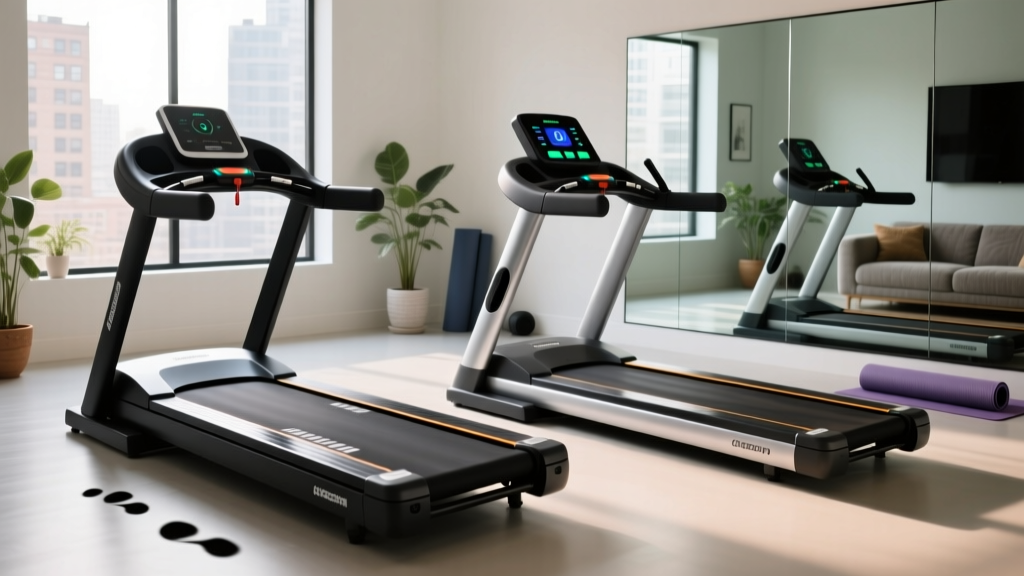
Curved vs Motorized Treadmills & NordicTrack Treadmill Maintenance
Compare curved manual and motorized treadmills. Explore biomechanics, 5-year costs, and essential NordicTrack treadmill maintenance for motorized models.

The Biomechanical Showdown: Self-Powered vs. Motorized
As we navigate the home fitness landscape in 2026, the debate between curved manual treadmills and traditional motorized treadmills remains one of the most polarizing topics in cardio equipment. The choice extends far beyond aesthetics; it fundamentally alters your running biomechanics, muscle recruitment patterns, and long-term financial commitment. According to research highlighted by the American College of Sports Medicine, curved, non-motorized treadmills force runners to adopt a forefoot or midfoot strike. This shift significantly increases the activation of the posterior chain—specifically the hamstrings and glutes—while reducing the braking forces associated with heel-striking on a motorized belt.
Conversely, motorized treadmills pull your foot backward, which heavily engages the quadriceps and hip flexors. While motorized models offer automated incline adjustments and immersive digital programming, they introduce a complex web of mechanical and electrical components that demand rigorous upkeep. Understanding these biomechanical and mechanical differences is the first step in making an informed purchasing decision.
Head-to-Head Specification Matrix
To contextualize the market, we have compared the leading contenders in both categories based on their 2026 specifications, retail pricing, and physical footprints.
| Feature | AssaultRunner Pro (Curved) | TrueForm Runner (Curved) | NordicTrack Commercial 1750 (Motorized) | Sole F80 (Motorized) |
|---|---|---|---|---|
| Retail Price (Approx.) | $3,299 | $5,895 | $2,499 | $1,199 |
| Power Source | Self-Powered (Manual) | Self-Powered (Manual) | Standard 120V Outlet | Standard 120V Outlet |
| Running Surface | 62' x 17' (Slat Belt) | 62' x 17' (Slat Belt) | 60' x 22' (Continuous Belt) | 60' x 22' (Continuous Belt) |
| Max User Weight | 350 lbs | 400 lbs | 300 lbs | 375 lbs |
| Incline Capability | Fixed Curve (Simulates 8%) | Fixed Curve (Simulates 8%) | -3% Decline to 15% Incline | 0% to 15% Incline |
| Primary Maintenance | Belt Tensioning, Bearings | Belt Tensioning, Bearings | Silicone Lubrication, MCB Care | Silicone Lubrication, Deck Care |
The Hidden Cost of Motorized Ownership: Upkeep and Longevity
When budgeting for a motorized machine, understanding the nuances of NordicTrack treadmill maintenance is critical for protecting your investment. Motorized treadmills are essentially large electrical appliances with moving parts that generate immense friction and heat. Neglecting routine upkeep is the primary reason these machines end up in landfills within five years.
The Friction Factor and MCB Failure
The most catastrophic failure mode in motorized treadmills involves the Motor Control Board (MCB). When a running belt lacks proper lubrication, the coefficient of friction between the belt and the wooden deck increases dramatically. This forces the drive motor to draw higher amperage to maintain your target speed. Over time, this excess current generates immense heat, eventually frying the capacitors on the MCB. Replacing an MCB can cost between $150 and $300, not including labor.
To prevent this, you must apply 100% pure silicone lubricant under the belt every 150 miles or every three months. Never use petroleum-based products like WD-40, as they will dissolve the belt backing and ruin the deck.
Warning: Using aerosol lubricants or household oils will instantly void your warranty and cause irreversible damage to the treadmill deck. Always use the manufacturer-approved 100% silicone liquid or gel.Dust Ingress and Thermal Shutdown
Another vital aspect of NordicTrack treadmill maintenance involves the motor hood. The cooling fan on the drive motor acts like a vacuum, sucking in dust, pet hair, and lint from your floor. If this debris clogs the motor's internal heatsink, the unit will trigger a thermal shutdown to prevent a fire hazard. Every 90 days, unplug the machine, remove the plastic motor hood (usually secured by four Phillips-head screws), and use a vacuum with a brush attachment to clear the debris. For official guidance and schematic diagrams, always refer to the NordicTrack support portal.
Curved Treadmill Maintenance: Busting the 'Zero Upkeep' Myth
Marketing materials often sell curved treadmills as 'maintenance-free.' While they lack motors, MCBs, and power cords, they are not immune to mechanical wear. The primary maintenance task for curved models like the AssaultRunner Pro or TrueForm Runner is managing slat belt tension.
The polyurethane slats are under constant, heavy tension. After roughly 1,500 to 2,000 miles of use, the rubber can stretch, causing a rhythmic 'slapping' noise as the belt hits the front roller. To resolve this, you must use a socket wrench to adjust the rear tensioner bolts. Turning the bolts exactly two to three full rotations per side will re-seat the belt. Additionally, the sealed ball bearings inside the slats can seize if exposed to excessive moisture or sweat corrosion, requiring individual slat replacement—a tedious but inexpensive fix.
5-Year Total Cost of Ownership (TCO) Breakdown
Consumer Reports frequently notes that the initial purchase price is only a fraction of fitness equipment ownership. Below is a realistic 5-year TCO projection assuming 150 miles of annual usage.
| Cost Category | Curved Manual (e.g., AssaultRunner) | Motorized (e.g., NordicTrack 1750) |
|---|---|---|
| Initial Purchase Price | $3,299 | $2,499 |
| Extended Warranty (Optional) | $0 (Mechanical simplicity) | $299 (Highly recommended for electronics) |
| Electricity (5 Years) | $0 | $145 (Based on avg. kWh rates) |
| Routine Consumables (Lube/Cleaners) | $0 | $60 (Silicone lube, belt cleaners) |
| Projected Out-of-Warranty Repairs | $120 (Replacement slats/bearings) | $350 (MCB or drive belt replacement) |
| Digital Subscriptions (iFIT, etc.) | $0 | $1,188 ($468/yr for 5 years, if kept) |
| Total 5-Year TCO | $3,419 | $4,541 |
Note: The motorized TCO skyrockets if you maintain the mandatory digital subscription required to unlock the machine's full automated incline and speed features on modern smart treadmills.
Expert Verdict: Which Machine Fits Your Profile?
'The best treadmill is the one that aligns with your biomechanical needs and your tolerance for maintenance. A curved treadmill is a pure running tool; a motorized treadmill is an interactive fitness hub.' - FitGearPulse Biomechanics Team
Buy a Curved Manual Treadmill If:
- You are a purist runner: You want to focus on form, increase posterior chain activation, and eliminate the artificial pacing of a motorized belt.
- You hate digital subscriptions: You want a machine that works the second you step on it, with no monthly fees or Wi-Fi requirements.
- You have space constraints: Curved treadmills are generally shorter and lack the bulky motor hood, making them easier to tuck into smaller home gyms.
Buy a Motorized Treadmill If:
- You rely on guided programming: You need automated speed and incline changes dictated by virtual trainers or GPS-mapped routes.
- You require decline training: Only premium motorized models offer negative incline (decline), which is crucial for eccentric quad loading and downhill race preparation.
- You walk or jog exclusively: The biomechanical advantages of a curved treadmill are most pronounced at running speeds above 6.0 MPH. For walking, a motorized belt is significantly more comfortable and cost-effective.
Ultimately, if you choose the motorized route, commit to a strict schedule of NordicTrack treadmill maintenance. Lubricating the deck and cleaning the motor hood will easily add three to five years to the lifespan of your machine, ensuring your cardio investment pays dividends for years to come.
More gear to consider
All reviews
Spin, Upright & Recumbent Bikes: DeerRun Treadmill Reviews Reddit

Which Is Better, a Treadmill or Exercise Bike? (Stair Climber Guide)

Elliptical vs Treadmill: The Truth About Adjusting Treadmill Belt

Treadmill Safety & Belt Care: A Guide for Compact Home Gyms
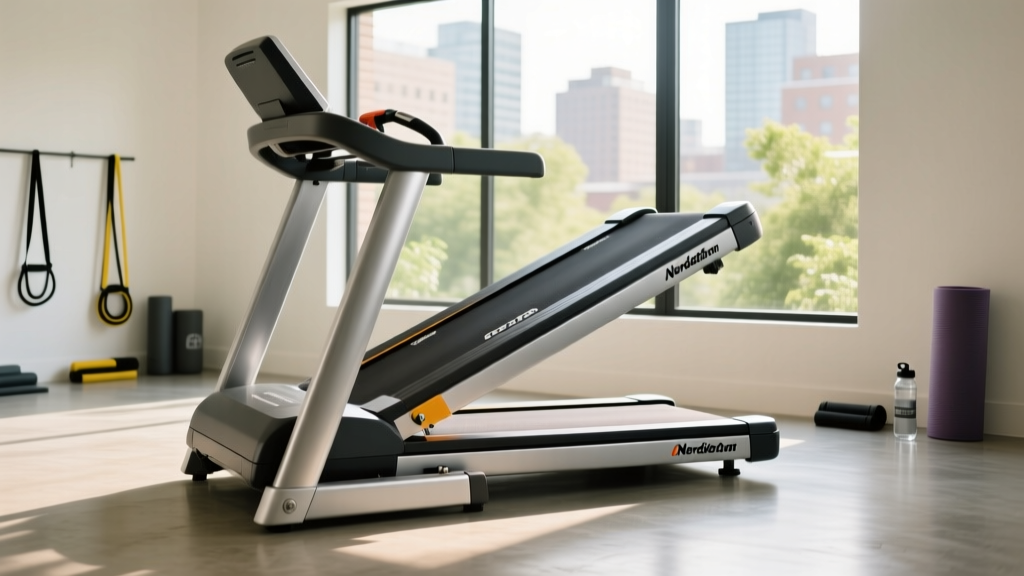
NordicTrack Commercial 1750 Treadmill NTL17125: Folding Small Space Review
