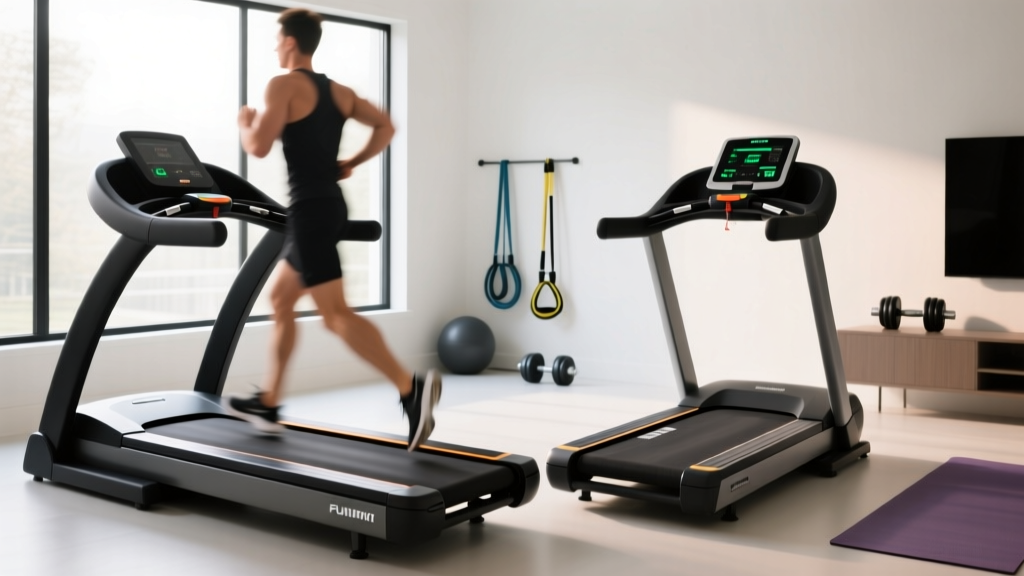
Curved vs Motorized: Cardio Load & Treadmill Stress Test Cost
Compare curved manual vs motorized treadmills. Discover how cardio load impacts your training and if a medical treadmill stress test cost is justified.

The Metabolic Tax: Curved vs. Motorized Cardio Load
The debate between curved manual treadmills and traditional motorized models has dominated the home gym market for the last decade, but as we move through 2026, the conversation has shifted from mere calorie burn to precise cardiovascular loading. When you step onto a curved manual treadmill like the AssaultRunner Elite ($3,499) or the TrueForm Runner ($5,295), you are entirely responsible for propelling the belt. This biomechanical demand results in a significantly higher metabolic tax compared to motorized counterparts like the NordicTrack Commercial 2450 ($2,799).
According to sports science research, running on a curved, non-motorized treadmill increases oxygen consumption (VO2) and heart rate by approximately 20% to 30% at the exact same perceived pace as a motorized treadmill. Because the user must actively pull the belt downward and backward using their hamstrings and glutes, the posterior chain is heavily recruited. This rapid spike in cardiovascular demand is phenomenal for high-intensity interval training (HIIT) and VO2 max improvement, but it also raises a critical health question for amateur athletes and aging fitness enthusiasts: Is my heart ready for this level of acute, unassisted stress?
Decoding the Treadmill Stress Test Cost: Do You Need One?
Because curved treadmills mimic the physiological strain of all-out sprinting almost immediately, many prospective buyers—especially those over 40 or with a family history of cardiovascular issues—wonder if they should undergo clinical screening before investing in high-intensity home equipment. This brings up the medical treadmill stress test cost and its relevance to home gym planning.
A clinical exercise stress test involves running on a medical-grade motorized treadmill while hooked up to an electrocardiogram (ECG) to monitor for arrhythmias, ischemia, or abnormal blood pressure responses under load. According to the Cleveland Clinic, a standard exercise stress test is a foundational diagnostic tool for evaluating coronary artery disease and exercise-induced cardiac events.
Financial Breakdown: Treadmill Stress Test Cost in 2026
- Standard ECG Stress Test: $200 to $500 (out-of-pocket without insurance).
- Nuclear or Echocardiogram Stress Test: $600 to $1,500+ (includes imaging for higher-risk patients).
- At-Home Alternative: High-end smartwatches (e.g., Apple Watch Ultra 3, Garmin Fenix 8) now offer FDA-cleared single-lead ECGs and VO2 max estimations for under $1,000, though they do not replace diagnostic clinical imaging.
If you are transitioning from a sedentary lifestyle directly to curved treadmill HIIT protocols, the out-of-pocket treadmill stress test cost is a highly justifiable investment. However, if you have a baseline of cardiovascular fitness and are simply upgrading from a motorized to a manual treadmill, utilizing the American Heart Association's target heart rate guidelines alongside a reliable chest strap monitor (like the Polar H10) is generally sufficient for safe progression.
Head-to-Head Specification Matrix
To understand how the physical machine dictates your cardiac output, we must compare the hardware. Below is a 2026 specification matrix contrasting top-tier curved manual treadmills against premium motorized models.
| Feature | AssaultRunner Elite (Curved) | Technogym Skillrun (Curved/Hybrid) | NordicTrack Comm. 2450 (Motorized) |
|---|---|---|---|
| Price (MSRP) | $3,499 | $11,400 | $2,799 |
| Max Speed | Unlimited (User-Driven) | 18.6 mph (Motor-Assisted Sled) | 12 mph |
| Incline/Decline | Fixed Curve (Simulates 8% grade) | Up to 25% / -3% Decline | -3% to 12% |
| Energy Expenditure | +30% vs. Flat Motorized | +25% (Varies by Sled Mode) | Baseline (1x) |
| Footprint | 69" L x 33" W | 112" L x 35" W | 80" L x 36" W |
| Maintenance | Low (No motor, Kevlar belt) | High (Complex dual-belt system) | Medium (Motor & belt lubrication) |
Biomechanical Stress and Joint Impact
Beyond the cardiovascular system, the type of treadmill you choose drastically alters the biomechanical stress placed on your joints. Motorized treadmills, particularly those with thick, cushioned decks like the Sole F80 ($1,199), encourage a heel-strike running pattern. The belt effectively pulls your foot out from under you, which can lead to overstriding and increased impact forces on the knees and lower back.
Conversely, the geometry of a curved manual treadmill naturally forces a mid-foot or forefoot strike. To move the belt, your foot must land directly beneath your center of mass. This drastically reduces the braking forces associated with heel striking and shifts the load to the calf muscles, Achilles tendon, and glutes.
Expert Insight: If you are recovering from patellofemoral pain syndrome (runner's knee), a curved treadmill is often superior because it limits knee extension at initial contact. However, if you have a history of Achilles tendinopathy or plantar fasciitis, the heavy forefoot loading of a curved treadmill may exacerbate your condition, making a well-cushioned motorized deck the safer choice.
2026 Purchasing Framework: Match the Machine to Your Cardiac Profile
Choosing between curved and motorized is not just about budget; it is about aligning the equipment with your physiological capabilities and training goals. Use this decision framework to guide your purchase:
Step 1: Assess Your Baseline and Screening Needs
If you are over 45, have high blood pressure, or experience shortness of breath during mild exertion, consult a cardiologist. Paying the treadmill stress test cost out-of-pocket (roughly $300 for a standard ECG) provides peace of mind and establishes your safe maximum heart rate (MHR) before you attempt the brutal 30% metabolic overload of a curved treadmill.
Step 2: Define Your Primary Training Modality
- For HIIT, CrossFit, and Sprint Intervals: Buy a curved manual treadmill. The ability to go from 0 to 15 mph in three seconds without waiting for a motor to spool up is unmatched. The Xebex AirRun Pro ($3,299) is a top contender here for its rugged slat belt.
- For LISS (Low-Intensity Steady State) and Marathon Pacing: Buy a motorized treadmill. Maintaining an exact 8:00/mile pace for 90 minutes is mentally and physically easier when a motor dictates the rhythm. The Horizon 7.4 ($1,299) offers excellent deck cushioning for long-haul joint preservation.
Step 3: Evaluate Space and Power Constraints
Curved treadmills require zero electrical outlets, making them ideal for garage gyms or off-grid spaces. However, their footprint is often longer and wider to accommodate the aggressive curve. Motorized treadmills require dedicated 15-amp or 20-amp circuits to prevent tripping breakers during high-speed motor draws.
Frequently Asked Questions
Can a smartwatch replace a clinical treadmill stress test?
No. While smartwatches can estimate VO2 max and detect atrial fibrillation via optical sensors, they cannot measure ischemic changes (lack of blood flow to the heart muscle) under extreme physical duress. A clinical test remains the gold standard for diagnosing hidden coronary artery disease.
Why do curved treadmills feel so much harder at slow speeds?
Even at a 3.0 mph walking pace, the user must overcome the static friction of the belt and the upward slope of the curve's leading edge. There is no momentum assistance, meaning your muscles are under constant, unassisted tension, which elevates heart rate disproportionately compared to a motorized walking pad.
Is the treadmill stress test cost covered by insurance?
Most major health insurance providers and Medicare will cover the treadmill stress test cost if it is deemed medically necessary—meaning you have presented symptoms like chest pain, unexplained syncope (fainting), or severe arrhythmias. It is rarely covered if requested purely for athletic baseline screening.
More gear to consider
All reviews
Treadmill, C2, or Spin? Mile-by-Mile Bike Maintenance Guide
Life Fitness Run CX Treadmill vs Curved Manual: Beginner Guide

How Much Walking on a Treadmill to Lose Weight: Under-Desk Review

Treadmill Sunny Health and Fitness Belt Maintenance Value Guide

Curved Manual vs Motorized: ProForm Pro 9000 Smart Treadmill Guide
