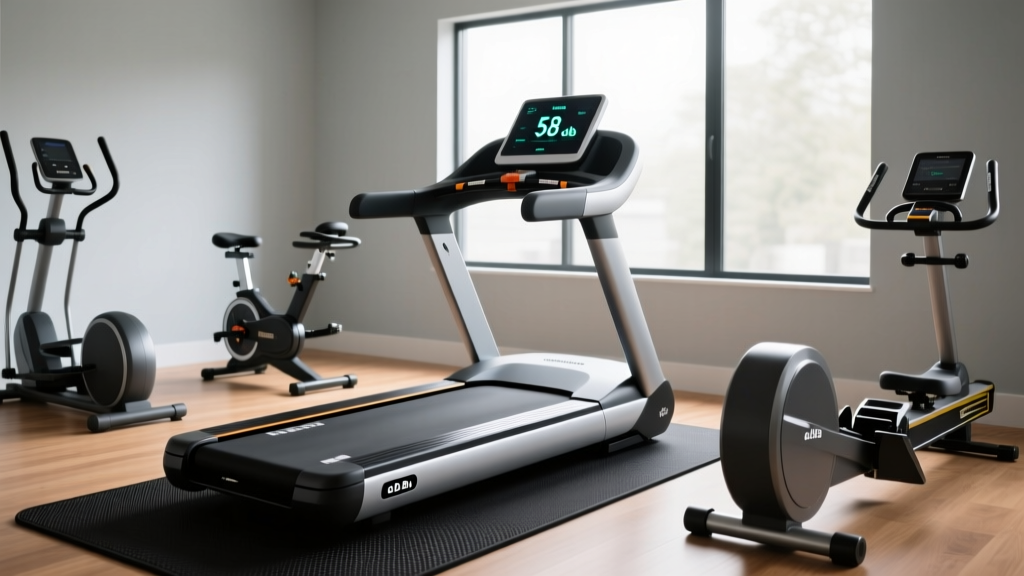
Are Ellipticals Better Than Treadmills? Curved vs Motorized Fixes
Wondering if ellipticals are better than treadmills? Before switching, troubleshoot these common curved and motorized treadmill mistakes to save your joints.

Every January, fitness forums and physical therapy clinics light up with the same frustrating question: are ellipticals better than treadmills? Usually, this inquiry stems from a specific pain point—literally. Shin splints, patellofemoral pain syndrome (runner's knee), or lower back fatigue often drive runners to seek the zero-impact glide of an elliptical. But before you abandon your treadmill for an elliptical cross-trainer, you need to audit your equipment and your biomechanics.
In 2026, the divide between curved manual treadmills and traditional motorized decks is wider than ever. The truth is that treadmill-induced joint pain is rarely the machine's fault; it is almost always the result of user error, improper machine calibration, or a fundamental misunderstanding of ground reaction forces (GRF). This comprehensive troubleshooting guide will help you fix the most common curved and motorized treadmill mistakes so you can run pain-free—without needing to switch to an elliptical.
The Biomechanics: Why People Ask if Ellipticals Are Better
To understand the troubleshooting steps below, we must first address the core of the debate. According to comparative analyses by the Cleveland Clinic, ellipticals provide a low-impact cardiovascular workout that drastically reduces the ground reaction forces placed on the knees and hips. On a standard motorized treadmill, a runner's foot strikes the deck with a force equivalent to 2.0 to 2.5 times their body weight. Conversely, an elliptical keeps that impact near zero.
However, curved manual treadmills change this equation entirely. Because the user drives the belt with the ball of their foot, curved treadmills naturally encourage a mid-foot or forefoot strike, reducing impact forces to roughly 1.5 times body weight while increasing caloric expenditure by up to 30%. If your treadmill is causing pain, the issue usually lies in one of the following mechanical or biomechanical errors.
Motorized Treadmill Mistakes & Hardware Troubleshooting
Traditional motorized treadmills, like the popular Sole F80 or NordicTrack Commercial 1750, pull your feet backward. This artificial pulling motion often leads to severe form breakdown if the machine isn't properly maintained or if the user relies on bad habits.
Mistake 1: The 0% Incline Heel-Strike
Running at a 0% incline on a motorized treadmill actually simulates running slightly downhill due to the lack of wind resistance and the belt pulling your foot. This encourages overstriding and aggressive heel-striking, sending shockwaves directly up the tibia to the knee joint.
The 1% Rule Fix: Always set your motorized treadmill to a 1% or 1.5% incline for flat-road simulation. This slight elevation forces a mid-foot strike, engages the glutes, and significantly reduces the braking forces on your patellar tendon.Mistake 2: Ignoring Belt Tension and Motor Strain
A loose treadmill belt causes micro-stutters at the foot-strike phase. Your brain senses this instability and forces your stabilizing muscles to overcompensate, leading to rapid lower back and hip fatigue. Furthermore, a dry belt creates immense friction, forcing a 3.5 CHP motor to work at 4.5 CHP capacities, leading to overheating and premature failure.
Hardware Fix: The Belt Lift Test and Lubrication
- Check Tension: Turn off and unplug the machine. Lift the running belt from the center of the deck. It should lift exactly 2 to 3 inches. If it lifts higher, it is too loose.
- Adjust the Rollers: Using a 3/4-inch socket wrench, locate the rear roller adjustment bolts at the back of the deck. Turn both the left and right bolts exactly one full rotation clockwise.
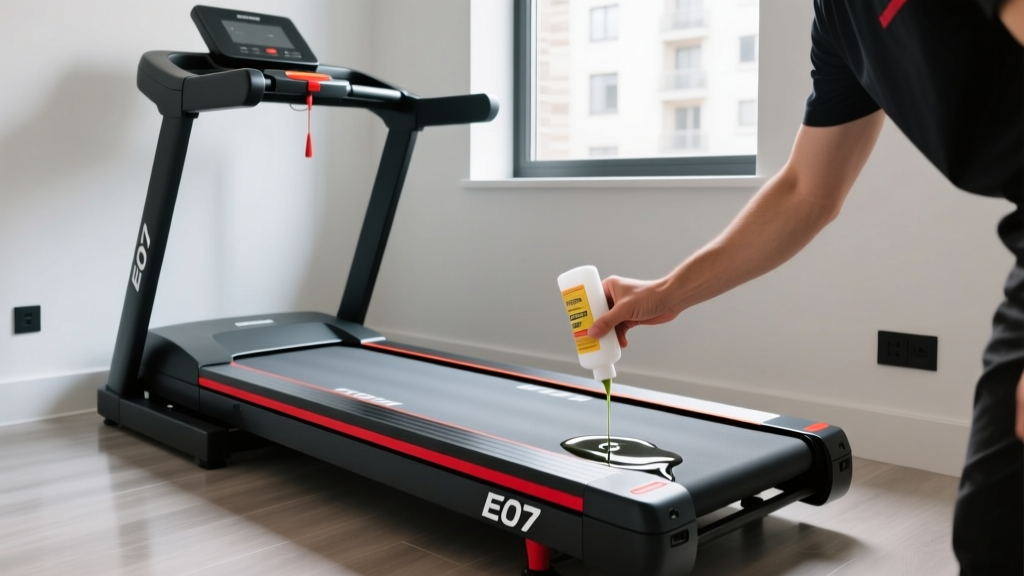
- Lubricate: Lift the belt and apply 1 oz of 100% silicone treadmill lubricant in a zig-zag pattern across the deck. Walk on the belt at 2 MPH for 3 minutes to distribute the silicone.
Curved Manual Treadmills: Mastering the Arc
Curved treadmills like the AssaultRunner Elite or the Technogym Skillmill are entirely user-powered. They are phenomenal for HIIT and sprint intervals, but they have a steep learning curve. When users ask if ellipticals are better than treadmills after trying a curved model, it is usually because they used the wrong zone of the deck.
Mistake 1: Running on the 'Brake' or the 'Accelerator'
A curved treadmill deck is divided into three distinct biomechanical zones. Running in the wrong zone will destroy your running economy and cause severe Achilles strain.
- Zone 1 (Top/Front - The Accelerator): The steepest part of the curve. Running here forces you into an aggressive forward lean, simulating a steep hill sprint. Staying here during a steady-state run will burn out your calves and Achilles within 5 minutes.
- Zone 2 (The Apex - The Sweet Spot): The middle, flattest part of the curve. This is where you should maintain your steady-state running pace. Your posture should be upright, mirroring outdoor running mechanics.
- Zone 3 (Back/Bottom - The Brake): The upward slope at the rear. Stepping here acts as a deceleration mechanism. Running too far back forces you to push the belt uphill with every step, causing massive hip flexor fatigue.
Hardware Fix: Slat Belt Friction and Guide Rail Squeaks
Unlike motorized treadmills that use a continuous PVC belt over a wooden deck, curved treadmills use individual rubber or urethane slats that glide along UHMWPE (Ultra-High-Molecular-Weight Polyethylene) guide rails. If your curved treadmill sounds like a freight train or feels 'sticky,' the rails are dry.
CRITICAL WARNING: Never use wet silicone spray on a curved slat treadmill. Wet silicone attracts dust, hair, and debris, turning into a grinding paste that will permanently score the guide rails. Always use a PTFE (Teflon) dry lubricant spray. Apply it directly to the side guide rails, wipe away excess with a microfiber cloth, and let it cure for 10 minutes before running.
Troubleshooting Matrix: Curved vs. Motorized vs. Elliptical
Use the table below to diagnose your specific pain points and determine if your issue is a machine maintenance problem, a form error, or a true physiological need to switch to an elliptical.
| Machine Type | Primary Impact Force (GRF) | Common User Mistake | Maintenance Red Flag | Estimated Repair Cost (2026) |
|---|---|---|---|---|
| Motorized Treadmill | 2.0x - 2.5x Body Weight | Overstriding / Holding Handrails | Belt slipping, motor overheating | $150 - $250 (Belt/Deck Kit) |
| Curved Manual Treadmill | 1.2x - 1.5x Body Weight | Running on the front 'Accelerator' zone | Slat squeaking, sticky lateral glide | $400 - $700 (Slat Belt Replacement) |
| Elliptical Cross-Trainer | Near Zero (Closed Kinetic Chain) | Pedaling without resistance (momentum) | Drive belt slipping, pivot joint squeaks | $80 - $150 (Drive Belt/Bearings) |
When an Elliptical Actually IS the Better Choice
While fixing your treadmill biomechanics and maintaining your deck will solve 80% of joint pain issues, there are specific physiological scenarios where the answer to 'are ellipticals better than treadmills' is a definitive yes. According to guidelines on aerobic exercise and joint preservation from the Mayo Clinic, closed-kinetic-chain exercises are mandatory for certain populations.
You should abandon the treadmill (both curved and motorized) and transition to an elliptical or an air bike if you are currently managing:
- Acute Plantar Fasciitis: The repetitive dorsiflexion required to drive a curved treadmill will aggravate micro-tears in the plantar fascia.
- Severe Osteoarthritis (Grade 3 or 4): Even the reduced 1.5x GRF of a curved treadmill is too much impact for degraded articular cartilage in the knees or hips.
- Achilles Tendonitis: The forefoot strike required on curved treadmills places immense eccentric load on the Achilles tendon.
- Post-Operative Spinal Fusion: The vertical oscillation of running can cause severe discomfort in healing lumbar vertebrae.
Final Verdict: Fix the Machine Before You Switch
The debate over whether ellipticals are better than treadmills is largely a false dichotomy born out of poor treadmill maintenance and flawed running mechanics. If you are running on a motorized treadmill, implement the 1% incline rule and check your belt tension today. If you are using a curved manual treadmill, learn to ride the apex of the curve and keep your UHMWPE guide rails properly lubricated with PTFE dry spray. For further reading on optimizing your cardiovascular equipment for longevity and joint health, consult the educational resources provided by the American College of Sports Medicine (ACSM). Master your treadmill first; your joints will thank you.
More gear to consider
All reviews
Taylor Swift Falling on the Treadmill? Setup & Noise Guide
NordicTrack 6.5S Treadmill vs Under Desk Treadmills: Office Value

NordicTrack C900i Treadmill Pivot: Air Bike vs Assault Bike Comparison

Home Stair Climber Guide: Better Than a Treadmill Workout Warm Up?
E07 Treadmill Belt Maintenance for Small Space Layouts