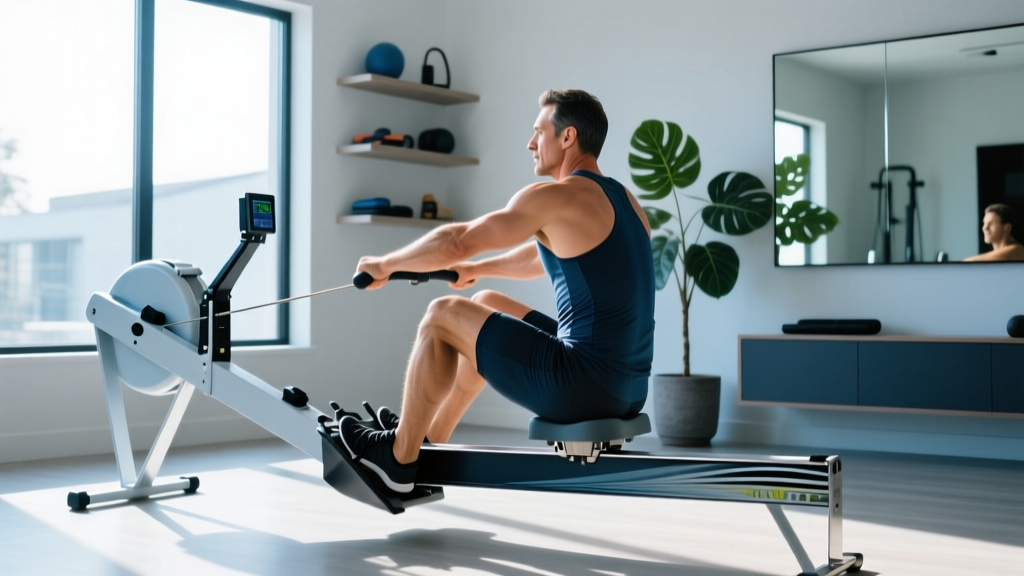
Curved vs Motorized: WalkingPad R3 Hybrid+ Foldable Treadmill
Discover common mistakes when choosing a curved manual vs motorized treadmill, featuring WalkingPad R3 Hybrid+ foldable treadmill troubleshooting.

The Biomechanical Divide: Curved Manual vs. Motorized Mechanics
The home fitness landscape in 2026 is heavily polarized between two distinct treadmill philosophies: the heavy-duty, self-powered curved manual treadmill and the ultra-compact, motorized under-desk or hybrid units. When consumers attempt to navigate the curved manual treadmill vs motorized treadmill debate, they frequently make critical purchasing errors rooted in a misunderstanding of biomechanics and spatial engineering.
Curved treadmills (like the TrueForm or AssaultRunner Elite) utilize a slatted belt driven entirely by the user's foot strike, requiring a 20% to 30% higher energy expenditure compared to traditional belts. Conversely, motorized hybrid units—exemplified by the WalkingPad R3 Hybrid+ foldable treadmill—rely on a brushless DC motor and a low-profile PVC belt designed for space efficiency and casual to moderate cardio. According to a comprehensive physiological study published in the National Institutes of Health (NIH), the ground reaction forces and muscle activation patterns between these two machine types are drastically different, meaning treating them as interchangeable will lead to frustration, improper form, and eventual mechanical neglect.
This guide dissects the most common mistakes buyers make when choosing between these two paradigms and provides a master troubleshooting guide to fix the mechanical and biomechanical fallout.
3 Critical Buyer Mistakes (And How to Troubleshoot the Fallout)
Mistake 1: Ignoring Spatial Footprints vs. Structural Weight Limits
The most frequent error is confusing "foldable" with "lightweight." A standard curved manual treadmill weighs between 280 lbs and 350 lbs and requires a permanent 70 x 35-inch footprint. The WalkingPad R3 Hybrid+ foldable treadmill, on the other hand, weighs roughly 57 lbs and folds 180 degrees to slide under a sofa.
The Fallout: Buyers who choose a curved treadmill for a second-story apartment often face structural joist issues and acoustic complaints, while those who buy the R3 Hybrid+ for heavy sprinting quickly destroy the 1.25 HP motor.
The Fix: If you are troubleshooting acoustic vibration on a curved treadmill, place a 3/4-inch thick high-density EVA foam puzzle mat beneath the rear stabilizers to absorb the low-frequency hum of the slat belt. If you own the R3 Hybrid+ and the motor is overheating during runs, ensure the ambient room temperature is below 75°F and limit continuous running sessions to 45 minutes to prevent the thermal cutoff switch from tripping.
Mistake 2: Misjudging the Biomechanical Learning Curve
Curved treadmills force a forefoot strike and a higher cadence. Motorized treadmills pull the foot backward, allowing for a more passive heel-strike. Users transitioning from a motorized unit to a curved manual treadmill often suffer from acute Achilles tendonitis and shin splints within the first two weeks.
The Fix: Implement a 14-day transition protocol. Week 1 should consist solely of walking at a 2.0 to 3.0 MPH pace on the curved deck to condition the plantar fascia. Week 2 should introduce 30-second jogging intervals. Johns Hopkins Medicine notes that gradual load management is the primary defense against treadmill-related lower extremity overuse injuries.
Mistake 3: Overlooking Running Surface Dimensions
The running surface on a curved treadmill is typically 60+ inches long, accommodating a full sprinting stride. The WalkingPad R3 Hybrid+ foldable treadmill features a running area of approximately 47 x 17 inches. Users over 5'10" frequently experience "clipping" (stepping off the rear roller) when attempting to run at the R3's top speed of 8 MPH.
The Fix: If you are over 5'10" and using the R3 Hybrid+ for running, you must consciously shorten your stride length by 15% and increase your cadence to stay within the safe zone of the belt. Use the included safety lanyard attached to the console to ensure the machine halts immediately if you drift backward.
Troubleshooting Matrix: Fixing Common Usage Errors
Below is a quick-reference matrix for diagnosing and resolving the most frequent issues encountered with both machine types.
| Machine Type | Common Error / Symptom | Root Cause | Exact Troubleshooting Fix |
|---|---|---|---|
| Curved Manual | Belt feels "sticky" or requires excessive force to start | Slat belt tension is too tight, or debris in the drive chain | Locate rear tensioner bolts. Loosen both sides by exactly 1/4 turn. Clean drive chain with degreaser and apply dry PTFE lubricant. |
| Curved Manual | Asymmetrical pulling (belt drifts left or right) | Uneven foot strike or misaligned rear roller | Check user form first. If mechanical, adjust the side with more tension by tightening the rear bolt 1/8th of a turn clockwise. |
| WalkingPad R3 Hybrid+ | 180-degree folding hinge squeaks or catches | Friction on the central pivot pin due to dust accumulation | Unfold to 90 degrees. Apply a few drops of white lithium grease directly into the central pivot seam and cycle the fold 5 times. |
| WalkingPad R3 Hybrid+ | Remote control fails to sync or change speeds | Bluetooth/IR interference or depleted CR2032 battery | Replace battery. Stand on side rails, press and hold the power button on the console for 5 seconds until it beeps, then press any button on the remote. |
Deep Dive: WalkingPad R3 Hybrid+ Foldable Treadmill Specific Fixes
The WalkingPad R3 Hybrid+ foldable treadmill is a marvel of compact engineering, but its hybrid nature (transitioning from a flat under-desk walker to an inclined runner with an extended handrail) introduces specific mechanical vulnerabilities. As highlighted in comprehensive fitness tech reviews by Tom's Guide, the longevity of folding treadmills relies entirely on hinge and belt maintenance.
Expert Tip: Belt Tracking on the R3 Hybrid+Because the R3 lacks a traditional heavy-duty deck, the PVC belt is prone to drifting if the user favors one leg. If the belt rubs against the left side frame, insert the provided hex key into the right rear roller cap. Turn it clockwise by exactly 1/2 turn. Run the machine at 3 MPH for two minutes to allow the belt to self-center. Never adjust both sides simultaneously.
Handrail Wobble Troubleshooting
When deployed in running mode, the telescoping handrail on the R3 Hybrid+ can develop a lateral wobble. This is rarely a structural failure; it is almost always caused by loose locking knobs at the base of the uprights.
- Lower the handrail to the walking position.
- Locate the two hex bolts connecting the vertical poles to the front base plate.
- Use a 5mm hex wrench to tighten these bolts while applying downward pressure on the poles to seat them fully into the brackets.
- Re-raise the handrail and tighten the secondary friction knobs by hand.
Deep Dive: Curved Manual Treadmill Maintenance
Curved treadmills have zero electronics to fail, but their mechanical drivetrain requires rigorous upkeep. The slat belt is held together by a central Kevlar or fiberglass guide track.
Warning: Never use silicone spray or wet lubricants on a curved treadmill slat belt. This will attract dust, create a grinding paste, and ultimately degrade the polyurethane coating on the slats. Always use a dry Teflon or PTFE-based spray on the guide rails only.
If your curved treadmill emits a high-pitched whining noise at higher speeds, the bearings in the front or rear roller are likely drying out. Unlike motorized treadmills where you can simply replace the motor, roller bearing replacement on a curved unit requires removing the entire slat belt. If you are outside the warranty period, this is a job for a professional fitness equipment technician, typically costing between $150 and $250 in labor.
Expert Verdict: Which Machine Fits Your 2026 Home Gym?
The decision between a curved manual treadmill and a motorized unit like the WalkingPad R3 Hybrid+ foldable treadmill should not be based on aesthetics, but on your primary physiological goal and spatial reality.
- Choose the Curved Manual Treadmill if: You are an athlete focused on HIIT, sprint mechanics, and maximizing caloric burn per minute. You have a dedicated, ground-floor gym space that can support 300+ lbs of dead weight, and you are willing to perform monthly drivetrain maintenance.
- Choose the WalkingPad R3 Hybrid+ Foldable Treadmill if: You live in an apartment, need to integrate walking into your work-from-home routine, and prioritize space-saving design. You must be willing to accept a shorter stride length and a strict 8 MPH speed ceiling, while committing to regular hinge lubrication and belt tracking adjustments.
By understanding the mechanical realities and troubleshooting the common pitfalls outlined above, you can ensure your cardio equipment remains a valuable asset to your health rather than an expensive clothing rack.
More gear to consider
All reviews
Elliptical vs Treadmill: 12-3-30 Routine & How Many Days a Week?
Does a Treadmill Make You Lose Weight? Budget Folding Picks

Air Bike vs Assault Bike & WalkingPad MC11 Workout Treadmill Layouts

Maintenance Tips: C970 Pro Treadmill & Stationary Bike Types

Ice Hockey Treadmill Training: Best Folding Models for Small Spaces