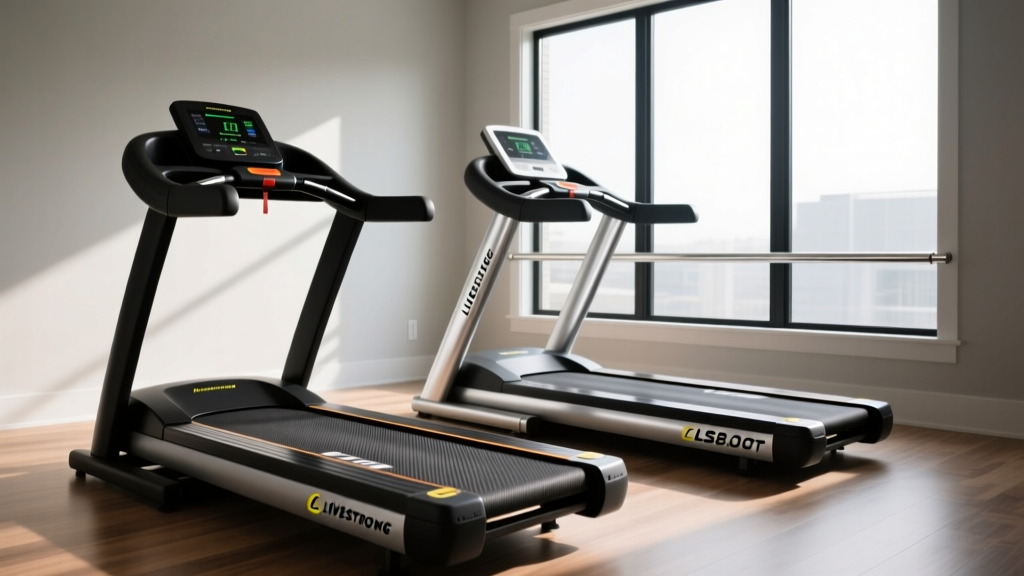
Curved Manual vs Motorized: Livestrong Treadmill LS8.0T Showdown
We compare curved manual treadmills against the motorized Livestrong Treadmill LS8.0T. Discover which machine wins for HIIT, steady-state, and durability.

The Propulsion Debate: Manual Curve vs. Motorized Deck
The home gym cardio landscape in 2026 is defined by a fundamental biomechanical divide: should you pull the belt, or let the machine pull you? Curved manual treadmills have surged in popularity among functional fitness athletes and HIIT enthusiasts, while traditional motorized treadmills remain the undisputed champions of steady-state endurance and paced rehabilitation. To settle this debate with hard data and real-world teardowns, we are putting the modern curved manual category (represented by the industry-standard Assault AirRunner Elite) head-to-head against a legendary motorized workhorse: the Livestrong treadmill LS8.0T.
While the Livestrong treadmill LS8.0T is a legacy model originally engineered under the Johnson Health Tech umbrella, it remains a highly coveted fixture on the 2026 refurbished and secondary market. Why? Because its commercial-grade 3.0 CHP motor and heavy-gauge steel frame routinely outlast the 1.5 HP plastic-shrouded models sold new at big-box stores today. But does its forced-pacing motorized deck stand a chance against the self-propelled, high-calorie-burn mechanics of a curved manual treadmill? Let us break down the engineering, failure modes, and physiological outcomes.
TL;DR: The Quick Verdict
Choose a Curved Manual Treadmill if: You prioritize HIIT, sprint mechanics, and a 30% higher caloric burn, and you have a budget exceeding $3,000 for a new unit.
Choose the Livestrong Treadmill LS8.0T if: You are training for distance running, require strict pace enforcement for Zone 2 cardio, need adjustable incline, or are sourcing a premium refurbished motorized unit under $1,000.
Head-to-Head Specification Matrix
Before analyzing the biomechanics, we must look at the raw engineering specifications. Note that pricing for the LS8.0T reflects the 2026 certified-refurbished market, as new old-stock is virtually depleted.
| Feature | Curved Manual (e.g., AirRunner Elite) | Livestrong Treadmill LS8.0T |
|---|---|---|
| Propulsion | User-generated (Self-paced) | 3.0 CHP Continuous Duty Motor |
| Running Surface | 20" x 63" (Vulcanized Rubber Slats) | 20" x 60" (Phenolic Wood Deck) |
| Top Speed | Unlimited (User-dependent) | 0.5 – 12.0 MPH |
| Incline | Fixed Curve (Simulates 5-8% grade) | 0% – 15% Motorized Incline |
| Max User Weight | 350 lbs | 350 lbs |
| 2026 Market Price | $3,500 – $4,200 (New) | $700 – $1,100 (Refurbished) |
Biomechanics and Caloric Expenditure: The Curved Advantage
The most compelling argument for curved manual treadmills lies in human physiology. Because there is no motor to assist the rotation of the belt, the user must actively engage their posterior chain—specifically the hamstrings and glutes—to pull the slatted belt backward with every foot strike. According to a comprehensive study published in the Journal of Strength and Conditioning Research, running on a curved non-motorized treadmill results in a significantly higher physiological demand. The study demonstrated that subjects experienced up to a 30% increase in caloric expenditure and elevated heart rates compared to running at the exact same speed on a traditional motorized treadmill.
Furthermore, the fixed curvature naturally encourages a forefoot or midfoot strike. This reduces the heavy heel-strike braking forces associated with flat, motorized decks. If your primary goal is high-intensity interval training (HIIT), CrossFit-style conditioning, or maximizing caloric burn in a compressed 20-minute window, the manual curve is biomechanically superior.
Motorized Consistency: Where the Livestrong LS8.0T Shines
However, human output is inherently flawed. When fatigue sets in on a manual treadmill, your pace drops immediately. For marathoners, triathletes, and runners focusing on strict Zone 2 aerobic base building, this is a critical failure point. This is where the Livestrong treadmill LS8.0T justifies its footprint.
The LS8.0T features a robust 3.0 Continuous Horsepower (CHP) motor. Unlike peak horsepower ratings used in cheap marketing, CHP dictates the motor's ability to sustain heavy loads over long durations without overheating. When you set the LS8.0T to 8.5 MPH at a 4% incline, the machine enforces that pace relentlessly. This forced pacing is crucial for standardized cardiovascular testing and tempo runs, where dropping your speed by even 0.5 MPH ruins the physiological adaptation you are targeting.
Additionally, the LS8.0T offers a motorized 0-15% incline. While the curve of a manual treadmill simulates a mild uphill grade, it cannot replicate the severe 12-15% incline intervals required for mountaineering prep or specialized glute-hypertrophy protocols. The LS8.0T's incline motor handles these steep grades with minimal gear strain, a feature entirely absent in manual models.
Joint Impact and Deck Engineering
Impact absorption is where the engineering philosophies of these two machines diverge wildly.
- Curved Manual Decks: The running surface consists of individual vulcanized rubber slats mounted on a steel track. The shock absorption comes entirely from the compression of these thick rubber slats. While excellent for reducing repetitive stress injuries, heavier runners (over 240 lbs) may experience 'bottoming out' during aggressive sprints, where the slat compresses fully against the steel track, sending a sharp shockwave up the tibia.
- Livestrong LS8.0T Deck: This unit utilizes a traditional phenolic-coated wood deck paired with variable elastomer cushioning nodes. The system is designed to absorb impact at the foot-strike zone while remaining firm at the toe-off zone for energy return. For long-distance steady-state running, this predictable, uniform cushioning is generally preferred by physical therapists for patients recovering from Achilles or plantar fascia issues, as it eliminates the variable tension of a manual slat belt.
Real-World Durability and Maintenance Failure Modes
As equipment reviewers, we look past the warranty and examine what actually breaks after 2,000 miles of use. Both machine types require maintenance, but their failure modes are entirely different.
Curved Manual Treadmill Failure Modes
The primary maintenance headache with curved treadmills is belt tension and track lubrication. Over time, the polyurethane belt stretches. If not re-tensioned via the rear axle adjustment bolts, the slats will slip during explosive starts. Furthermore, the small guide wheels that keep the belt tracking on the curved rails rely on sealed bearings. In dusty home gyms or garages, these bearings can seize within 18 months if not regularly blown out with compressed air. When they fail, the belt tracks unevenly and grinds against the side rails, destroying the rubber slats.
Livestrong LS8.0T Failure Modes
The LS8.0T is a tank, but it is not immune to the realities of motorized wear. The most common failure point on refurbished units is the drive belt (the belt connecting the motor to the front roller). If the user frequently runs at high speeds while weighing over 250 lbs, the friction can cause the drive belt to fray and eventually snap. Secondly, the incline motor potentiometer can suffer from 'drift'—a scenario where the console displays a 5% incline, but the sensor reads 4.2%, causing the machine to halt and throw an error code. Finally, the motor brushes inside the 3.0 CHP drive will eventually wear down after 5,000+ miles, requiring a $150 part replacement and a teardown of the motor housing.
Expert Warning: Never vacuum the motor compartment of the Livestrong LS8.0T while the plastic shroud is on. Static discharge from the vacuum hose can fry the lower control board. Always remove the hood and use a dry microfiber cloth or canned air to clean the motor fins.
Space, Power, and Setup Constraints
Curved manual treadmills are entirely off-grid. They require no electrical outlet, meaning you can place them in the center of a garage gym, a basement, or even an outdoor covered patio without worrying about tripping hazards or GFCI outlet requirements. However, their footprint is notoriously long and wide to accommodate the sweeping curve, often requiring a 75" x 35" dedicated floor space.
The Livestrong treadmill LS8.0T requires a dedicated 120V, 15-amp circuit. Sharing this circuit with a space heater or a large window AC unit will trip the breaker or starve the motor of voltage, leading to premature motor capacitor failure. On the plus side, the LS8.0T features a hydraulic folding mechanism. While moving a 200+ lb folded treadmill is a two-person job, the ability to fold the deck against the console saves roughly 30 square feet of floor space when not in use—a massive advantage for apartment dwellers or multi-use guest rooms.
The Final Verdict: Which Should You Buy?
The choice between a curved manual treadmill and the motorized Livestrong treadmill LS8.0T is not about which machine is objectively 'better,' but rather which machine aligns with your physiological goals and living situation.
If you are an athlete focused on sprint mechanics, HIIT, and maximizing metabolic output in short bursts, the curved manual treadmill is a non-negotiable investment. The 30% caloric premium and forced forefoot strike will transform your conditioning.
Conversely, if you are training for a half-marathon, require strict pace enforcement for heart-rate zone training, or simply want a highly durable, incline-capable machine without spending $4,000, sourcing a certified-refurbished Livestrong treadmill LS8.0T is one of the smartest equipment decisions you can make in 2026. Its 3.0 CHP motor and traditional deck geometry provide a reliable, low-maintenance platform for thousands of miles of steady-state running.
Frequently Asked Questions
Can I walk on a curved manual treadmill?
Yes, but it requires a learning curve. Walking slowly on a manual curve can feel jerky because you must overcome the static friction of the heavy slat belt with each step. For slow, casual walking while watching TV, the motorized LS8.0T provides a much smoother, friction-free experience.
Is the Livestrong LS8.0T compatible with modern fitness apps?
Because the LS8.0T is a legacy model, it lacks native Bluetooth FTMS connectivity found in 2026 treadmills. However, you can easily bridge this gap by purchasing a third-party Bluetooth footpod or a Wahoo TICKR X heart rate monitor, which will broadcast your speed and cadence data to apps like Zwift or Peloton Digital via your smartphone or tablet.
How often do curved treadmill slats need replacing?
In a standard home gym environment with 3-5 hours of use per week, high-quality vulcanized rubber slats will last 5 to 7 years. The primary cause of premature slat degradation is running with improper footwear (like deep-lugged trail running shoes) which acts like sandpaper against the rubber surface.
More gear to consider
All reviews
ProForm Carbon Pro 9000 Treadmill Reviews: Small-Space Budget Analysis

What Is a Good Rowing Machine for Home Use? 2026 Guide

ProForm XP 650e Treadmill vs Rowing: Buying Guide

Treadmill Motor Setup for Interval Workouts for Weight Loss
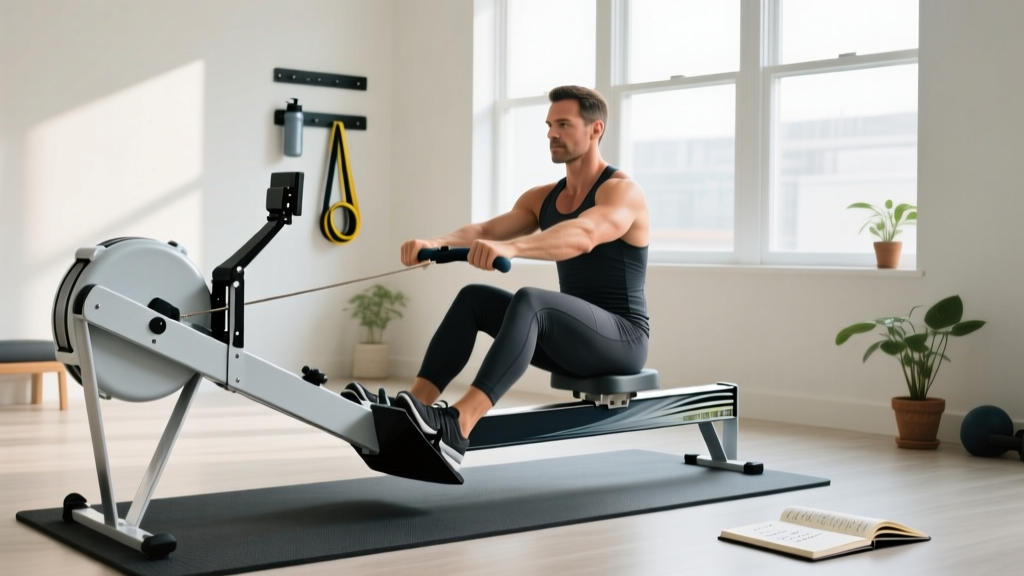
Skip the 28 Day Treadmill Challenge Free: Rowing Machine Setup & Form
