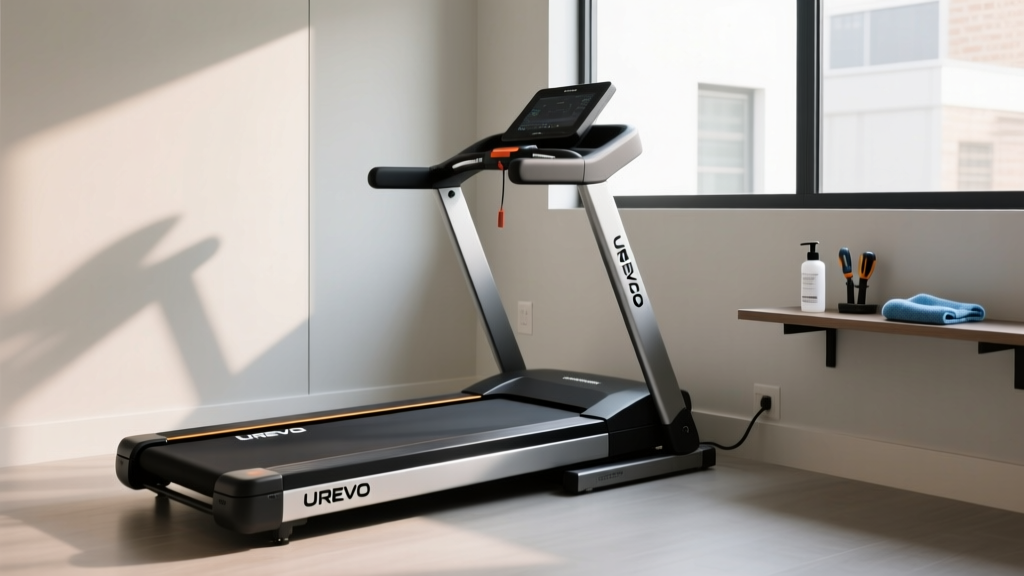
Curved Manual vs Electronic Treadmill: 2026 Buyer's Guide
Compare curved manual treadmills and motorized electronic treadmills. Our 2026 guide covers biomechanics, pricing, and maintenance to help you choose.

The Great Treadmill Debate: Self-Powered Curve vs. Motorized Drive
The home fitness landscape in 2026 is more polarized than ever. On one side, you have the raw, unassisted mechanics of the curved manual treadmill. On the other, the feature-rich, steady-state reliability of the modern electronic treadmill. Choosing between these two distinct cardio machines is not merely a matter of budget; it is a fundamental decision about your running biomechanics, space constraints, and long-term maintenance tolerance.
While an electronic treadmill uses a motorized belt to pull your feet backward—allowing for a traditional heel-strike running gait—a curved manual treadmill requires you to generate the kinetic energy to move the belt yourself. This guide breaks down the engineering, physiological impact, and real-world ownership costs of both systems to help you make an informed investment.
Biomechanics and Gait Analysis: How They Change Your Stride
The most profound difference between these machines lies in how they interact with your kinetic chain. According to research highlighted by the American Heart Association, maintaining proper form during cardiovascular exercise is critical for joint longevity and injury prevention.
Expert Insight: On a motorized electronic treadmill, the belt pulls your leg back, which can encourage over-striding and heavy heel-striking. On a curved manual treadmill, the concave shape and lack of a motor naturally force a mid-foot or forefoot strike, engaging the posterior chain (glutes, hamstrings, and calves) much more aggressively.
Head-to-Head Comparison Matrix
Below is a comprehensive breakdown of how curved manual models stack up against premium electronic treadmills in 2026.
| Feature | Curved Manual Treadmill | Electronic Treadmill (Motorized) |
|---|---|---|
| Price Range (2026) | $2,500 - $4,500 | $1,200 - $3,500+ |
| Power Source | 100% Human-Powered | Requires 120V/20A Dedicated Outlet |
| Max Speed | Unlimited (User-Dependent) | Typically 12 - 15 MPH |
| Incline / Decline | Fixed Curve (Simulates 4-8% grade) | Motorized (-3% to +15% or more) |
| Running Surface | Slatted Urethane/Rubber (17-20" wide) | Continuous PVC Belt (20-22" wide) |
| Tech & Screens | Basic LCD telemetry (Speed, Time, Watts) | HD Touchscreens, iFIT/JRNY, Auto-Adjust |
| Maintenance | Bearing lubrication, belt tensioning | Silicone belt lubrication, MCB checks |
Deep Dive: Curved Manual Treadmills
Top 2026 Models and Real-World Pricing
The premium curved market is dominated by a few key players who have perfected the slat-belt design. The TrueForm Trainer (retailing around $3,299) remains a gold standard for its low-profile deck and smooth urethane slats. The AssaultRunner Elite ($3,499) offers a slightly more aggressive curve, making it a favorite for HIIT and CrossFit athletes who need rapid acceleration and deceleration.
The Maintenance Reality: What Actually Breaks?
Because there is no motor, you might assume a curved treadmill is maintenance-free. This is a dangerous misconception. The primary failure point on a curved manual treadmill is the guide rail bearings. If dust and pet hair infiltrate the side rails, the bearings seize, causing the slat belt to stutter. Furthermore, the urethane slats can stretch over 3 to 5 years of heavy use, requiring a complete belt replacement (a $400-$600 service).
Deep Dive: The Electronic Treadmill Advantage
Motor Specs and the CHP Standard
When shopping for an electronic treadmill, ignore 'Peak Horsepower.' The only metric that matters is Continuous Horsepower (CHP). As noted in the Consumer Reports treadmill buying guide, a motor under 3.0 CHP will overheat and degrade rapidly if used for running by individuals over 180 lbs. In 2026, the Sole F80 ($1,999) with its 3.5 CHP motor and the NordicTrack Commercial 1750 ($2,499) with its 3.75 CHP motor represent the sweet spot for durability and thermal management.
⚠️ Critical Warning: The MCB Failure Mode
The most common catastrophic failure in an electronic treadmill is the Motor Control Board (MCB). Power surges or voltage drops from your home's grid can fry the MCB, resulting in a $300+ repair bill and weeks of downtime. Actionable Advice: Always plug your electronic treadmill into a high-joule surge protector or a dedicated Uninterruptible Power Supply (UPS) rated for at least 15 Amps. Furthermore, the FDA recommends strict adherence to safety key protocols and keeping the area clear to prevent friction burns and pinch-point injuries, which remain a risk with motorized belts.
The Calorie Burn Myth vs. Reality
Marketing materials for curved treadmills frequently boast a '30% higher calorie burn' compared to an electronic treadmill. Is this true? Yes, but with a major caveat. The increased caloric expenditure is not magic; it is pure physics. On a curve, you are manually overcoming the inertia of the heavy slat belt and simultaneously driving your body weight up the incline of the curve.
However, this comes at the cost of duration. Because the perceived exertion (RPE) is significantly higher on a manual curve, most recreational runners fatigue 20% to 30% faster. If your goal is a sustained 60-minute Zone 2 cardio session for aerobic base building, an electronic treadmill with a shock-absorbing deck is vastly superior for maintaining the required pace without premature muscular failure.
Decision Framework: Which Should You Buy?
Use this 4-step diagnostic checklist to determine the right machine for your home gym:
- Assess Your Primary Training Modality: If your programming consists of sprint intervals, Tabata, or functional fitness conditioning where you need to stop and start instantly, buy a curved manual treadmill. If you train for marathons, prefer steady-state LISS cardio, or walk while watching TV, buy an electronic treadmill.
- Evaluate Your Space and Power: Do you lack a dedicated 20-amp circuit in your gym space? A curved manual requires zero electricity and can be placed anywhere, even on a covered patio.
- Consider the User Profile: Electronic treadmills with long (60-inch) belts are much more forgiving for tall runners (6'2"+) who naturally over-stride. Curved treadmills with shorter running surfaces can feel claustrophobic for runners with long gaits.
- Budget for the Ecosystem: Remember that an electronic treadmill often requires a $39-$46/month subscription (like iFIT or JRNY) to unlock auto-incline features and global routes. Curved treadmills have zero mandatory software subscriptions.
Frequently Asked Questions
Can I walk on a curved manual treadmill?
Yes, but it requires a learning curve. Because the belt only moves when you push it, walking at very slow speeds (under 2.5 MPH) can feel jerky. You must maintain a consistent forward lean to keep the slat belt rotating smoothly at walking paces.
How often do I need to lubricate an electronic treadmill belt?
Most modern electronic treadmills require 100% silicone lubricant applied under the belt every 150 miles or every 3 to 6 months, depending on usage. Failure to lubricate causes excessive friction, which forces the motor to draw more amps, eventually tripping the thermal breaker or destroying the drive belt.
Are curved treadmills bad for your knees?
Generally, no. The forced forefoot strike on a curved treadmill engages the calf and Achilles tendon as natural shock absorbers, reducing the impact force transmitted directly to the knee joint. However, if you have a history of Achilles tendonitis or plantar fasciitis, the aggressive calf loading of a curved treadmill may exacerbate those specific conditions.
More gear to consider
All reviews
Stair Climber Setup & What Is a Good Speed on Treadmill to Lose Weight

Cardio Machine Noise: Manual Treadmill Advantages & Fixes

Folding Treadmill Review: 30 Minutes on Elliptical vs Treadmill
2026 Review: The Motor in Treadmill Tech for Small Folding Models

Gold's Gym 720 Treadmill Motor: A Beginner's HP Guide