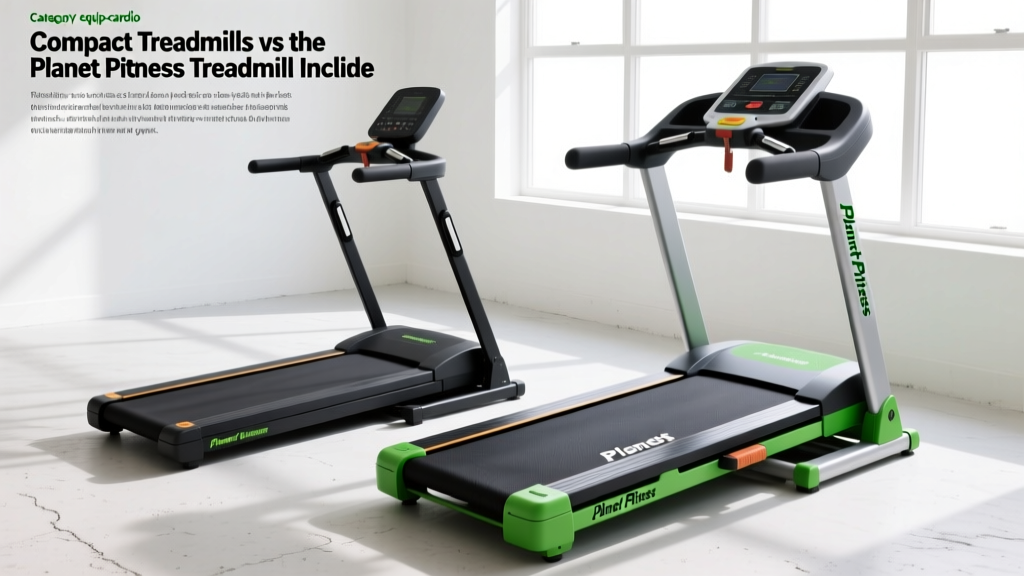
Compact Treadmills vs the Planet Fitness Treadmill Incline
Discover how compact portable treadmills compare to the Planet Fitness treadmill incline for small-space home gyms. Expert layout tips and 2026 model reviews.

The Spatial Reality: Commercial vs. Compact Footprints
When designing a micro-gym in an apartment or small home, the battle between commercial-grade performance and spatial efficiency is immediate. Many fitness enthusiasts transitioning from a commercial gym membership to a home setup worry about losing specific training stimuli—most notably, the steep grade of a commercial machine. The standard planet fitness treadmill incline peaks at an impressive 15% on their commercial Matrix and Life Fitness units, providing a rigorous glute and calf workout that flat-surface walking simply cannot replicate. However, achieving that 15% grade at home traditionally requires a massive spatial commitment.
A commercial treadmill demands a footprint of roughly 84 inches long by 34 inches wide (about 20 square feet). According to safety guidelines highlighted by Runner's World, you must also account for a minimum of 6 feet of clearance behind the machine to prevent severe injury in the event of a fall. In a standard 10x10 bedroom, this safety zone alone consumes over 30% of your total floor space. This is where compact, portable cardio equipment options enter the 2026 market, offering clever engineering compromises to reclaim your living space while preserving the incline training you need.
Data Highlight: The Space Cost of Incline
Commercial Gym Treadmill: 20 sq. ft. footprint + 42 sq. ft. safety clearance = 62 sq. ft. total spatial cost.
Compact Folding Incline Treadmill: 12 sq. ft. footprint (folded to 6 sq. ft.) + 36 sq. ft. safety clearance = 48 sq. ft. total spatial cost.
Ultra-Compact Incline Walking Pad: 6 sq. ft. footprint + 18 sq. ft. safety clearance = 24 sq. ft. total spatial cost.
Can a Portable Treadmill Match the Planet Fitness Treadmill Incline?
The short answer is yes, but with specific engineering caveats. The commercial machines found at Planet Fitness utilize heavy-duty 4.0 HP AC motors that can push a 250 lb user up a 15% grade without amperage spikes. Portable treadmills and walking pads must rely on lighter DC motors and shorter decks. To optimize your home layout, you must choose between a folding chassis (which saves space when not in use) or an ultra-compact walking pad (which saves space during active use but limits top speed and max incline).
| Model Type | Max Incline | Active Footprint | Motor (CHP) | 2026 Est. Price |
|---|---|---|---|---|
| Planet Fitness Commercial (Matrix T7xe) | 15% | 84" x 34" | 4.0 HP AC | N/A (Gym) |
| Horizon 7.4 (Compact Folding) | 15% | 76" x 35" | 3.0 CHP DC | $1,099 |
| UREVO Strol 2E (Incline Walking Pad) | 9% | 43" x 20" | 2.5 CHP DC | $349 |
| WalkingPad X21 (Ultra-Portable) | 0% (Flat) | 53" x 22" | 1.5 CHP DC | $599 |
As noted in Wired's comprehensive walking pad reviews, the market has shifted heavily toward incline-capable walking pads. The UREVO Strol 2E is a standout for space optimization. While it maxes out at a 9% incline rather than the 15% grade of the planet fitness treadmill incline, a 9% grade is sufficient to elevate heart rate into Zone 3 cardio for most users, all while sliding neatly under a standard 18-inch clearance sofa.
Motor Strain and Thermal Failure Modes at Max Incline
When optimizing for space, buyers often select underpowered walking pads and push them to their limits. If a 200 lb user walks at a 12% incline on a 1.5 CHP motor, the amperage draw spikes drastically. This leads to thermal shutdowns—a failure mode where the machine's internal breaker trips to prevent a fire. Furthermore, the increased downward force on the belt at steep angles causes friction spikes, leading to premature belt stretching and deck wear. If replicating a steep commercial incline is your priority, you must invest in a compact folding model with at least a 3.0 CHP motor, like the Horizon 7.4, and commit to regular silicone deck lubrication every 150 miles.
Designing the 2026 Micro-Gym Layout
Integrating portable cardio into a multi-use living space requires a deliberate layout strategy. The goal is to maintain the required safety clearances without sacrificing the room's primary function. Here is a proven framework for small-space cardio zoning:
- The 45-Degree Corner Anchor: Instead of pushing the back of the treadmill flat against a wall (which leaves the 6-foot rear clearance jutting into the center of the room), angle the machine 45 degrees into a corner. This tucks the safety zone into the dead space of the room's geometry.
- Vertical Storage Integration: For folding models, ensure the folded footprint aligns with your room's vertical storage. The Horizon 7.4 folds to roughly 42" x 35". Pair this with a wall-mounted slatwall panel to store resistance bands and light dumbbells, creating a unified "fitness wall" that visually contains the equipment.
- The Sliding Mat Protocol: For ultra-compact walking pads that lack wheels, mount the pad on a custom-cut, high-density EVA foam mat equipped with low-profile furniture sliders on the bottom corners. This allows you to push the entire pad-and-mat assembly under a bed or desk in seconds without scratching hardwood floors.
Acoustic Footprint and Vibration Dampening
Space optimization in apartments is not just about physical dimensions; it is also about acoustic space. A compact treadmill operating at a 12% incline generates significant low-frequency motor hum and high-impact footfalls. According to physical activity and environmental guidelines tracked by the CDC, consistency in exercise is heavily tied to reducing barriers to entry—and in an apartment, the barrier is often the fear of neighbor complaints.
To mitigate this, pair your compact incline treadmill with a 3/4-inch thick, interlocking rubber horse-stall mat (typically 4x6 feet, costing around $50 at farm supply stores). Cut it to size and place it beneath your machine. The dense vulcanized rubber absorbs the kinetic energy of incline walking, reducing structural vibration transfer to the floor joists below by up to 60%. This acoustic optimization makes daily use of portable cardio equipment viable in high-density living situations.
Alternative Portable Cardio for Vertical Spaces
If the spatial requirements of even a compact incline treadmill remain prohibitive, consider pivoting to equipment that leverages vertical space. Portable stair climbers and compact rowers offer intense cardiovascular output with a fraction of the floor plan.
"Biomechanically, the glute activation achieved on a 15% treadmill incline can be closely mirrored by the drive phase of a rowing stroke or the vertical push of a compact stair stepper, but the latter two options can be stored in a 12-inch wide closet footprint."
Models like the Hydrow Wave (which stores upright in a 22" x 25" footprint) or the Cubii JR2 under-desk elliptical provide low-impact, high-yield cardio. While they do not replicate the exact motorized grade of a commercial treadmill, they solve the spatial equation for users who prioritize floor space over exact modality replication.
Final Verdict: Space vs. The 15% Grade
Replicating the exact planet fitness treadmill incline experience at home requires a compromise. If you demand a true 15% grade and have at least 48 square feet to dedicate to safety zones, a compact folding treadmill like the Horizon 7.4 is your best 2026 option. It delivers commercial-grade angles with a chassis that folds away. However, if your layout demands ultra-portability and under-furniture storage, you must accept a lower 9% incline ceiling with models like the UREVO Strol 2E. By pairing these compact machines with intelligent corner-angling layouts and acoustic dampening mats, you can build a highly effective, space-optimized cardio zone that rivals the commercial gym experience without dominating your living space.
More gear to consider
All reviews
Walking Pad Versus Treadmill: 2026 Stationary Bike Budget Breakdown
Home Stair Climbers: Can Strava Track Treadmill Runs & Climbs?

Beyond Sole Treadmill Reviews: Air Bike vs Assault Bike Guide

Space Planning: Fitting a Treadmill for CrossFit in Your Garage Gym

Sole vs NordicTrack Treadmills: Noise Level Comparison
