
Stationary Bike Types & Treadmill Resistance Maintenance Guide
Master the maintenance of upright, recumbent, and spin bikes. Learn how bike magnetic systems compare to treadmill resistance care for maximum longevity.

The Core of Cardio Longevity: Understanding Resistance Systems
When building a comprehensive home gym or managing a commercial fitness floor in 2026, understanding the mechanical nuances of your equipment is non-negotiable. The lifespan of any cardio machine is ultimately dictated by how well its drive and resistance mechanisms are maintained. However, comparing the maintenance of stationary bike types—upright, recumbent, and spin—to treadmill resistance requires a fundamental shift in mechanical perspective.
In the fitness industry, the term 'treadmill resistance' refers to a dual-factor metric: the coefficient of friction between the running belt and the phenolic deck, combined with the mechanical load placed on the incline DC motor. Conversely, stationary bikes rely on entirely different physics—magnetic eddy currents, electromagnetic braking (ECB), or physical friction pads. Bridging the maintenance gap between these distinct systems is the hallmark of true equipment longevity. This guide provides deep, actionable protocols for maintaining the resistance and drive systems across all major cardio formats.
Upright Stationary Bikes: Magnetic and Friction Upkeep
Upright bikes mimic the geometry of outdoor cycling and typically utilize either standard magnetic resistance or electromagnetic (ECB) systems. Models like the Schwinn AC Performance Pro use a magnetic brake pad that moves closer to a metal flywheel to create resistance without physical contact.
Drive Belt and Crank Arm Maintenance
The most common failure point on upright bikes is not the magnetic brake itself, but the drivetrain transferring your power to it. Over time, poly-V drive belts stretch, causing a slipping sensation that users often misdiagnose as 'resistance loss'.
- Belt Tension Check: Every 90 days, remove the side shroud and press the belt midway between the front and rear pulleys. It should have exactly 1/2 inch of deflection. If it sags more, adjust the rear axle tensioner bolts using a 15mm wrench.
- Crank Arm Extraction: Pedal crank arms loosen due to lateral torque. If you feel a 'click' at the top of your pedal stroke, the square-taper or ISIS spline interface is stripping. Use an 8mm Allen key to tighten the crank bolt to 35-40 Nm of torque. If the arm is already wobbly, you must use a crank puller tool (like the Park Tool CCP-22) to remove and replace the arm before it permanently ruins the bottom bracket spindle.
Recumbent Bikes: Cable Tension and Seat Rail Care
Recumbent bikes, such as the Life Fitness RS3 or Matrix R50, place the user in a reclined position. The resistance is usually generated by a servo-motor pulling a physical cable that moves a magnetic bracket closer to the flywheel. Because the user is seated low, these machines are highly susceptible to dust accumulation near the floor-level flywheel.
Seat Carriage and Track Lubrication
The seat carriage glides on polyurethane wheels along an aluminum or steel track. Dust and pet hair wrap around these wheels, creating a sandpaper effect that degrades the track and causes the seat to bind.
Expert Warning: Never use WD-40 or petroleum-based lubricants on a recumbent seat track. These attract dust and degrade polyurethane. Use a 100% silicone spray, applying it to a microfiber cloth and wiping the track clean once a month.
Servo-Motor Cable Calibration
If your recumbent bike's digital display reads 'Level 10' but the pedaling feels like 'Level 4', the internal resistance cable has stretched. Access the flywheel shroud, locate the cable turnbuckle near the servo-motor, and turn it clockwise to take up the slack until the magnetic bracket rests exactly 2mm from the flywheel at the lowest resistance setting.
Spin Bikes (Indoor Cycles): Heavy-Duty Upkeep and Sweat Corrosion
Indoor cycles are built for high-intensity interval training (HIIT) and out-of-the-saddle climbing. They fall into two categories: friction-resistance (felt pad) and magnetic-resistance (eddy current). Sweat is the ultimate enemy of the spin bike, acting as a highly corrosive saline solution that destroys unprotected steel.
Friction Pad vs. Magnetic Calibration
- Friction Bikes (e.g., older Schwinn IC4 models): The felt pad requires regular conditioning. If the pad dries out, it will glaze over, resulting in a harsh, squeaking ride and uneven resistance. Apply 5-10 drops of 100% silicone oil directly to the felt pad every 4 weeks. Replacement pads cost between $15 and $25 and should be swapped annually.
- Magnetic Bikes (e.g., Keiser M3i, Peloton Bike+): These use eddy-current magnets and require zero pad maintenance. However, the Keiser M3i relies on AA batteries to power the magnetic actuator and console. If your resistance feels stuck or the console displays a low-battery icon, the magnetic bracket may fail to retract, leaving the bike permanently in a high-resistance state. Swap batteries immediately to prevent actuator burnout.
Bottom Bracket (BB) Survival
The sweat drip zone directly intersects the bottom bracket cartridge. A standard Shimano UN300 replacement cartridge costs about $25, but ignoring a grinding BB will eventually destroy the frame's internal threads, turning a $25 fix into a $600 frame replacement. Wipe down the crank spindle after every ride and replace the BB cartridge at the first sign of lateral play.
Comparative Maintenance Matrix: Bikes vs. Treadmill Resistance
To contextualize bike maintenance, we must compare it to the unique demands of treadmill resistance systems. The table below outlines the critical maintenance intervals and associated costs for 2026's most common cardio setups.
| Equipment Type | Resistance / Drive System | Primary Maintenance Task | Interval | Est. Cost (Parts) |
|---|---|---|---|---|
| Upright Bike | Magnetic / Poly-V Belt | Belt tensioning & crank torque check | 90 Days | $0 (Tools only) |
| Recumbent Bike | Servo-cable / Magnetic | Seat track cleaning & cable adjustment | 30 Days | $12 (Silicone spray) |
| Spin Bike (Friction) | Felt Pad / Chain or Belt | Pad conditioning & sweat wipe-down | Weekly / Monthly | $20 (Replacement pad) |
| Spin Bike (Magnetic) | Eddy Current / Belt | Battery check & BB cartridge replacement | 6-12 Months | $25 (BB Cartridge) |
| Treadmill (Standard) | Belt-Deck Friction / Incline DC Motor | Deck lubrication & incline actuator cleaning | Every 300 Miles | $15 (Silicone liquid) |
| Treadmill (Slat) | Rubber Slat / No Deck Friction | Slat bearing inspection & belt tracking | Annually | $50+ (Bearing grease) |
The Treadmill Resistance Paradigm: Deck Friction and Incline Load
While stationary bikes use magnets to create drag, treadmill resistance is primarily a battle against physical friction and gravity. A standard treadmill like the Life Fitness Club Series+ requires 0.5 oz of 100% silicone liquid applied between the belt and the phenolic deck every 300 miles. If this is neglected, the friction coefficient spikes. The drive motor must then pull significantly higher amperage to maintain speed, which inevitably leads to a burned-out motor controller board—a $400+ repair that is entirely preventable.
Furthermore, the incline motor on a treadmill operates under massive physical load. Unlike the smooth, contactless magnets on a spin bike, a treadmill incline motor uses a physical DC screw-drive or rack-and-pinion system to lift the user's body weight. If you hear grinding or popping during a 12% incline push, the internal grease has degraded or the lift actuator is failing. Unlike a bike's simple cable adjustment, a treadmill incline actuator requires a full part replacement, typically costing between $150 and $250. According to commercial maintenance standards outlined by IHRSA (International Health, Racquet & Sportsclub Association), proactive vacuuming of the treadmill motor compartment every 30 days is critical to prevent dust from choking the incline motor's cooling fan, which is the leading cause of thermal shutdowns.
Advanced Troubleshooting: Hall Effect Sensors and Electronics
When resistance feels inconsistent or the console displays erratic wattage readings, the issue is rarely the heavy metal flywheel; it is the data feedback loop. Both high-end recumbent bikes and treadmills utilize Hall effect sensors or optical encoders to read flywheel or motor RPMs.
Troubleshooting Erratic Resistance Readings
- Locate the Sensor: Find the small magnetic pickup positioned 1-2mm away from the flywheel's toothed ring or embedded magnet.
- Check the Gap: If the machine has been moved or bumped, the sensor gap may have widened beyond 3mm. Loosen the set screw, push the sensor closer to the magnet until it almost touches, and pull it back exactly 1.5mm before retightening.
- Inspect the Wiring: Follow the thin data wire back to the lower control board. Look for micro-fractures in the shielding caused by machine vibration. A $5 multimeter can test the continuity of this wire; if it's broken, the console cannot read the resistance level, causing the servo-motor to default to a 'safe' low-resistance state.
Authoritative Sourcing and Industry Standards
Maintaining cardio equipment requires adherence to manufacturer-specific tolerances and industry-wide safety standards. The protocols detailed in this guide are synthesized from commercial-grade maintenance frameworks. For deep-dive technical schematics and warranty-compliant upkeep schedules, facility managers and home-gym owners should regularly consult Precor Commercial Support and the Keiser Indoor Cycling Support portals. These resources provide updated firmware patches for magnetic resistance actuators and exact torque specifications for drivetrain components, ensuring your equipment performs flawlessly well into the late 2020s.
More gear to consider
All reviews
Rowing Buying Guide & Technique: ProForm Carbon TLS Treadmill Setup
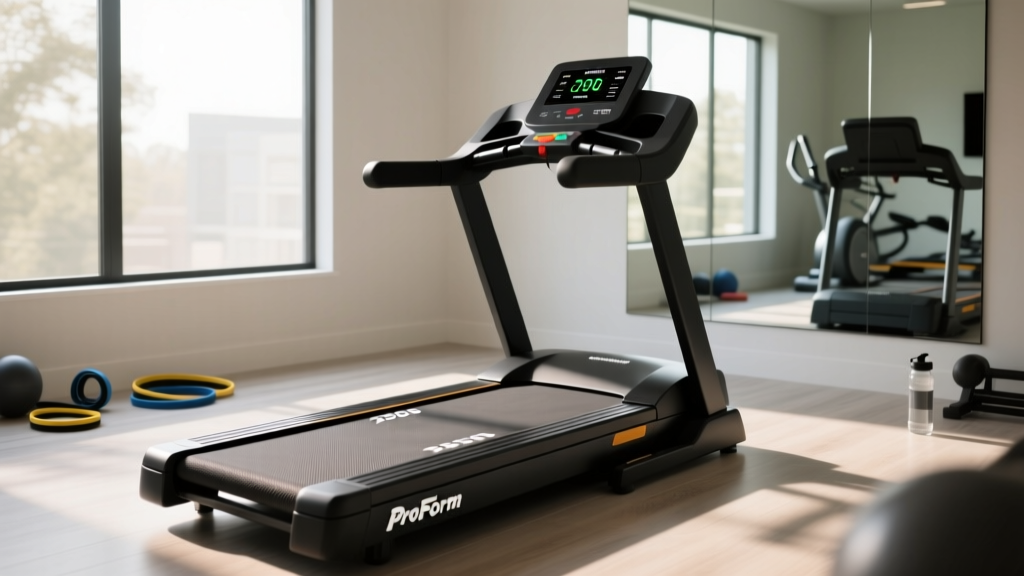
ProForm 2500 Treadmill Setup: Noise Level Comparison & Install Guide

How To Choose Longevity: A Practical, Data-Driven Guide for Automotive Buyers
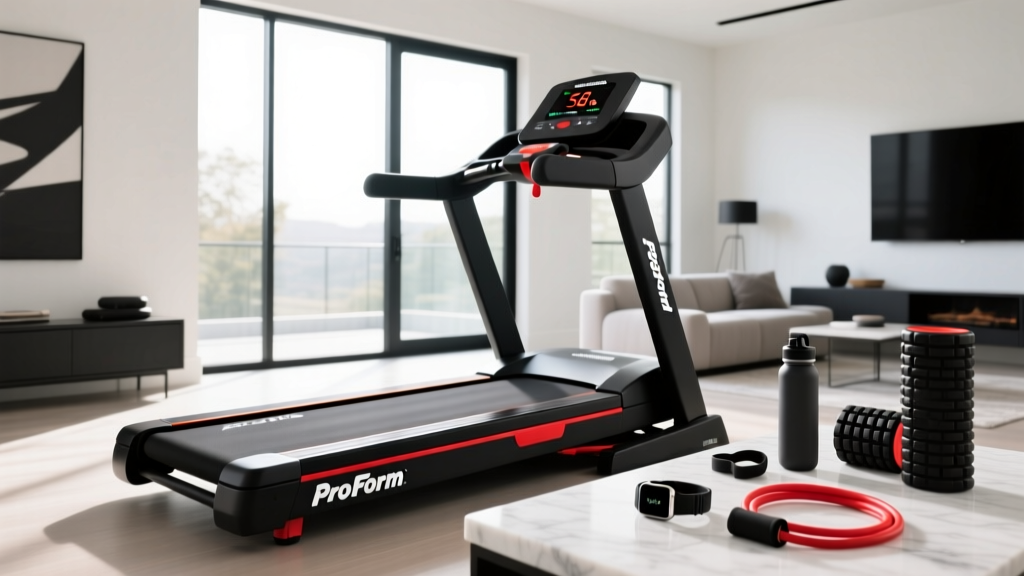
Cardio Noise Comparison: ProForm Pro 2000 Treadmill Manual Data

Inspire Series T7s Treadmill Review: Small Spaces (2026)
