Stationary Bike Maintenance vs Treadmill Walk Workout Machine Care
Compare stationary bike maintenance for upright, recumbent, and spin models against the wear of a daily treadmill walk workout machine. Expert care tips.

The Biomechanical Wear Factor: Bikes vs. Treadmills
When building a home gym, understanding the long-term mechanical wear of your equipment is just as critical as evaluating its upfront cost. While a daily treadmill walk workout provides excellent low-impact cardiovascular benefits, the machine itself endures continuous belt friction, deck compression, and motor strain. According to the American Academy of Orthopaedic Surgeons (AAOS), both stationary cycling and treadmill walking are premier low-impact exercises, but the mechanical footprint they leave on your equipment differs vastly.
A treadmill walk workout machine relies on a high-torque motor (typically 2.5 to 3.5 Continuous Horsepower) pulling a textured belt over a wooden deck. This creates immense friction and heat. In contrast, stationary bikes—whether upright, recumbent, or spin—utilize rotational mechanics, magnetic or friction resistance, and belt or chain drives. As of 2026, Consumer Reports data indicates that magnetic resistance bikes generally require 40% less annual maintenance than motorized treadmills, provided the user follows a strict care protocol. Below, we break down the exact maintenance requirements for the three main stationary bike types and compare them to the rigorous upkeep demanded by treadmill walking machines.
Upright Stationary Bikes: Magnetic Resistance & Belt Drive Care
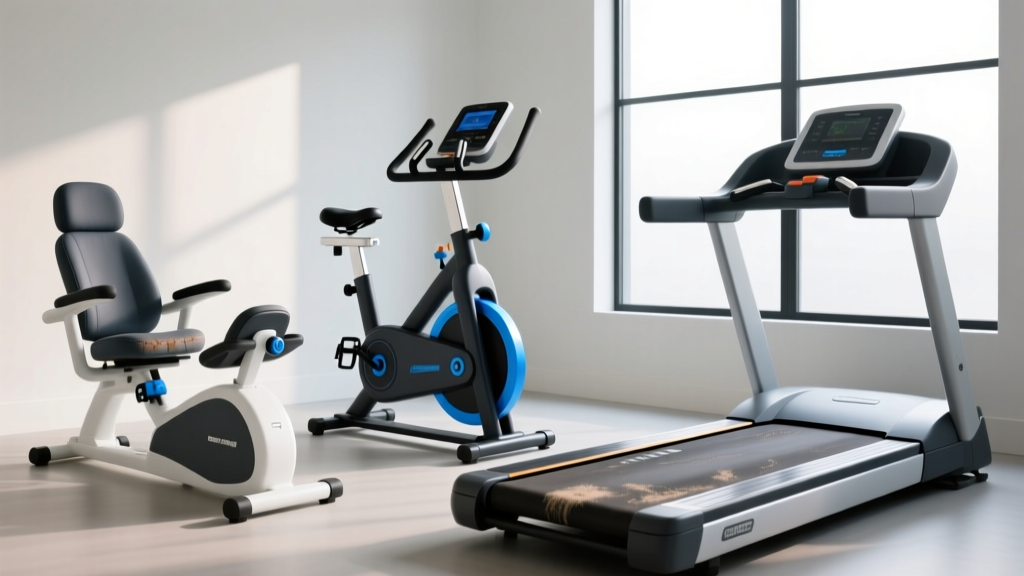
Upright bikes, such as the popular Schwinn IC4 or Nautilus U618, mimic the geometry of a traditional road bike. Modern uprights have largely abandoned chain drives in favor of Poly-V ribbed belts and eddy current (magnetic) braking systems.
Belt Tension and Alignment
Unlike chains, belts do not require lubrication, but they are susceptible to stretching and dry-rot. Over a 24-month period, a Poly-V belt can lose tension, resulting in a 'slipping' sensation during high-cadence sprints.
- Inspection: Every 6 months, remove the flywheel cover and press the belt. It should have no more than 1/2 inch of deflection.
- Correction: If loose, adjust the motor mount or idler pulley (depending on the model) to restore tension. Do not overtighten, as this will destroy the alternator or magnetic brake bearings.
- Lifespan: Expect to replace the drive belt every 4 to 6 years ($30–$50 for OEM parts).
Console and Sensor Calibration
Upright bikes rely on reed switches or optical sensors to read cadence (RPM). Dust accumulation on the optical sensor lens will cause erratic RPM readings. Use a can of compressed air to clear the sensor housing near the flywheel every three months.
Recumbent Bikes: Caring for the Step-Through Frame
Recumbent bikes, like the Sunny Health & Fitness SF-RBE5365 or ProForm Recumbent series, are the gold standard for users with lumbar issues or limited mobility, aligning with CDC guidelines for accessible, joint-friendly physical activity. However, their elongated, step-through chassis presents unique maintenance challenges.
Pro Tip: Seat Rail LubricationThe adjustable seat on a recumbent bike glides along a metal or aluminum rail using linear bearings or plastic sliders. Over time, friction causes the seat to stick or squeak. Never use WD-40, which attracts dust and degrades plastic. Instead, apply a light coating of white lithium grease or a PTFE (Teflon) dry lubricant to the seat rail every 90 days. Wipe away excess to prevent grime buildup.
Dust Accumulation in the Lower Chassis
Because the flywheel and resistance mechanism on a recumbent bike are positioned close to the floor, they act as magnets for dust, pet hair, and carpet fibers. This debris can infiltrate the magnetic brake housing, causing a grinding noise. Vacuum the lower flywheel shroud monthly using a crevice tool attachment.
Spin Bikes: Sweat, Chains, and Friction Pads
Indoor cycling bikes (spin bikes) are built for high-intensity interval training (HIIT) and out-of-the-saddle climbing. Models like the Keiser M3i or the Peloton Bike+ are engineered for gym-level abuse, but they require the most rigorous maintenance of all stationary bikes.
Combating Chloride Salt Corrosion
Human sweat is highly corrosive, containing chloride salts that will rapidly rust untreated steel and degrade aluminum. On a spin bike, sweat drips directly onto the flywheel, bottom bracket, and handlebar posts.
- Post-Workout Wipe Down: Never use bleach or ammonia-based cleaners. Use a 50/50 mix of water and white vinegar, or a specialized enzyme-based gym wipe, to neutralize sweat acids.
- Clear Coat Protection: If you notice surface rust on the flywheel edge, lightly sand it with 800-grit sandpaper and apply a clear enamel spray to seal the metal.
Chain Stretch and Friction Pad Replacement
While high-end spin bikes use belt drives, many mid-tier models still use roller chains. Chains physically elongate over time due to pin and bushing wear.
The 0.75% Rule: Use a bicycle chain wear indicator tool. If the tool drops fully into the chain at the 0.75% mark, the chain has stretched and must be replaced immediately. Riding a stretched chain will prematurely wear the front chainring and rear cog, turning a $20 chain replacement into a $150 drivetrain overhaul.
For bikes utilizing friction resistance (a felt pad pressing against the flywheel), the pad will compress and dry out. Apply a few drops of silicone oil to the felt pad monthly to ensure smooth resistance transitions and prevent the flywheel from jerking during climbs.
Comparative Maintenance Matrix: Bikes vs. Treadmill Walk Workout Machines
How do these bike maintenance routines compare to the upkeep required for a machine dedicated to a daily treadmill walk workout? The table below outlines the critical differences in longevity and care.
| Maintenance Task | Stationary Bikes (Upright/Recumbent/Spin) | Treadmill Walk Workout Machine |
|---|---|---|
| Lubrication | Seat rails (Recumbent), Felt pads (Friction Spin). Belt drives require zero lube. | 100% Silicone lubricant applied between belt and deck every 150 miles or 3 months. |
| Dust & Debris | Vacuum lower flywheel housing (Recumbent) and optical sensors (Upright). | Vacuum motor compartment and belt rollers to prevent overheating and static shock. |
| High-Wear Parts | Drive belts (4-6 years), Friction pads (1-2 years), Chains (2-3 years). | Walking belt (5-7 years), Deck (7-10 years), Motor control board (5-8 years). |
| Estimated Annual Upkeep Cost | $15 - $40 | $50 - $120 (including silicone, belt replacements, and roller bearings) |
Troubleshooting Common Failure Modes
Even with meticulous care, mechanical anomalies occur. Here is how to diagnose the most common issues across both cardio categories without immediately calling a technician.
Stationary Bike Squeaks and Clicks
Warning: Pedal Thread StrippingA rhythmic clicking that syncs with your cadence is rarely the bottom bracket. 80% of the time, it is a loose pedal. Note that the left pedal is reverse-threaded. Tighten the right pedal clockwise, and the left pedal counter-clockwise. Use a 15mm pedal wrench and apply blue Loctite to the threads if the clicking persists.
Treadmill Belt Hesitation During Walk Workouts
If the belt on your treadmill hesitates or stutters when your foot strikes the deck during a treadmill walk workout, the issue is almost always friction-related. The motor is drawing excess amperage to overcome the resistance between the dry belt and the deck.
- Test: Reach under the belt to the center of the deck. If it feels completely dry, lubrication is required.
- Fix: Loosen the rear roller bolts by exactly three full turns, lift the belt, and apply three zig-zag lines of 100% silicone treadmill lubricant. Retighten the bolts and walk at 2.0 MPH for 5 minutes to distribute the silicone.
- Edge Case: If the belt is lubricated but hesitation persists, the walking deck may have worn through its phenolic coating, exposing raw wood. This requires a full deck and belt replacement (typically $150–$250 in parts).
Final Thoughts on Equipment Longevity
Choosing between a stationary bike and a treadmill ultimately comes down to your biomechanical needs and your willingness to perform routine maintenance. A treadmill walk workout remains a staple for bone-density loading and natural gait training, but it demands strict adherence to silicone lubrication schedules and motor compartment cleaning to prevent catastrophic board failures. Stationary bikes—particularly modern magnetic uprights and recumbents—offer a remarkably low-maintenance alternative, requiring only occasional dusting, bolt-checking, and targeted rail lubrication to easily exceed a decade of reliable home use.
More gear to consider
All reviews
How to Start a Precor Treadmill & Review Under Desk Office Options

Cardio Machine Noise Comparison: Treadmill Hill Walk Workout

Step-by-Step Treadmill Buttocks Guide & Cardio Noise Comparison

Gold Gym 450 Treadmill Troubleshooting: Curved Manual vs Motorized
Elliptical vs Treadmill: Can I Use My HSA to Buy a Treadmill?