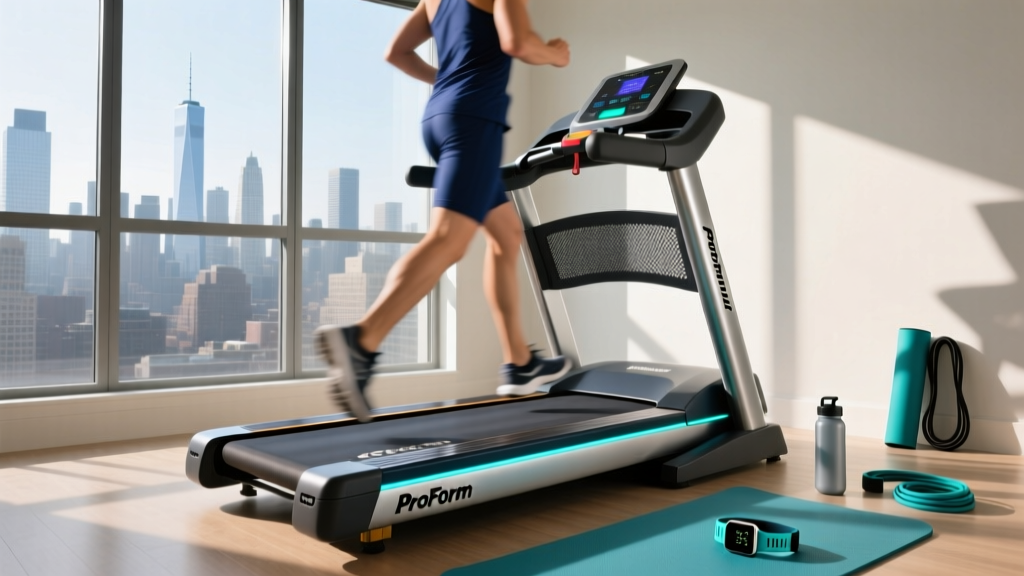
Is It OK to Walk on a Treadmill Barefoot? Home Stair Climber Guide
Master your home stair climber setup, fix common mistakes, and find out if it's OK to walk on a treadmill barefoot in our expert cardio troubleshooting guide.

The Ultimate Home Cardio Setup: Stair Climbers and Footwear Myths
Building a high-performance home gym in 2026 requires more than just dropping cash on premium equipment; it demands an understanding of biomechanics, spatial geometry, and machine maintenance. While the home stair climber remains the undisputed king of glute activation and high-yield cardiovascular output, many home gym owners sabotage their results—and risk injury—through poor machine setup and misguided footwear habits.
In this comprehensive troubleshooting guide, we will break down the exact spatial requirements and mechanical pitfalls of home stair climbers. Furthermore, we will definitively answer one of the most hotly debated questions in home fitness forums: is it ok to walk on a treadmill barefoot? By the end of this guide, you will have a bulletproof framework for optimizing your cardio machines for longevity, safety, and peak physiological output.
Home Stair Climber Guide: Spatial Setup and Selection
Before addressing mechanical troubleshooting, we must address the most common catastrophic mistake in home cardio: ignoring ceiling clearance and floor deflection. Stair climbers fall into two distinct categories, each with unique spatial demands.
1. The Stepmill (Rotating Stairs)
Commercial-grade rotating stair climbers, like the StairMaster SM5000 (retailing around $6,499) or the more home-friendly Core Home Fitness StepMill (~$2,199), require massive vertical clearance. Because the user is elevated on a raised platform and stepping upward, you must calculate clearance using this formula: Ceiling Height = User Height + Machine Step-Up Height (usually 10-14 inches) + 15 inches of headroom.
If you have a standard 8-foot (96-inch) ceiling and are 6 feet tall, your head will strike the ceiling at the peak of your stride. For a rotating stepmill, a minimum ceiling height of 9'2" is mandatory.
2. The Pedal Stepper (Hydraulic or Magnetic)
Pedal steppers, such as the Bowflex Max Trainer M9 ($2,299) or budget-friendly mini-steppers like the Sunny Health & Fitness SF-S902 ($79), operate with a much lower vertical profile. These are ideal for basements with low clearance but introduce a different set of troubleshooting challenges related to hydraulic cylinders and magnetic resistance calibration.
Top Stair Climber Mistakes and Troubleshooting
Even with perfect spatial planning, daily use introduces mechanical wear and user-form degradation. Here is how to troubleshoot the most common stair climber issues.
Mistake 1: The 'Console Lean' and Weight Distribution
Leaning heavily on the handrails shifts up to 30% of your body weight off your lower extremities, effectively reducing your caloric expenditure and altering your spinal alignment. The Fix: Set the machine to a speed where you can maintain a 'floating grip'—fingertips resting on the rails purely for balance, not support. If your heart rate drops below your target zone (typically 70-85% of your max HR), increase the resistance, do not lean.
Mistake 2: Shallow Stepping and Glute Amnesia
Taking rapid, shallow steps on a pedal climber turns the movement into a calf-dominant aerobic exercise, completely bypassing the gluteus maximus. The Fix: Drive through the entire foot, focusing on a full extension of the hip at the bottom of the stroke. Aim for a cadence of 60-80 steps per minute with deep depression rather than 100+ shallow steps.
Mechanical Troubleshooting Matrix
| Symptom | Probable Cause | Expert Fix |
|---|---|---|
| Squeaking pivot joints (Mini-Steppers) | Friction in the pedal arm bushings | Apply 100% PTFE (Teflon) dry spray. Never use WD-40, as it degrades rubber bushings. |
| Belt slipping (Rotating Stepmills) | Worn drive belt or low tension | Remove the side shroud and tighten the drive belt tensioner bolt by exactly 1/4 turn. |
| Magnetic resistance fails to adjust | Servo motor misalignment or dust | Recalibrate via the hidden diagnostic menu (usually holding 'Start' + 'Level Up' for 5 seconds). |
| Hydraulic cylinder 'spongy' feel | Fluid degradation due to heat | Replace the hydraulic shocks. They are rated for ~500 hours of use and cost ~$25 for a pair. |
Footwear Faults: Is It OK to Walk on a Treadmill Barefoot?
As home gym enthusiasts optimize their spaces, a recurring question surfaces regarding natural movement and grounding: is it ok to walk on a treadmill barefoot? The short answer from a biomechanical and safety standpoint is a resounding no. While barefoot training on a static, shock-absorbent floor has merits for proprioception, applying this to a motorized treadmill introduces severe risks.
The Biomechanics of Shear Force and Thermal Friction
When you walk barefoot on solid ground, your foot strikes, rolls, and pushes off. On a motorized treadmill, the belt is actively pulling your foot backward while you attempt to push forward. According to research on gait mechanics cited by the American Podiatric Medical Association, this creates a high degree of horizontal shear force. Without the EVA foam and structured rubber outsole of a running shoe to absorb this shear, the friction is transferred directly to the plantar fascia and the epidermis, leading to micro-tears, blistering, and exacerbated plantar fasciitis.
Furthermore, treadmill belts generate significant thermal energy. During a 45-minute session, the friction between the deck and the belt can cause the surface temperature of the PVC belt to exceed 105°F (40°C). Bare skin is highly susceptible to low-grade friction burns under these conditions.
Stair Climbers vs. Treadmills: The Barefoot Verdict
If barefoot treadmill walking is a mistake, barefoot stair climbing is an outright hazard. The pedals of a stair climber are coated in industrial-grade, abrasive anti-slip tape (similar to heavy-grit sandpaper) to prevent shoes from slipping during high-resistance pushes. Using a stair climber barefoot will rapidly abrade the skin on your soles. Furthermore, the Mayo Clinic emphasizes that proper foot support is critical during high-impact or high-resistance cardiovascular routines to maintain proper kinetic chain alignment from the ankle up to the lumbar spine.
The 2026 Footwear Standard: For treadmills, use a shoe with a minimum 8mm heel-to-toe drop and a smooth, continuous rubber outsole to prevent belt snags. For stair climbers, opt for a cross-training shoe with a wide toe box and a stiff midsole to distribute the intense localized pressure of the pedal edges across your entire foot.
Home Gym Flooring and Vibration Dampening Guide
A frequently overlooked aspect of machine troubleshooting is floor deflection and vibration transfer. Placing a 250-lb stair climber on standard laminate flooring without proper dampening will cause the machine to 'walk' during use and eventually damage the subfloor.
| Machine Type | Avg. Weight (Loaded) | Required Mat Thickness | Material Recommendation |
|---|---|---|---|
| Mini-Stepper | 45 lbs + User | 1/4 inch | High-density EVA foam |
| Magnetic Pedal Climber | 150 lbs + User | 3/8 inch | Recycled rubber puzzle mats |
| Rotating Stepmill | 350+ lbs + User | 3/4 inch minimum | Vulcanized rubber horse stall mats |
| Motorized Treadmill | 200+ lbs + User | 1/2 inch | PVC equipment mat (anti-microbial) |
Troubleshooting Machine 'Walking' and Drift
If your stair climber or treadmill slowly drifts across the room during use, do not simply push it back. This indicates an unlevel machine causing uneven belt tracking.
- Place a digital carpenter's level on the side rail of the machine.
- Locate the adjustable leveling feet at the base of the rear stabilizer bar.
- Rotate the feet clockwise or counter-clockwise until the bubble is perfectly centered.
- Retighten the locking nut against the frame to prevent the foot from vibrating loose during heavy stepping.
Expert Maintenance Schedule for 2026 Cardio Gear
To keep your home cardio equipment out of the repair shop and operating at factory specifications, implement this strict maintenance cadence:
- Weekly: Wipe down stair climber pedals and treadmill handrails with a non-corrosive, alcohol-free antibacterial wipe. Sweat contains high levels of sodium and urea, which will rapidly corrode exposed steel and degrade LCD touchscreens.
- Monthly: Inspect the treadmill belt alignment. If the belt drifts more than 1/4 inch to the left or right, adjust the rear roller bolts. For stair climbers, check the pedal straps for micro-fraying.
- Bi-Annually: Lift the treadmill belt and apply 1 oz of 100% silicone lubricant in a zigzag pattern across the deck. For hydraulic stair steppers, inspect the cylinder shafts for pitting or oil weeping.
By respecting the spatial requirements of your stair climber, adhering to proper footwear protocols, and executing targeted mechanical troubleshooting, you ensure your home gym remains a safe, efficient environment for years to come. Leave the barefoot walking for the beach, and lace up properly for the belt.
More gear to consider
All reviews
Expert Review: Compact Incline Walking Workout Treadmill Options

T Series 8 Treadmill Motor Guide: Sizing & Troubleshooting

Compact Portable Cardio vs Super Runners Shop Gait Analysis Treadmill
Stair Climber Home Guide & Best Lube for NordicTrack Treadmill Care

Best Compact Gamified Treadmill Options for Small Spaces (2026)