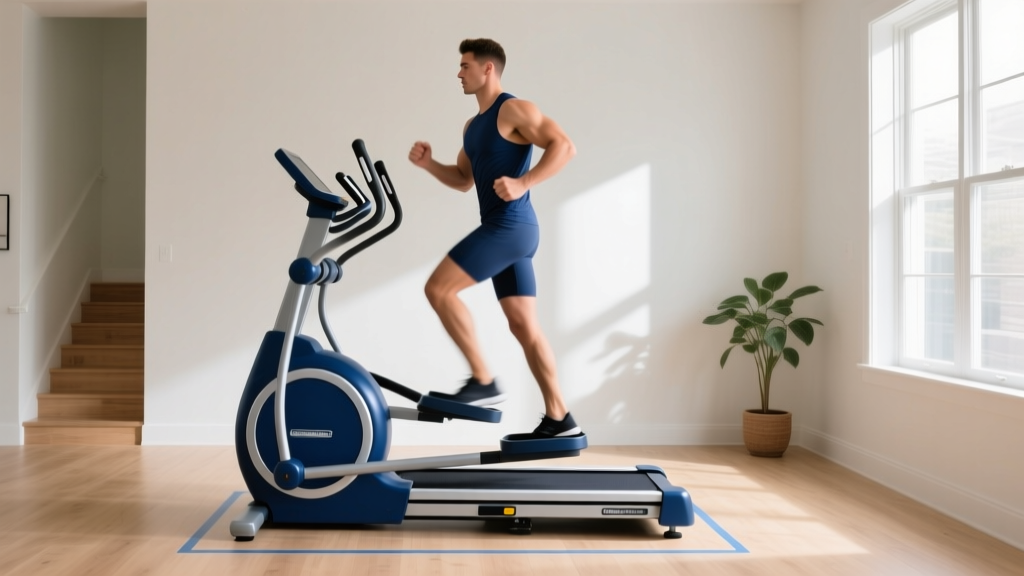
Avoid Treadmill Falls: Home Stair Climber Safety & Setup Guide
Prevent treadmill falls by switching to a stair climber. Our expert guide covers home setup clearances, form mistakes, and hardware troubleshooting.

Why Ditch the Belt? The Biomechanics of Treadmill Falls vs. Stair Steppers
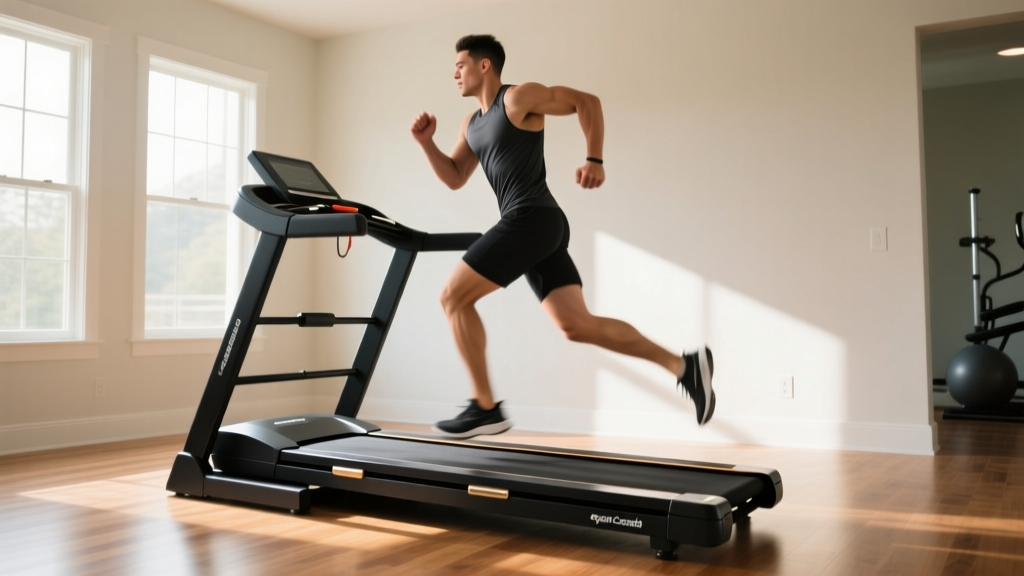
If you have been spooked by viral videos of treadmill falls or experienced a belt-speed mismatch yourself, transitioning to a home stair climber is one of the smartest cardiovascular pivots you can make. According to data from the U.S. Consumer Product Safety Commission, motorized treadmills account for tens of thousands of emergency room visits annually, largely due to the horizontal shear force created when a motorized belt pulls the feet backward while the user's center of mass moves forward. A single misstep or speed miscalculation results in a high-velocity fall.
Stair climbers and stepmills eliminate this horizontal shear force entirely. Because the resistance is driven by your downward vertical force against gravity (or an electromagnetic alternator), the machine only moves when you move. However, swapping a treadmill for a stair climber—like the commercial-grade StairMaster SM9 ($4,200) or the compact Bowflex Max Trainer M9 ($2,299)—introduces a new set of biomechanical and spatial challenges. This guide will walk you through the most common form mistakes, hardware troubleshooting protocols, and critical home gym setup measurements to ensure your cardio routine is both highly effective and completely fall-proof.
Top 4 Form Mistakes on Home Stair Climbers (And How to Fix Them)
While you eliminate the risk of being thrown backward off a belt, poor form on a stair climber can lead to joint degradation, lower back pain, and localized stumbles. The Mayo Clinic emphasizes that proper alignment during aerobic exercise is critical to preventing repetitive strain injuries.
1. The 'Lean and Hang' Posture Collapse
Gripping the handrails tightly and leaning your torso forward at a 45-degree angle is the most pervasive mistake in home cardio. This transfers up to 30% of your body weight onto your wrists and shoulders, severely reducing core engagement and actual caloric expenditure. The Fix: Use a 'hover hands' approach. Rest only your fingertips lightly on the rails for balance, keeping your torso stacked directly over your hips.
2. Shallow Step Depth (Achilles Strain)
Many users only press the pedal down halfway, keeping their heels elevated. This keeps the calf muscle in a state of constant contraction, rapidly leading to Achilles tendonitis and plantar fasciitis. The Fix: Drive through the heel and press the pedal down fully (usually an 8 to 10-inch depth) to engage the glutes and hamstrings, allowing the calf to stretch at the bottom of the stroke.
3. Looking Down at the Console
Staring at your feet or the lower console disrupts your vestibular system and alters your cervical spine alignment, increasing the likelihood of a misstep. The Fix: Mount a tablet or phone at eye level and focus on a fixed point straight ahead.
Expert Insight: If you are using a rotating stepmill (where actual stairs revolve downward), never step onto the moving staircase while it is already in motion. Always straddle the side platforms, start the machine at Level 1, and step on only when the stairs are moving at a walking pace.Hardware Troubleshooting: Fixing Squeaks, Slips, and Sensor Errors
Home stair climbers endure massive dynamic loads—often 150 to 250 lbs of downward force per step. Over time, this leads to specific mechanical failure modes. Here is how to troubleshoot the most common issues across different machine types.
| Machine Type / Model | Common Issue | Root Cause & Troubleshooting Fix |
|---|---|---|
| Hydraulic Mini-Steppers (e.g., Sunny Health SF-S0881) | Loss of resistance / Pedals sinking after 15 mins | Hydraulic cylinders overheat and fluid thins. Fix: Limit sessions to 15 mins, keep room temp below 75°F, or upgrade to heavy-duty gas-spring cylinders. |
| Motorized StepMills (e.g., StairMaster SM9) | Console displays 'Error 3' or 'Speed Sensor' | Magnetic reed switch misalignment. Fix: Remove lower cowl, locate sensor near flywheel, and adjust the gap to exactly 2-3mm from the magnet. |
| Alternator Climbers (e.g., Bowflex Max M9) | Loud squeaking from pivot arms | Friction in needle bearings. Fix: Apply 100% silicone lubricant. Never use petroleum-based WD-40, which degrades rubber bushings. |
| All Magnetic Resistance Models | Inconsistent stepping tension / 'Jerky' pedals | Dust buildup on the optical sensor or drive belt slack. Fix: Wipe sensor lens with isopropyl alcohol; tighten alternator belt tensioner bolt by 1/4 turn. |
Fall-Proofing Your Home Gym: Ceiling Clearances and Footprint Specs
The most dangerous mistake you can make when installing a stair climber at home is ignoring the vertical clearance requirements. Unlike treadmills, where the user remains relatively flat, stair climbers elevate your entire body. Hitting your head on a ceiling joist or low-hanging fan mid-stride is a severe fall hazard that mimics the dangers of treadmill falls.
The Ceiling Clearance Formula
To calculate your minimum safe ceiling height, use this exact formula:
User Height + Peak Step-Up Height (usually 12-15 inches) + 6 inches for safety clearance = Minimum Ceiling Height
For example, if you are 6'0" (72 inches) and your machine's maximum pedal elevation is 14 inches, you need 72 + 14 + 6 = 92 inches (7 feet, 8 inches) of absolute minimum clearance. If your home gym is in a basement with a drop ceiling, ductwork, or recessed lighting fixtures, you must measure from the lowest hanging obstruction, not the drywall.
Floor Matting and Leveling
Stair climbers generate intense vertical vibration. Placing a machine directly on luxury vinyl plank (LVP) or laminate flooring will eventually cause the locking mechanisms to snap.
- The Fix: Use a 3/8-inch thick, high-density rubber horse stall mat (cut to size) beneath the machine. This absorbs the kinetic energy and prevents the machine's leveling feet from puncturing softer subfloors.
- Leveling: Use a torpedo level on the machine's base frame. If the machine is pitched forward by even 2 degrees, the internal chain drive will wear unevenly, leading to pedal slippage—a major stumble hazard.
Maintenance Schedule to Prevent Mechanical Failures
To ensure your machine remains a safe haven from the unpredictability of motorized belts, adhere to this strict maintenance cadence. The American Heart Association recommends consistent, uninterrupted aerobic routines for cardiovascular health; a broken machine disrupts this consistency.
- Weekly: Wipe down the handrails and console with a non-corrosive, electronics-safe antibacterial wipe. Sweat contains high levels of salt, which will rapidly corrode the metal contact points on heart-rate monitors and rust the pivot bolts.
- Monthly: Inspect the pedal straps. If the nylon webbing shows fraying near the plastic buckle, replace them immediately. A snapped strap mid-stride can cause your foot to slip off the pedal edge, resulting in an ankle roll.
- Bi-Annually: Vacuum the internal motor compartment and alternator housing. Dust acts as an insulator, causing electromagnetic brakes to overheat and fail silently during high-intensity interval training (HIIT) sessions.
Final Verdict: Is the Switch Worth It?
Transitioning from a treadmill to a stair climber requires a higher upfront spatial investment and a brief period of biomechanical adaptation. However, by entirely removing the motorized belt from the equation, you effectively eliminate the risk of high-speed treadmill falls. When paired with proper ceiling clearances, strict form protocols, and proactive hardware maintenance, a home stair climber offers a superior, high-yield, and fundamentally safer cardiovascular experience for the long term.
More gear to consider
All reviews
Does Nike Run Club Work on Treadmills? Setup & 2026 Buyer Guide

Fixing Your Treadmill for CrossFit: 6 Common WOD Mistakes & Solutions
Curved vs Motorized Treadmill Setup: Elliptical vs Treadmill Calories
Elliptical vs Treadmill: The Salvation Army Treadmill Donation Spike
Folding Treadmill Review: Safe for Treadmill Sprints for Weight Loss?
