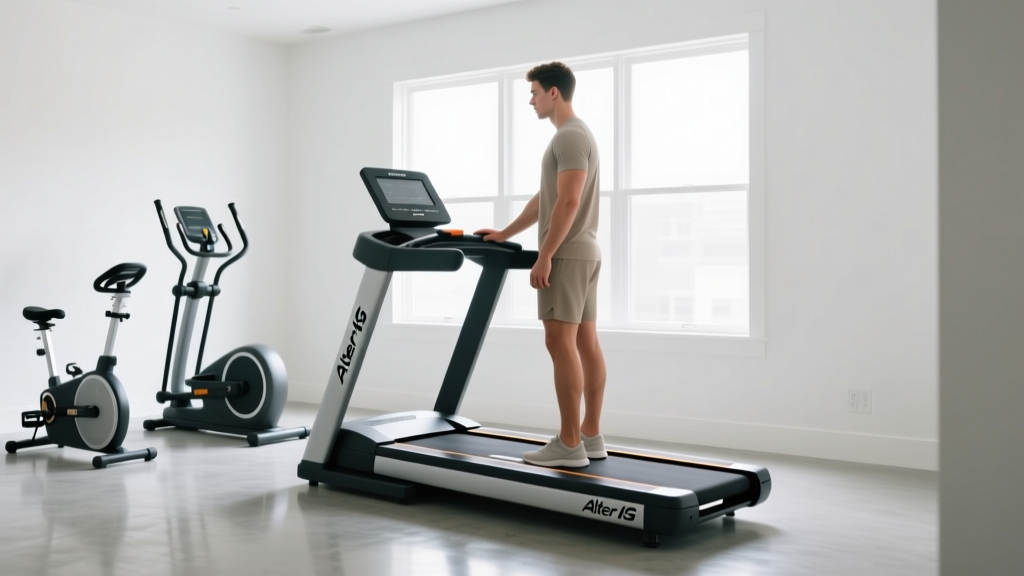
Alter G Treadmill Noise vs. Home Cardio: Beginner Guide
Discover how the Alter G treadmill noise level compares to standard home cardio machines. A beginner's step-by-step guide to measuring and reducing gym noise.

Why Cardio Machine Noise Matters in Home Gyms
Building a home gym in 2026 offers unprecedented convenience, but acoustic impact remains a primary hurdle for beginners. Whether you live in a multi-story apartment or a shared household, the vibration and airborne noise generated by cardio equipment can cause friction with neighbors and family members. Many users searching for an 'alter g treadmill' are surprised to learn that its pneumatic unweighting system creates a completely different acoustic profile compared to traditional motorized belts or magnetic flywheels.
This step-by-step guide breaks down the acoustic profiles of modern cardio machines. According to the CDC's National Institute for Occupational Safety and Health (NIOSH), prolonged exposure to noise above 70 decibels (dB) can cause stress and fatigue, while levels above 85 dB risk long-term hearing damage. Understanding these thresholds is your first step toward building a peaceful, sustainable home workout space.
Step 1: Understand the Decibel (dB) Scale
Before comparing machines, beginners must grasp how sound is measured. The decibel scale is logarithmic, not linear. This means a 3 dB increase represents a doubling of sound energy, and a 10 dB increase sounds roughly twice as loud to the human ear.
Beginner's Rule of Thumb: A quiet library sits at 40 dB. Normal conversation is 60 dB. A standard vacuum cleaner operates around 75 dB. When evaluating cardio equipment, your goal is to keep the ambient room noise below 70 dB to avoid disrupting adjacent rooms.According to the National Institute on Deafness and Other Communication Disorders (NIDCD), repeated exposure to sounds at or above 85 dB can cause noise-induced hearing loss. While most home cardio machines won't reach this threshold, the cumulative annoyance factor of a 75 dB machine running for an hour daily is significant.
Step 2: Analyze the Alter G Treadmill Acoustic Profile
The Alter G treadmill (officially branded as AlterG) is a marvel of biomechanical engineering, utilizing Differential Air Pressure (DAP) to unweight the user by up to 80% of their body weight. Originally designed for NASA and now a staple in elite physical therapy, its noise signature is entirely unique.
The Blower vs. The Drive Motor
Unlike standard treadmills where the primary noise comes from the friction of the belt against the deck and the impact of footfalls, the Alter G relies on a high-CFM (Cubic Feet per Minute) blower motor to inflate the neoprene enclosure and generate the lifting force. This blower produces a continuous, low-frequency hum similar to a commercial HVAC unit or a high-powered air mattress pump, typically registering between 68 dB and 74 dB at the user's ear level.
"The continuous white-noise profile of a DAP blower is often perceived as less intrusive than the rhythmic, percussive thumping of a standard treadmill belt, even if the raw decibel output is slightly higher."
Furthermore, because the user is partially unweighted, footstrike impact on the deck is drastically reduced, eliminating the low-frequency structural vibrations that typically travel through floor joists in multi-story homes.
Step 3: Compare Noise Levels Across Cardio Categories
To contextualize the alter g treadmill's acoustic footprint, we must compare it to the most popular home cardio machines on the 2026 market. The table below measures average airborne noise at a distance of 1 meter from the console during moderate-to-vigorous exertion.
| Machine Category | Specific Model (2026) | Drive Mechanism | Avg. dB (1 Meter) | Primary Noise Source |
|---|---|---|---|---|
| Anti-Gravity Treadmill | AlterG Via | DAP Blower + 3HP Belt | 70 - 74 dB | Air impeller hum |
| Standard Treadmill | Sole F80 | 3.5 CHP Motor + Belt | 62 - 68 dB | Belt slap & foot impact |
| Air Rower | Concept2 RowErg | Fan Blade Flywheel | 70 - 75 dB | Wind resistance swoosh |
| Magnetic Elliptical | NordicTrack SE7i | Eddy Current Magnetic | 45 - 52 dB | Minor joint friction |
| Smart Spin Bike | Peloton Bike+ | Magnetic Resistance | 40 - 48 dB | Belt drive whisper |
As the data illustrates, magnetic resistance machines (ellipticals and smart bikes) are virtually silent, producing noise levels akin to a quiet office. Air rowers and the AlterG Via occupy the higher end of the spectrum due to the physical movement of large volumes of air, while standard treadmills sit in the middle, heavily dependent on the user's weight and running mechanics.
Step 4: Step-by-Step Guide to Measuring Your Room's Acoustics
Do not rely solely on manufacturer specifications, which are often measured in anechoic chambers. Follow these steps to test how a machine will actually sound in your specific space.
- Download a Calibrated App: Install the free 'NIOSH Sound Level Meter' app (iOS) or a highly-rated equivalent decibel meter app on your smartphone.
- Establish the Baseline: Stand in the room adjacent to your planned gym space (or directly below it). Record the ambient room noise with no machines running. A typical quiet home baseline is 35-40 dB.
- Simulate Peak Exertion: Have a partner run the treadmill at 6.0 mph, or row at 28 strokes per minute, for a full 3 minutes to allow the motor to reach operating temperature.
- Measure Structure-Borne Vibration: Place your phone flat on the floor of the room below the gym. This measures low-frequency impact transfer, which is the primary cause of neighbor complaints in multi-story dwellings.
- Calculate the Delta: Subtract your baseline dB from the machine's operating dB. If the machine increases the adjacent room's noise level by more than 15 dB, acoustic mitigation is mandatory.
Step 5: Implement Targeted Noise Mitigation
If your measurements reveal excessive noise or vibration, apply these beginner-friendly mitigation strategies tailored to the specific machine type.
- For Standard Treadmills (Impact Noise): Avoid cheap, 1/4-inch EVA foam puzzle mats. They compress entirely under the dynamic load of a running treadmill. Instead, invest in a 3/4-inch thick vulcanized rubber horse stall mat (typically $50-$80 at agricultural supply stores) cut to size, topped with a dedicated treadmill isolation pad.
- For the Alter G Treadmill (Airborne Noise): Because the DAP blower generates airborne hum rather than heavy footstrike impact, floor mats will do little to reduce the noise. Focus on room treatments: install heavy acoustic curtains, add mass-loaded vinyl (MLV) to shared walls, and ensure the machine's air intake filters are cleaned monthly to prevent the blower motor from overworking and whining.
- For Air Rowers (Wind Noise): The Concept2's fan noise cannot be muffled without altering the resistance mechanics. Position the rower so the fan's exhaust port faces away from shared walls, and utilize a thick rubber mat to dampen the mechanical clack of the seat rollers on the aluminum monorail.
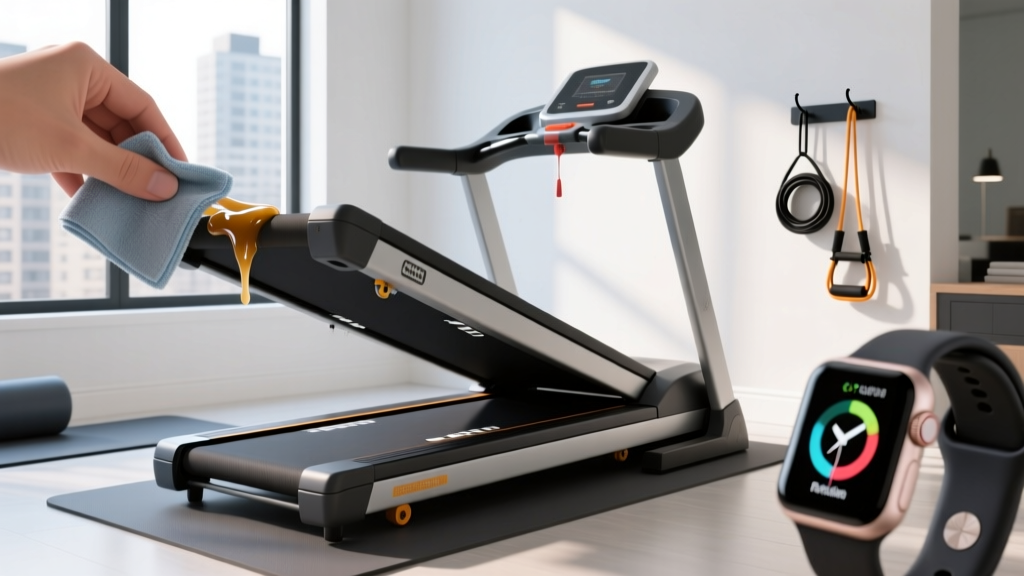
- Routine Maintenance: For any belt-driven machine, apply 100% silicone treadmill lubricant every 150 miles. A dry belt increases friction, forcing the motor to draw more amperage, which directly correlates to a louder, higher-pitched mechanical whine.
Frequently Asked Questions
Is the Alter G treadmill suitable for a standard bedroom gym?
Due to its physical footprint (the Via model requires roughly 7' x 11' of clearance) and the continuous 70+ dB hum of the blower, the Alter G is generally not recommended for small, shared-wall bedrooms unless extensive acoustic drywall treatments are installed. It is best suited for dedicated basement or garage gyms.
Which cardio machine is the absolute quietest for apartment living?
Magnetic resistance ellipticals and smart spin bikes are the undisputed champions of apartment living. Because they lack impact (no footstrikes) and use silent magnetic eddy currents for resistance, their noise output rarely exceeds 50 dB, making them virtually undetectable through standard interior walls.
More gear to consider
All reviews
Curved vs Motorized Treadmills: Treadmill Animation & Biomechanics

Compact Cardio Guide: Walking Pads & Treadmill Belt Lubricant

Omni Virtual Reality Treadmill vs Rowing: 2026 Guide
Can You Use FSA for Treadmill Belt Maintenance and Lubrication?

NordicTrack Commercial X32i Treadmill vs Elliptical: Value Breakdown
