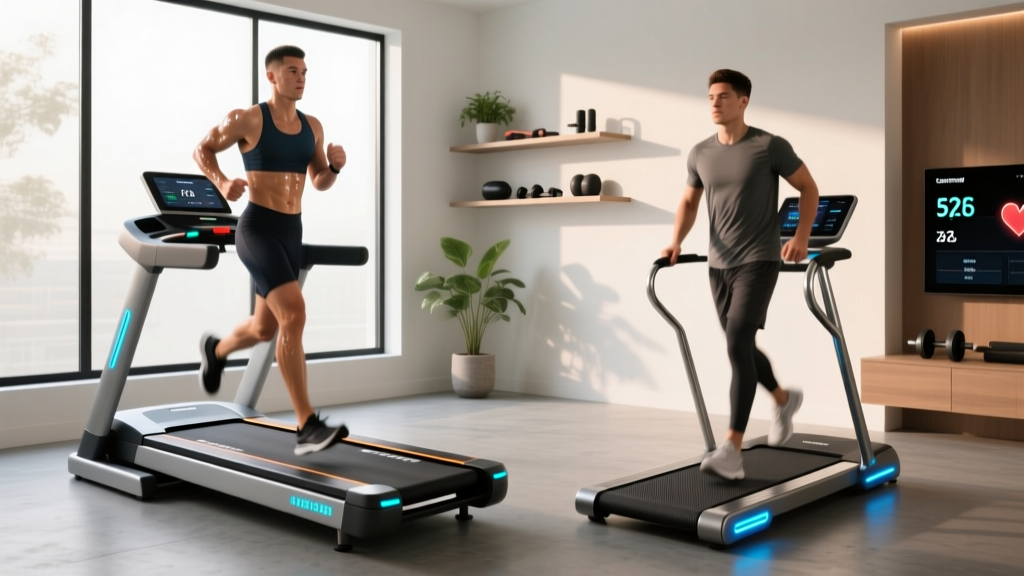
Air Bike vs Assault Bike vs Treadmill for Rehab: Budget Breakdown
Compare the Rogue Echo, AssaultBike Pro X, and top treadmills for rehab. Discover which low-impact cardio machine offers the best joint-friendly value.

Recovering from a lower-body injury—whether it is an ACL reconstruction, meniscus repair, or total knee arthroplasty (TKA)—requires a delicate balance between maintaining cardiovascular fitness and protecting healing tissues. When building a home recovery gym, patients and physical therapists frequently debate the best equipment investment. The ultimate showdown often comes down to the premier air bikes on the market (the Rogue Echo Gen 2 and the Assault Fitness AssaultBike Pro X) versus investing in a specialized treadmill for rehab.
As a senior equipment analyst for FitGearPulse, I have evaluated the biomechanics, upfront costs, and long-term value of these machines. This 2026 budget breakdown and value analysis will help you determine which cardio modality delivers the highest return on investment (ROI) for your specific recovery protocol.
The Biomechanics of Recovery: Ground Reaction Forces (GRF)
Before analyzing price tags, we must establish the physiological baseline for joint rehabilitation. The primary enemy of a healing knee, hip, or ankle is excessive Ground Reaction Force (GRF). According to the American Academy of Orthopaedic Surgeons (AAOS), early mobilization is critical for preventing scar tissue adhesion, but it must be done without overloading the joint capsule.
Impact Data Snapshot: Joint Loading Metrics
- Standard Treadmill Walking: Generates 1.2x to 1.5x your body weight in GRF per step.
- Standard Treadmill Running: Spikes to 2.5x to 3.0x body weight.
- Air Bike (Seated Cycling): Near-zero impact GRF; resistance is entirely air-displacement based.
Note: The American College of Sports Medicine (ACSM) highlights that zero-impact modalities allow for higher cardiovascular output (VO2 max maintenance) without exacerbating joint inflammation.
Head-to-Head: Rogue Echo Gen 2 vs. AssaultBike Pro X
If your physical therapist has cleared you for zero-impact cardio, an air bike is the gold standard. But which model offers the best value? The market is dominated by two heavyweights: the belt-driven Rogue Echo Gen 2 and the chain-driven AssaultBike Pro X.
| Specification | Rogue Echo Bike Gen 2 | Assault Fitness AssaultBike Pro X |
|---|---|---|
| Current Retail Price | $995.00 | $1,199.00 |
| Drive System | Quiet Belt Drive | Upgraded Chain Drive |
| Seat Comfort (Rehab) | Firm, narrow (requires aftermarket gel pad) | Wider, plush contour (superior for longer rehab sessions) |
| Pedal Grip | Knurled aluminum (excellent for post-op footwear) | Standard textured plastic |
| Warranty | 2 Years Comprehensive | Lifetime Frame / 2 Years Parts |
The Value Verdict on Air Bikes
From a pure budget perspective, the Rogue Echo Gen 2 ($995) wins on upfront cost and resale value. Rogue Fitness equipment holds its value exceptionally well on the secondary market; you can often recoup 70-80% of your investment if you sell it post-recovery. However, for rehab specifically, the AssaultBike Pro X ($1,199) offers a wider, more forgiving seat and a smoother chain-drive feel that is gentler on patellofemoral tracking issues. If you are 6+ weeks post-op and doing 45-minute steady-state flush sessions, the $204 premium for the AssaultBike's comfort is a justifiable medical expense.
The Treadmill for Rehab: When Walking is Non-Negotiable
While air bikes excel at cardiovascular conditioning, they cannot replicate the specific neuromuscular gait patterns required for late-stage ACL or hip rehab. Eventually, you must bear weight and retrain your stride. This is where searching for the right treadmill for rehab becomes necessary. However, the budget breakdown here is starkly different.
Budget Tier: Sole F80 ($1,199)
The Sole F80 is a staple in home gyms. It features a 3.5 CHP motor and Sole's signature Cushion Flex deck, which claims to reduce joint impact by up to 40% compared to outdoor asphalt. For early-stage weight-bearing protocols (walking at 1.0 to 2.5 MPH), the Sole F80 provides adequate shock absorption. Edge Case Warning: The Sole F80 lacks the low-speed micro-adjustments (below 1.0 MPH) that some clinical treadmills offer, making it less ideal for the very first days of post-op gait retraining.
Premium Tier: Woodway Curve (Non-Motorized) ($6,500+)
If budget is secondary to biomechanical perfection, the Woodway Curve is the undisputed king of rehab treadmills. Its slat-belt design and self-powered curved deck force a natural mid-foot strike, reducing knee extension torque. However, at over five times the cost of an AssaultBike, the ROI is difficult to justify for a single patient's recovery unless you plan to use it for decades of general fitness.
5-Year Total Cost of Ownership (TCO) Analysis
When evaluating fitness equipment for rehabilitation, the sticker price is only half the equation. Maintenance, space requirements, and eventual resale dictate the true financial impact.
| Cost Factor | Rogue Echo Bike | AssaultBike Pro X | Sole F80 Treadmill |
|---|---|---|---|
| Upfront Cost | $995 | $1,199 | $1,199 |
| Delivery & Assembly | $75 (Freight) + DIY | $99 (Freight) + DIY | Free Curbside / $250 In-Home |
| Maintenance (5 Yrs) | $0 (Belt requires no lube) | $30 (Chain lube/tensioning) | $50 (Silicone deck lubrication) |
| Est. Resale Value | $750 (75% recouped) | $700 (58% recouped) | $400 (33% recouped) |
| Net 5-Year Cost | $320 | $628 | $1,099 |
Decision Framework: Which Machine Fits Your Recovery?
To maximize your rehab budget, align your purchase with your specific surgical timeline and long-term fitness goals.
"The biggest mistake patients make is buying a motorized treadmill too early in their recovery. If you cannot walk pain-free on flat ground for 20 minutes, a treadmill will only reinforce compensatory limping patterns. Start with the air bike to build the engine; upgrade to the treadmill to tune the chassis."
— Dr. M. Vance, DPT, Orthopedic Sports Specialist
Scenario A: The Early-Stage Post-Op Patient (Weeks 2-12)
Recommendation: Rogue Echo Bike Gen 2.
Why: Your primary goal is flushing edema (swelling) and maintaining VO2 max without loading the joint. The Echo's belt drive is whisper-quiet, allowing you to do 5:00 AM recovery sessions without waking the household. The high resale value means you can liquidate the asset once you transition to outdoor running.
Scenario B: The Late-Stage Rehab & Gait Retraining Phase (Months 3-6+)
Recommendation: Sole F80 Treadmill.
Why: You need to retrain your central nervous system for heel-strike and toe-off mechanics. The Sole F80's 20-inch by 60-inch deck provides ample room for stride normalization, and the 3.5 CHP motor ensures the belt won't stutter or jerk at slow walking speeds (1.5 - 2.0 MPH), which is a common failure mode in cheaper sub-$800 treadmills.
Scenario C: The Chronic Joint Pain / Osteoarthritis Profile
Recommendation: AssaultBike Pro X.
Why: If your 'rehab' is actually long-term management of osteoarthritis, comfort is paramount. The AssaultBike's wider seat and ergonomic grip positions reduce lumbar and hip flexor strain during longer, steady-state cardio sessions required for weight management and joint lubrication.
Frequently Asked Questions
Can I use Blood Flow Restriction (BFR) bands on an air bike?
Yes. In fact, air bikes are the preferred modality for lower-body BFR training during ACL rehab. Because the air bike requires both concentric and eccentric-like resistance through the push/pull arm motion, you can achieve systemic cardiovascular fatigue while keeping the leg resistance low enough to protect the graft. Ensure you use FDA-cleared pneumatic BFR cuffs rather than elastic wraps to maintain precise limb occlusion pressure (LOP).
Is a manual curved treadmill better than an air bike for knee rehab?
Biomechanically, curved treadmills like the Woodway Curve reduce patellofemoral joint stress compared to flat motorized treadmills. However, they still generate 1.0x to 1.2x body weight in GRF. An air bike generates virtually zero GRF. For early-stage tissue healing, the air bike is vastly superior. The curved treadmill is reserved for late-stage return-to-sprint protocols.
Do I need a specific floor mat for these machines?
For air bikes, a standard 3/8-inch interlocking EVA foam mat ($30-$50) is sufficient to catch sweat and prevent floor scratching. For a treadmill for rehab, especially heavy models like the Sole F80 (280 lbs assembled), you must invest in a high-density PVC treadmill mat ($70-$100) to distribute the dynamic load and prevent the machine's leveling feet from denting hardwood or laminate flooring during use.
More gear to consider
All reviews
NordicTrack Treadmill Stuck on iFIT Screen? Rowing Machine Setup

Maintaining a Treadmill for Seniors Walking: Belt Lubrication

Treadmill Incline Conversion vs Stationary Bikes: 2026 Trends
Rowing Buying Guide & Technique vs WalkingPad A1 Pro Treadmill

Air Bike vs Assault Bike Maintenance & ProForm 545s Treadmill