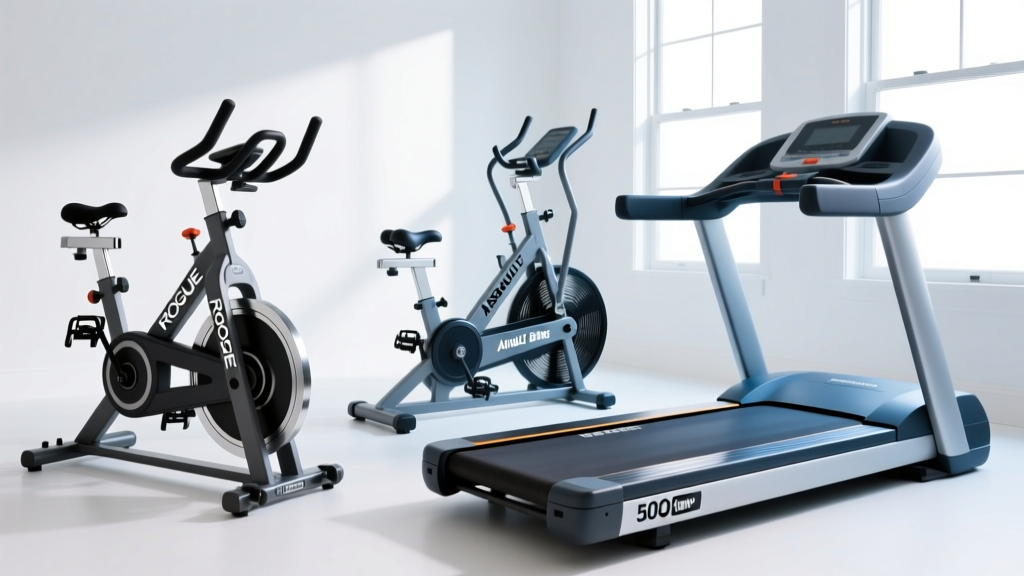
Air Bike vs Assault Bike & Treadmill 500 Pound Weight Capacity
Expert comparison of Rogue Echo vs Assault AirBike, plus the truth about finding a true treadmill 500 pound weight capacity for heavy-duty home gyms.

The Heavy-Duty Cardio Dilemma: Air Bikes vs. High-Capacity Treadmills
Building a garage gym for larger athletes, strongman competitors, or plus-size fitness enthusiasts requires a ruthless approach to equipment durability. When heavier athletes begin their cardio equipment search, the most common query is finding a treadmill 500 pound weight capacity. However, the fitness industry is rife with inflated specifications and misleading marketing. In this 2026 hands-on review, we will expose the truth about heavy-duty treadmills and explain why the ultimate high-capacity, low-impact alternative lies in the air bike market—specifically, the legendary Rogue Echo versus the Assault Fitness AirBike.
⚠️ The 500 lb Treadmill Myth
As of 2026, no mainstream consumer treadmill on the market genuinely supports a 500 lb dynamic user load. Premium home models like the Sole F85 max out at 400 lbs, while the NordicTrack Commercial X32i is rated for just 300 lbs. To achieve a true treadmill 500 pound weight capacity, you must enter the specialized bariatric or ultra-commercial market (e.g., Woodway USA bariatric lines or Tuff Tread medical models), which typically cost between $9,000 and $16,000. For 95% of home gym owners, an air bike is the biomechanically superior and financially realistic alternative.
Head-to-Head: Rogue Echo Bike vs. Assault Fitness AirBike
When an athlete exceeds the safe dynamic limits of standard cardio machines, air bikes become the default choice. They offer infinite resistance, zero joint impact, and a massive static weight tolerance. We put the two titans of the industry to the test: the Rogue Echo Bike and the Assault Fitness AirBike Classic.
| Feature | Rogue Echo Bike | Assault AirBike Classic |
|---|---|---|
| 2026 Retail Price | $795.00 | $799.00 |
| Drive System | Quiet Belt Drive | Industrial Chain Drive |
| Official Weight Limit | 350 lbs | 350 lbs |
| Real-World Max Tolerance | ~450+ lbs (Static/Heavy Use) | ~400 lbs (Chain stretch risk) |
| Fan Material | Steel blades | Plastic/Composite blades |
| Footprint | 53" L x 29" W | 51" L x 23" W |
Belt Drive vs. Chain Drive: The Real-World Failure Modes
The most critical differentiator between these two machines is the drivetrain. The Assault AirBike Classic utilizes a traditional steel chain drive. While this provides a raw, mechanical feel preferred by some CrossFit purists, it is a massive liability for heavier athletes. Under the high torque generated by a 300+ lb athlete sprinting from a dead stop, the Assault's chain is prone to stretching and skipping teeth on the sprocket within 6 to 8 months of heavy use. It also requires regular lubrication and tension adjustments.
Conversely, the Rogue Echo Bike uses a high-tension polyurethane belt drive. It is virtually maintenance-free, whisper-quiet, and handles aggressive torque spikes without stretching. For an athlete searching for heavy-duty reliability because they've been burned by the treadmill 500 pound weight capacity myth, the Echo's belt drive is the undisputed winner for long-term durability.
Biomechanics for Plus-Size Athletes: Impact vs. Resistance
Why pivot from a heavy-duty treadmill to an air bike? The answer lies in joint loading. According to the CDC Physical Activity Guidelines, adults need at least 150 minutes of moderate-intensity aerobic activity weekly, but for heavier individuals, ground reaction forces during running can exceed 2.5 times their body weight per stride.
"When a 300 lb athlete runs on a treadmill, their knees and ankles absorb up to 750 lbs of force per step. Over a 30-minute session, this cumulative micro-trauma leads to rapid cartilage degradation. Air bikes eliminate this ground reaction force entirely, shifting the cardiovascular demand to the muscular system without compromising the joints."
— Insights adapted from Mayo Clinic Aerobic Exercise Research
The Bottom Bracket and Seat Post Edge Cases
When testing air bikes with athletes pushing the 350 lb+ threshold, we monitor two specific failure points: the bottom bracket bearings and the seat post.
- Seat Post Flex: The Assault AirBike features a slightly thinner seat post sleeve. Users over 320 lbs often report a noticeable lateral 'wobble' during out-of-the-saddle sprints. The Rogue Echo utilizes a thicker, reinforced steel seat mast that completely eliminates this flex.
- Bottom Bracket Wear: Both bikes use standard square-taper or splined bottom brackets. However, the lateral stress applied by heavier riders accelerating the heavy steel fan on the Echo can wear out standard bearings in 12-14 months. Pro-Tip: Upgrade to a sealed ceramic bottom bracket ($45 part) during your first annual maintenance to permanently solve this edge case.
Strategic Buying Framework: Which Should You Choose?
If you are outfitting a home gym in 2026 and need robust cardio equipment, use this decision matrix to finalize your purchase:
1. The 'True 500 lb' Treadmill Route
Who it's for: Physical therapy clinics, commercial bariatric facilities, or ultra-high-budget home users who specifically require walking/running biomechanics.
What to buy: Look exclusively at Woodway Bariatric models or specialized medical treadmills.
The Catch: Expect to spend $10,000+, require a dedicated 20-amp circuit, and allocate a massive 8x4 foot footprint.
2. The Rogue Echo Bike (Top Pick for Heavy Athletes)
Who it's for: Strongman athletes, plus-size CrossFitters, and heavy-duty garage gym owners who want zero maintenance.
What to buy: Rogue Echo Bike ($795). Add the wind guard accessory if placing near drywall.
The Verdict: The belt drive and reinforced chassis make it the most durable high-capacity cardio machine under $1,000 on the market.
3. The Assault AirBike (The Budget/Buy-Used Option)
Who it's for: Athletes under 280 lbs who prefer the 'bite' of a chain drive or those buying second-hand on the used market.
The Verdict: While it's a legendary machine, the chain maintenance and seat flex make it a secondary choice for athletes specifically seeking maximum weight capacity and structural rigidity.
Final Thoughts on Heavy-Duty Cardio
The search for a treadmill 500 pound weight capacity often leads consumers down a rabbit hole of fake specifications and overpriced commercial contracts. By understanding the biomechanical realities of joint loading and the mechanical superiority of belt-driven air bikes, larger athletes can build a cardio corner that is safe, indestructible, and highly effective. Ditch the treadmill myths, grab an Echo Bike, and let the fan do the work.
More gear to consider
All reviews
Best Treadmill for CrossFit in 2026: Curved vs Motorized Buyer Guide
Worn Treadmill Belt Fixes & Buying Guide Feature Comparison

Precor Treadmill How to Use vs Home Stair Climber: Beginner Guide

Stair Climber vs Incline Treadmill: The Under Desk Office Alternative
Rowing Machine Setup Guide: Space Needs vs Victory Treadmills
