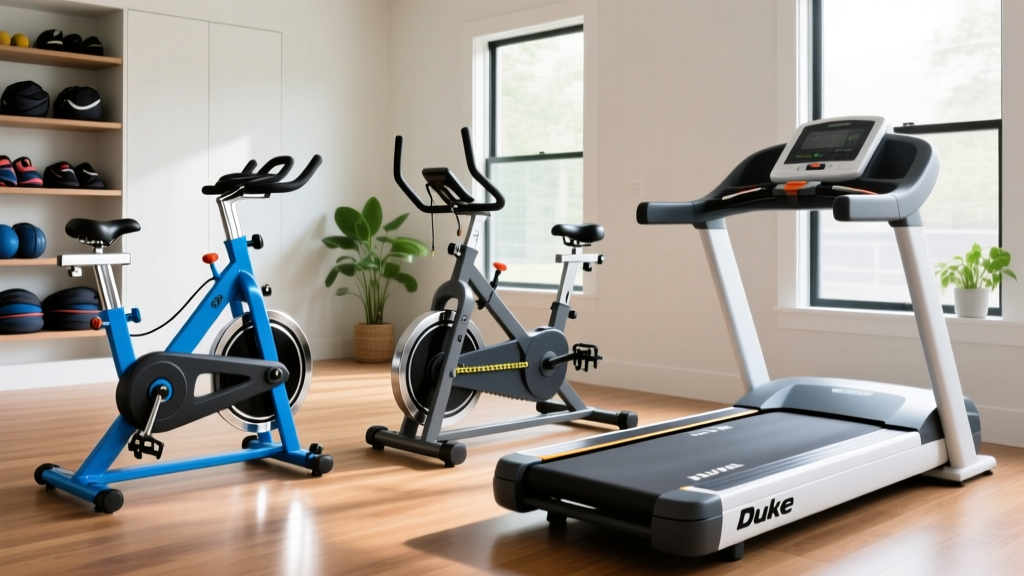
Air Bike vs Assault Bike Maintenance & Duke Treadmill Longevity
Compare Air Bike vs Assault Bike maintenance needs. Expert longevity tips, cleaning routines, and part replacements for your cardio fleet and Duke treadmill.

The Cardio Fleet Dilemma: Fan Bikes vs. Commercial Treadmills
When outfitting a garage gym or managing a commercial fitness facility in 2026, the debate over cardio equipment rarely ends at the initial purchase price. The true cost of ownership is defined by longevity, downtime, and the rigorous demands of maintenance. While strength equipment sits idle between sets, cardio machines endure thousands of high-RPM repetitive cycles, generating intense friction, heat, and structural stress.
For facility managers and dedicated home-gym owners, understanding the mechanical nuances between different cardio modalities is critical. In this comprehensive guide, we break down the Air Bike vs Assault Bike maintenance showdown, compare belt-driven versus chain-driven fan bikes, and explore the heavy-duty upkeep required for commercial-grade workhorses like the Duke Treadmill. By implementing the precise maintenance protocols outlined below, you can extend the lifespan of your cardio fleet by up to 40% while eliminating catastrophic mid-workout failures.
Air Bike vs Assault Bike: The Drive System Showdown
The term 'Assault Bike' is frequently used as a catch-all for fan bikes, but true equipment enthusiasts know that the specific model and its drive system dictate its maintenance profile. The classic Assault Fitness AirBike (Classic model) utilizes a heavy-duty steel chain drive, whereas newer iterations like the AirBike Elite, AirBike Pro, and the popular Rogue Echo Bike rely on reinforced rubber belt drives.
Chain Drive Maintenance (The Classic AirBike)
Chain-driven fan bikes deliver a raw, mechanical feel and are incredibly durable under extreme torque. However, they require a strict lubrication schedule. The exposed chain attracts gym dust, chalk, and pet dander, creating an abrasive paste that accelerates sprocket wear.
- Lubrication Interval: Every 30-45 days (or every 50 hours of use).
- Approved Lubricant: Use a dry PTFE (Teflon) bicycle chain lube. Never use wet lubricants or standard WD-40, as they will attract particulate matter and gum up the bottom bracket.
- Tension Check: The chain should have roughly 1/2 inch of vertical play at the midpoint between the front chainring and rear sprocket. If it sags more than 3/4 inch, adjust the rear wheel axle tensioners immediately to prevent chain slip during max-effort sprints.
Belt Drive Maintenance (Echo Bike & AirBike Elite)
Belt-driven fan bikes have dominated the 2026 market due to their near-zero maintenance requirements. They operate silently and do not require lubrication. However, they are not invincible.
- Debris Clearance: The belt guard must be removed every 6 months to vacuum out accumulated dust. Fine particulates can wedge between the belt teeth and the pulley grooves, causing micro-tears in the rubber.
- Alignment Verification: If the belt begins to 'chirp' or squeak, it is usually a sign of pulley misalignment rather than a lack of lubrication. Loosen the belt tensioner, realign the crank pulley with the fan pulley using a laser level or straight edge, and re-torque to manufacturer specifications (typically 40-50 Nm).
Whether you use a chain or belt drive, the bottom bracket bearings endure immense lateral stress during standing sprints. Annually, check the crank arms for lateral play. If you feel a 'clunk' when wiggling the pedals side-to-side, the bottom bracket cartridge must be replaced. Ignoring this will destroy the aluminum frame's bearing housing, turning a $40 repair into a $600 frame replacement.
The Duke Treadmill Benchmark: Heavy-Duty Belt and Deck Care
While fan bikes require localized mechanical care, maintaining a commercial-grade unit like the Duke Treadmill involves managing a complex ecosystem of high-voltage electronics, friction surfaces, and heavy-duty motors. Treadmills inherently possess more moving parts and higher failure rates than fan bikes, making a proactive maintenance schedule non-negotiable.
Managing Deck Friction and Belt Tension
The most common cause of treadmill motor burnout is excessive friction between the walking belt and the deck. When friction increases, the drive motor draws higher amperage to maintain speed, eventually overheating the motor control board (MCB).
- The Lift Test: With the treadmill off, lift the walking belt from the center of the deck. It should lift exactly 2 to 3 inches. If it lifts higher, the belt is too loose and will slip during heavy foot strikes. If it barely lifts, it is over-tensioned and will destroy the front and rear roller bearings.
- Silicone Lubrication: According to American College of Sports Medicine (ACSM) facility management guidelines, commercial treadmill decks require 100% pure silicone lubricant. Apply 1 oz of silicone every 3 months (or every 1,000 miles). Never use petroleum-based sprays, which will melt the belt backing and ruin the deck.
- Tracking Adjustments: If the belt drifts to the left or right, adjust the rear roller bolts in quarter-turn increments. Over-tightening one side to 'force' the belt straight will cause the belt seams to delaminate within weeks.
Motor Hood and Electronics Hygiene
Treadmill motors act as vacuums, pulling in dust, hair, and lint from the floor. In facilities housing a Duke Treadmill or similar commercial model, the motor hood must be removed and vacuumed monthly. Pay special attention to the cooling fan blades and the static discharge brushes. If the carbon motor brushes are worn down to less than 1/4 inch, they must be replaced to prevent arcing that will fry the MCB.
Environmental Factors: Defeating the Sweat and Corrosion Threat
Human sweat is essentially a saline solution with a pH that accelerates oxidation. In high-intensity interval training (HIIT) environments, sweat drips directly onto exposed chains, bottom brackets, and treadmill console seams.
The Post-Workout Neutralization Protocol
Wiping down equipment with a standard gym rag is insufficient. To protect your cardio fleet:
- Enzymatic Cleaners: Use an enzymatic or pH-neutral cleaner rather than bleach or ammonia-based sprays. Harsh chemicals will degrade the polyurethane grips on fan bike handles and cause the LCD screens on treadmills to cloud and crack.
- Anti-Corrosion Treatment: For chain-driven fan bikes and exposed treadmill incline screws, apply a light coat of a marine-grade anti-corrosion spray (such as Boeshield T-9) every 6 months. This leaves a dry, waxy film that repels moisture without attracting dust.
5-Year Total Cost of Ownership (TCO) Matrix
Understanding the long-term financial commitment of your cardio equipment is vital for budgeting. The table below compares the estimated 5-year maintenance costs and time investments for a chain-driven Air Bike, a belt-driven Echo Bike, and a commercial-grade Duke Treadmill, assuming 10 hours of weekly use.
| Equipment Type | Primary Maintenance Tasks | 5-Year Parts Cost | Time Investment |
|---|---|---|---|
| Classic AirBike (Chain) | Chain lube, tensioning, bottom bracket replacement | $85 - $140 | ~4 hours / year |
| Rogue Echo Bike (Belt) | Dust vacuuming, crank torque checks, belt replacement | $40 - $70 | ~1.5 hours / year |
| Duke Treadmill (Commercial) | Silicone lube, motor vacuuming, MCB/Brush replacement | $250 - $450 | ~8 hours / year |
Expert Verdict: Building a Bulletproof Maintenance Schedule
The choice between an Air Bike, an Assault Bike variant, or a heavy-duty treadmill ultimately comes down to your willingness to perform routine maintenance. If your goal is absolute minimal upkeep, the belt-driven fan bikes are the undisputed champions of the 2026 cardio market. They eliminate the messy chain lubrication process and significantly reduce the number of failure points.
However, if your facility requires the biomechanical specificity of running, investing in a commercial-grade Duke Treadmill is a necessity. To protect that investment, you must transition from a reactive repair mindset to a proactive maintenance culture. Log every silicone application, track your motor hood cleanings, and strictly enforce pH-neutral wipe-downs.
By respecting the mechanical boundaries of your equipment—whether that means torquing a fan bike crank arm to exactly 45 Nm or ensuring your treadmill belt lifts precisely 2.5 inches off the deck—you will secure a reliable, high-performance cardio fleet that outlasts the competition and delivers a flawless user experience for years to come.
More gear to consider
All reviews
Assault vs Air Bike & Horizon Fitness T101 Connect Treadmill

Air Bike vs Assault Bike Guide: Or Try a GoPlus Fitness Treadmill?

T6 5s Treadmill Setup: Curved Manual vs Motorized Installation
Cardio Noise Comparison & How to Take Apart a Sole F63 Treadmill

Belt Lubrication Guide for the Quietest Home Treadmill Models
