
Air Bike vs Assault Bike: Better Than an Aerobic Treadmill Workout?
Compare air bike vs assault bike costs and value. Discover if these budget-friendly cardio machines outperform a traditional aerobic treadmill workout.

The Budget Dilemma: High-End Treadmills vs. Wind-Resistance Bikes
When outfitting a home gym in 2026, the quest for the perfect aerobic treadmill workout often leads consumers into a financial trap. To achieve true, high-quality aerobic conditioning without a motorized treadmill dictating your pace, buyers typically gravitate toward curved manual treadmills (like the TrueForm Runner or AssaultRunner) or premium motorized models (like the NordicTrack 1750). The problem? These setups routinely cost between $2,000 and $4,500 upfront, not including mandatory monthly interactive subscriptions that can add $40 to $50 per month.
Enter the air bike and assault bike category. Originally designed for CrossFit and high-intensity interval training (HIIT), modern wind-resistance bikes from Rogue, Assault Fitness, and Schwinn have evolved into elite tools for steady-state Zone 2 and Zone 3 aerobic conditioning. But do they offer a better return on investment than a traditional treadmill? This guide breaks down the exact financial and physiological value of air bikes versus assault bikes, and how they stack up against the true cost of a treadmill setup.
The 2026 Subscription Fatigue Factor
Before comparing hardware, we must address the hidden cost of modern treadmills. A $2,000 motorized treadmill in 2026 is essentially a brick without its proprietary app ecosystem. Over a 5-year lifespan, a $468/year subscription adds $2,340 to your total cost of ownership. Air bikes and assault bikes require zero subscriptions to deliver a world-class aerobic stimulus. You pedal, the fan spins, and your heart rate dictates the resistance.
Market Pricing & Hardware Breakdown: The Big Three
To evaluate value, we must look at the dominant players in the wind-resistance market. While 'air bike' and 'assault bike' are often used interchangeably by consumers, 'AssaultBike' is a specific brand, whereas 'air bike' is the generic term for fan-based ergometers. Here is how the top three models price out in 2026.
| Model | Drive System | 2026 MSRP | Max User Weight | Warranty (Frame/Parts) |
|---|---|---|---|---|
| AssaultBike Classic | Chain Drive | $999 | 350 lbs | Lifetime / 1 Year |
| Rogue Echo Bike Gen 2 | Belt Drive | $1,299 | 350 lbs | 2 Years / 2 Years |
| Schwinn Airdyne AD7 | Belt Drive | $1,399 | 350 lbs | 10 Years / 2 Years |
Value Analysis: Chain vs. Belt Drive
The AssaultBike Classic wins on initial sticker price at $999. However, its chain drive system requires regular maintenance. Chains stretch, require lubrication, and eventually need replacement (a $40-$60 part and 30 minutes of labor every 1-2 years depending on usage). The chain also generates significant acoustic noise, which can be a dealbreaker for apartment dwellers or early-morning exercisers.
Conversely, the Rogue Echo Bike and Schwinn Airdyne AD7 utilize belt-drive systems. While they demand a $300 premium upfront, the polyurethane belts are virtually maintenance-free and operate in near silence. From a pure 5-year value perspective, the Echo Bike often surpasses the AssaultBike Classic when factoring in the cost of replacement parts and the friction of maintenance downtime.
5-Year Total Cost of Ownership Matrix
To truly understand the budget breakdown, we must compare the 5-year cost of an air bike against a comparable non-motorized curved treadmill (the gold standard for an unassisted aerobic treadmill workout).
| Expense Category | Rogue Echo Bike | Curved Treadmill (e.g., TrueForm) |
|---|---|---|
| Initial Hardware Cost | $1,299 | $3,499 |
| Shipping & Assembly | $0 (Often free) / DIY | $250 / $150 |
| 5-Year Maintenance | $0 | $150 (Belt lubrication/slats) |
| Subscription Fees (5 Yrs) | $0 | $0 (Manual) |
| Flooring / Space Prep | $50 (Small mat) | $200 (Heavy-duty mats) |
| Total 5-Year Cost | $1,349 | $4,099 |
"The spatial footprint is the hidden currency of home gyms. A curved treadmill demands roughly 15 square feet of dedicated, permanently occupied floor space and weighs over 350 pounds. An air bike occupies less than 9 square feet and can be rolled into a corner. For urban dwellers or garage gym owners maximizing multi-use space, the air bike's spatial ROI is unmatched."
Physiological ROI: Can You Replace the Treadmill?
The core question remains: Can an air bike replicate the cardiovascular benefits of an aerobic treadmill workout? According to the American Heart Association, achieving aerobic conditioning requires elevating your heart rate into specific target zones (typically 50-85% of your maximum heart rate) for sustained periods.
The Zone 2 Steady-State Challenge
For long, slow distance (LSD) Zone 2 cardio (e.g., 45-60 minutes at a conversational pace), treadmills have a distinct biomechanical advantage. Running or brisk walking primarily utilizes the lower body's largest muscle groups (glutes, quads, calves) in a natural, load-bearing pattern.
On an air bike, maintaining a steady Zone 2 heart rate for 60 minutes often leads to upper-body localized fatigue. Because you are pushing and pulling the handles, your shoulders, triceps, and lats accumulate metabolic waste (lactate) faster than your legs do during a light jog. This can cause your arms to 'burn out' before your cardiovascular system reaches the desired aerobic adaptation threshold.
The Workaround: Legs-Only and Interval Protocols
To maximize the aerobic value of an assault bike without upper-body burnout, experienced athletes utilize two methods:
- Legs-Only Steady State: Remove your hands from the moving handles and rest them on the stationary center pegs. This isolates the lower body, closely mimicking the muscular demand of an upright stationary bike or a light treadmill jog, allowing for 60+ minute Zone 2 sessions.
- Aerobic Intervals: Instead of a continuous 45-minute grind, perform 5 minutes of moderate pacing (using arms and legs) followed by 2 minutes of active recovery. This clears upper-body lactate while keeping the overall heart rate in the aerobic training zone.
Edge Cases & Failure Modes: When to Stick to a Treadmill
While the budget breakdown heavily favors the air bike, value is subjective to your physical limitations and training goals. Do not purchase an air bike if you fall into these specific edge cases:
- Severe Lower Back or Postural Issues: The slight forward lean required to grip the handles of a Rogue Echo or Schwinn Airdyne can aggravate lumbar strain during 40+ minute sessions. A treadmill allows for a natural, upright gait.
- Marathon or Distance Running Prep: If your goal is to train for a 13.1 or 26.2-mile road race, the SAID principle (Specific Adaptation to Imposed Demands) dictates you must run. An air bike will build your engine, but it will not condition your joints, tendons, and stabilizing muscles for the repetitive impact of pavement pounding.
- Wrist and Grip Pathologies: Conditions like carpal tunnel syndrome or severe arthritis can make gripping the thick, rubberized handles of an assault bike for extended periods highly uncomfortable.
Final Verdict: Maximizing Your Home Gym Budget
If your primary goal is general cardiovascular health, calorie expenditure, and high-intensity metabolic conditioning, the Rogue Echo Bike Gen 2 represents the undisputed value champion in 2026. At $1,299, it requires zero maintenance, zero subscriptions, and delivers a full-body aerobic and anaerobic stimulus that a $3,000 treadmill simply cannot match in terms of raw power output per dollar.
However, if your training is strictly geared toward long-duration, lower-body-only Zone 2 endurance, or if you require the biomechanical specificity of walking and running, saving up for a high-quality curved manual treadmill remains the superior—albeit vastly more expensive—investment. Assess your spatial budget, your maintenance tolerance, and your specific physiological targets before checking out.
More gear to consider
All reviews
NordicTrack Treadmill Screen Not Working? Fix Steps & Upgrade Guide

Are Treadmills FSA Eligible? Home Gym Layout & Belt Maintenance
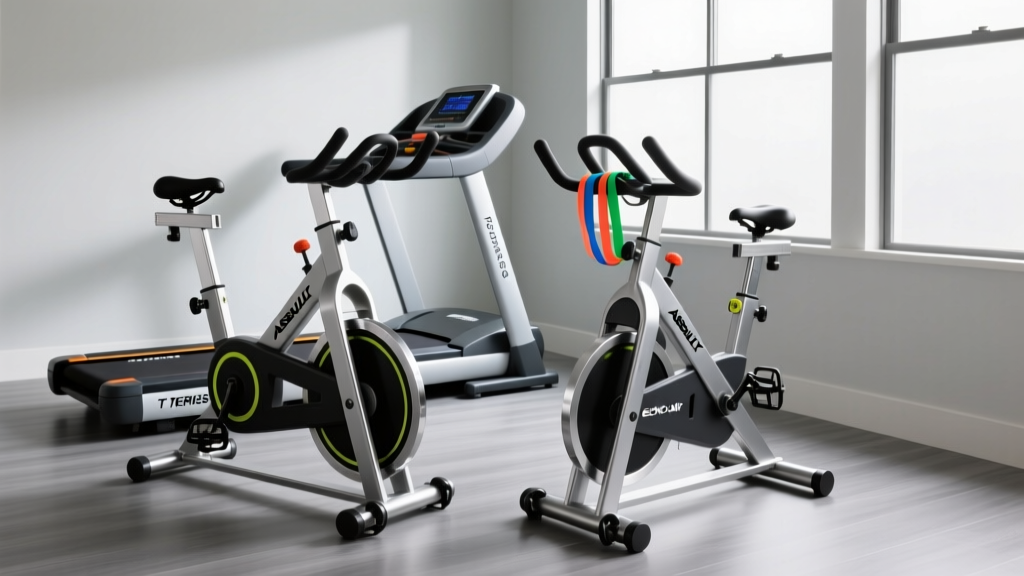
Assault Bike vs Air Bike: Space Layouts & T Series 6.5 S Treadmill
Does Walking on a Treadmill Build Leg Muscle? Pad vs Treadmill Guide

Elliptical vs Treadmill: Designing Space for Treadmill Walks
