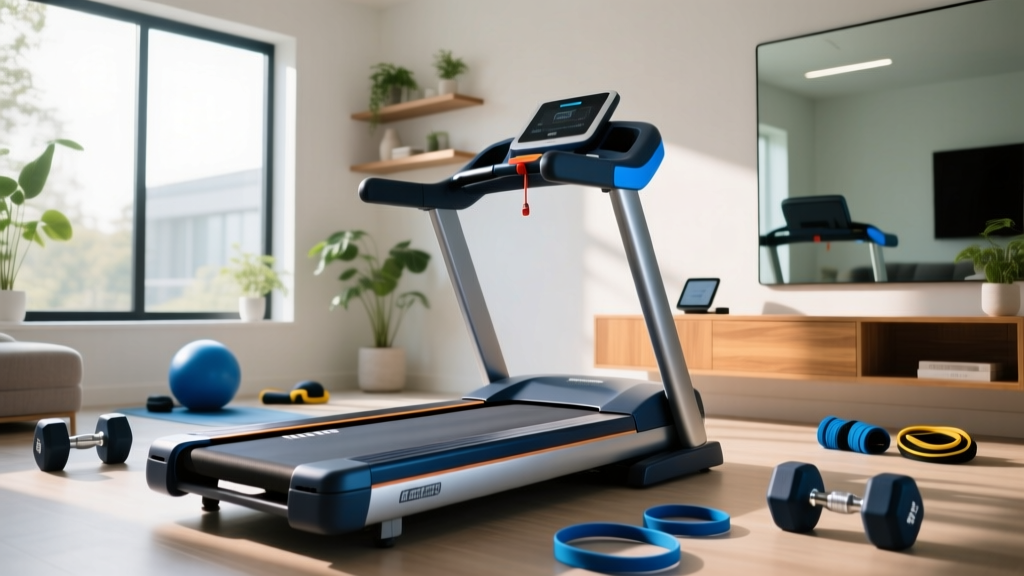
Advantages of Running on Treadmill: Noise Comparisons & Fixes
Discover the true advantages of running on treadmill setups at home. We compare cardio machine noise levels and troubleshoot common acoustic mistakes.

The Acoustic Trade-Off: Understanding Cardio Machine Noise
When evaluating the advantages of running on treadmill equipment at home, fitness enthusiasts rightfully focus on climate-controlled consistency, precise pacing, and reduced joint impact. According to the Mayo Clinic, regular aerobic exercise like treadmill running significantly improves cardiovascular health, endurance, and joint mobility. Modern treadmill decks feature elastomer cushioning systems that reduce impact forces by up to 30% compared to asphalt. However, one critical factor often derails the home gym experience and leads to neighbor disputes: acoustic disruption.
Treadmills are inherently the loudest cardio machines on the market. Unlike an elliptical or a magnetic stationary bike, a treadmill involves repetitive, high-impact footstrikes combined with a high-torque continuous duty motor. If you are not actively troubleshooting and managing this noise, you risk losing the primary advantages of running on treadmill setups in shared living spaces. This guide breaks down cardio machine noise level comparisons, identifies the most common setup mistakes, and provides a master troubleshooting framework for a quieter home gym.
Cardio Machine Noise Level Comparison Matrix
To understand where your equipment stands, we must differentiate between airborne noise (motor whine, fan noise, air resistance) and structure-borne noise (impact vibrations traveling through floor joists). The World Health Organization's Environmental Noise Guidelines recommend keeping continuous indoor noise below 30-40 dB for undisturbed rest, meaning a treadmill operating at 85 dB in an apartment requires serious mitigation.
| Machine Type | Drive/Motor Noise (Airborne) | Impact/Usage Noise (Structure-Borne) | Primary Acoustic Culprit |
|---|---|---|---|
| Motorized Treadmill | 60 - 75 dB | 85 - 95+ dB | Footstrike impact on deck; roller thump |
| Elliptical (Magnetic) | 40 - 50 dB | 55 - 65 dB | Pivot joint friction; heavy user sway |
| Rowing Machine (Air) | 70 - 80 dB | N/A | Flywheel wind displacement (airborne) |
| Rowing Machine (Magnetic) | 45 - 55 dB | 50 - 60 dB | Seat roller track friction |
| Stationary Bike (Flywheel) | 35 - 45 dB | 40 - 50 dB | Drive belt tension; pedal bearing wear |
As the data illustrates, the CDC-recommended vigorous aerobic activity of running on a treadmill generates nearly double the structure-borne decibel output of an elliptical. This makes troubleshooting treadmill-specific noise an absolute necessity for multi-story homes and apartments.
3 Common Mistakes That Amplify Treadmill Noise
Before assuming your machine's motor is failing, evaluate your setup. Most excessive noise issues stem from three critical installation and maintenance errors.
Mistake 1: Confusing Airborne Noise with Structure-Borne Impact
Many buyers purchase a standard 4mm PVC yoga mat or a cheap foam puzzle mat to 'soundproof' their treadmill. This is a fundamental physics error. PVC and foam compress entirely under the 250+ lb dynamic load of a runner, bottoming out and transferring 100% of the kinetic energy into the subfloor. This creates a 'drum effect' on second-floor joists, amplifying the thumping noise to the room below.
Mistake 2: Using the Wrong Belt Lubricant
A high-pitched squeaking or a strained motor whine usually indicates excessive friction between the running belt and the wooden deck. A common, catastrophic mistake is applying WD-40 or petroleum-based silicone sprays. Petroleum degrades the rubber backing of the belt and destroys the deck's wax coating, leading to permanent friction damage and voiding your warranty.
Mistake 3: Ignoring Motor Hood and Deck Bolt Creep
Treadmills vibrate continuously. Over 6 to 12 months, this micro-vibration causes the M8 hex bolts securing the deck to the frame, and the Phillips screws holding the plastic motor hood, to back out. This results in an irritating plastic rattle or a metallic clanking sound that mimics a failing drive roller.
⚠️ CRITICAL WARNING: Never use aerosol silicone sprays containing propellants or petroleum distillates on your treadmill. Only use 100% pure liquid silicone gel or liquid specifically formulated for fitness equipment. Applying petroleum-based products will cause the belt to delaminate within weeks, requiring a $150-$250 replacement.Step-by-Step Treadmill Noise Troubleshooting Guide
If your treadmill is disrupting your household, follow this diagnostic sequence to isolate and eliminate the acoustic anomaly.
- Isolate the Sound Profile: Turn the treadmill on without stepping on it. If the noise is present, it is motor, roller, or belt-related (airborne). If the machine is silent until you start running, it is an impact or structural issue (structure-borne).
- The 1-Ounce Lubrication Fix: If you hear a rhythmic 'shhh-shhh' friction sound or the motor sounds strained, loosen the rear roller bolts exactly two full turns. Apply exactly 1 ounce (30ml) of 100% pure silicone lube in a zigzag pattern down the center of the deck. Retighten the bolts to the manufacturer's torque spec and run the machine at 3 mph for 5 minutes to distribute the gel.
- Check the Belt Seam: If you hear a rhythmic 'thump' every time the belt completes a revolution, run your hand along the underside of the belt seam. A raised or warped seam will strike the front roller. This requires belt replacement or careful sanding of the seam overlap.
- Tighten the Shrouds: Power down and unplug the unit. Remove the motor hood. Inspect the drive belt tension (it should have about 1/2 inch of deflection). Tighten all frame-to-deck bolts using a torque wrench set to 15-20 ft-lbs, and apply a drop of blue Loctite 242 to the motor hood screws before reassembling to prevent future rattle.
Optimizing Your Space to Preserve the Advantages of Running on Treadmill
To fully enjoy the advantages of running on treadmill equipment without alienating your family or neighbors, you must engineer your space for acoustic decoupling. Here is the professional standard for treadmill installation in shared spaces:
- Upgrade to High-Density Rubber: Purchase a 3/8-inch (9.5mm) thick anti-vibration mat made from recycled vulcanized rubber with a Shore A durometer hardness rating of 60A to 70A. These mats cost between $70 and $120 but possess the density required to absorb kinetic footstrike energy before it reaches the subfloor.
- Strategic Load-Bearing Placement: Never place a treadmill in the exact center of a room on a suspended wood floor. The center of the joist span has the most flex and acts as an acoustic amplifier. Position the treadmill so the front motor area rests directly over a load-bearing wall or a primary support beam beneath the floorboards.
- Install Acoustic Isolation Pucks: For extreme noise sensitivity (e.g., basement gyms below bedrooms), place heavy-duty washer/dryer anti-vibration pucks under the treadmill's transport wheels and rear feet. This creates an air gap that severely limits structure-borne vibration transfer.
Frequently Asked Questions
Why is my brand new treadmill making a thumping noise?
New belts often have a stiff seam that hasn't yet conformed to the rollers. A mild thumping is normal for the first 20-30 miles of use. Running the treadmill at 6-8 mph unweighted for 10 minutes a day will help the belt relax and conform to the deck curvature.
Are manual (non-motorized) curved treadmills quieter?
Curved manual treadmills (like the AssaultRunner or Technogym Skillmill) eliminate motor noise entirely. However, because they rely on slat belts and the user's own kinetic force, the structure-borne impact noise of your footstrikes remains just as loud, if not louder, than a motorized equivalent. You still require a high-density rubber mat.
How often should I lubricate my treadmill deck?
For users running 15-20 miles per week, apply 1 ounce of 100% silicone lubricant every 3 months or every 150 miles. If you live in a low-humidity environment, the deck may dry out faster, requiring lubrication every 2 months to prevent friction-induced motor strain and squeaking.
More gear to consider
All reviews
Curved vs Motorized: Why Treadmill Keeps Tripping Circuit Breaker

Air Bike Longevity and the Treadmill vs Elliptical Fat Loss Debate

Treadmill Electrical Setup and Motor Horsepower Guide
2026 Market Trends: ProForm ProShox Treadmill Belt Maintenance

LifeSmart TM3000 PowerTouch Treadmill vs Air Bike: Assault Guide
