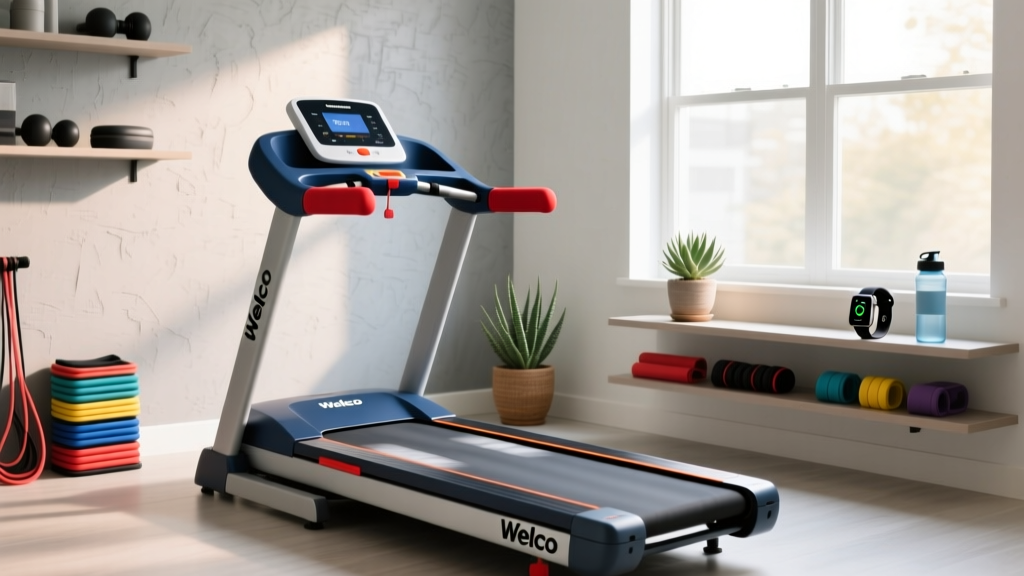
380am Pro Max Treadmill Review: Office Space Optimization
Read our 380am Pro Max treadmill review focused on office space optimization. Discover layout tips, desk clearance specs, and cable management.

The Spatial Reality of the 380am Pro Max Treadmill
As hybrid work models solidify in 2026, the home office has evolved from a makeshift corner desk into a highly engineered productivity hub. Integrating an under-desk treadmill is no longer just about burning extra calories; it is a complex spatial design challenge. The 380am Pro Max treadmill has emerged as a popular choice for active professionals, boasting a robust 2.5 HP motor and an 18-inch wide running belt. However, its premium build comes with a physical footprint that demands careful layout planning.
Unlike ultra-slim walking pads that can be slid under a sofa, the 380am Pro Max is a dedicated piece of fitness equipment. Measuring 54 inches in length, 21.5 inches in width, and standing 4.1 inches tall at the deck, it requires a permanent or semi-permanent zoning strategy within your office. In this comprehensive review, we analyze the 380am Pro Max strictly through the lens of space optimization, ergonomic geometry, and acoustic layout design.
Dimensional Breakdown & Desk Clearance Matrix
Before unboxing the 380am Pro Max, you must audit your existing desk infrastructure. The most common failure mode in under-desk treadmill setups is inadequate vertical clearance, leading to the dreaded 'T-Rex posture' where users must hunch over their keyboards. According to ergonomic standards outlined by Cornell University Ergonomics, your elbow angle must remain at 90 degrees while walking, meaning your desk and monitor must rise in tandem with the treadmill deck.
Spatial Data Highlight: The 380am Pro Max deck adds exactly 4.1 inches to your standing height. If your eye level is normally 48 inches from the floor while using a standing desk, it will now be 52.1 inches. Your monitor arm or desk riser must accommodate this delta without maxing out its vertical tension.| User Height | Seated Desk Height | Walking Desk Height (with 380am) | Required Monitor Arm Reach |
|---|---|---|---|
| 5'4" (162 cm) | 26.5 inches | 34.6 inches | 18 - 22 inches |
| 5'8" (172 cm) | 28.5 inches | 36.6 inches | 20 - 24 inches |
| 6'0" (182 cm) | 30.5 inches | 38.6 inches | 22 - 26 inches |
| 6'3" (190 cm) | 32.0 inches | 40.1 inches | 24 - 28 inches |
Layout Configuration 1: The 'Slide-and-Walk' L-Desk Setup
If you are working with a standard L-shaped desk, dedicating a permanent 54x21.5 inch floor space solely to walking is often an inefficient use of square footage. The optimal spatial solution is the lateral slide method.
Executing the Lateral Slide
- Zone A (Seated Work): Position your ergonomic chair (e.g., Herman Miller Aeron or Steelcase Leap) in the corner of the L-desk.
- Zone B (Active Work): Place the 380am Pro Max parallel to the secondary wing of the L-desk.
- The Transition Path: Ensure a minimum 24-inch lateral clearance between the edge of the treadmill belt and the base of your desk chair. This allows you to stand up, take one lateral step, and mount the treadmill without tripping over the 380am's side motor housing.
This layout requires a keyboard tray on a telescoping arm so you can easily swivel your input devices between Zone A and Zone B without disconnecting peripherals.
Layout Configuration 2: The Dedicated Active Zone
For those with the luxury of a larger home office or a corporate flex-space, creating a dedicated 'Active Zone' utilizing a floating desk is the gold standard for 2026 office design. By mounting a heavy-duty floating desk (rated for at least 150 lbs of down-force) directly over the 380am Pro Max, you eliminate the need to transition between sitting and walking stations.
However, this layout introduces a critical spatial challenge: chair clearance. The 380am Pro Max features a slightly raised front motor cowling that extends 6 inches past the belt. When rolling an office chair away from the desk, the caster wheels can easily catch on this cowling, scratching the plastic and potentially damaging the chair. To solve this, you must install a flush-mount transition ramp or leave a strict 30-inch deep 'roll-back zone' behind the treadmill where no chair is ever parked.
Cable Management & Power Routing for a Clean Layout
The 380am Pro Max comes with a 6.5-foot power cord, which is surprisingly short for larger office layouts. Routing this cable without creating a tripping hazard is paramount for spatial safety.
- Under-Desk J-Channels: Mount a 3-inch wide wire mesh J-channel to the underside of your desk. This keeps the power brick elevated off the floor, preventing it from becoming a dust magnet or a snag point for your shoes.
- Surge Protector Placement: Never place the surge protector on the floor behind the treadmill. The continuous vibration of the 2.5 HP motor can cause the treadmill to 'walk' backward by up to half an inch per week, eventually crushing floor-level cables. Mount the surge protector directly to the desk leg or under-desk tray.
- Peripheral Cables: Use coiled cables for your mouse and keyboard. Standard straight cables will pull taut and yank your peripherals off the desk when you walk at the 380am's top speed of 4.0 mph and your body naturally shifts backward.
Acoustic Geometry and Vibration Isolation
Space optimization is not just visual; it is also acoustic. The 380am Pro Max operates at approximately 58 decibels at 2.0 mph. While this is quieter than older commercial models, low-frequency vibrations will transfer through the floor joists, potentially disturbing household members or colleagues in adjacent rooms.
Subfloor Layout Adjustments
If your office is located on the second floor or features engineered hardwood, you must incorporate acoustic dampening into your floor plan. We recommend placing a 3/8-inch thick, high-density EVA foam puzzle mat strictly under the treadmill's footprint. Do not use thin PVC chair mats; they will crack under the 68-pound dynamic load of the 380am Pro Max and fail to isolate the harmonic vibration of the motor.
Furthermore, position the treadmill so the motor (located at the front) faces an interior, load-bearing wall rather than a hollow drywall partition. This prevents the wall cavity from acting as an acoustic amplifier.
Research published by the Mayo Clinic highlights that Non-Exercise Activity Thermogenesis (NEAT)—the energy expended for everything we do that is not sleeping, eating or sports-like exercise—can significantly offset the metabolic risks of sedentary office work. Integrating a treadmill into your daily layout is one of the most effective ways to boost NEAT without disrupting your workflow.
Ergonomic Guardrails: Avoiding Spatial Compromise
When optimizing for space, many users compromise on monitor placement. According to the OSHA Computer Workstations eTool, the top of your monitor should be at or slightly below eye level. When you step onto the 4.1-inch deck of the 380am Pro Max, your eye level rises. If your monitor is mounted on a rigid, non-adjustable stand, you will be forced to tilt your neck upward, leading to cervical strain within 15 minutes.
The Spatial Fix: You must allocate budget and desk real estate for a heavy-duty, gas-spring dual monitor arm. The arm must have a minimum vertical travel range of 8 inches to seamlessly transition between your seated eye level and your walking eye level. Ensure the arm's pole is mounted at the very back edge of the desk to maximize the forward reach, keeping the screen exactly 20 to 26 inches from your eyes while in motion.
Pros and Cons for Spatial Planning
Spatial Pros
- Low 4.1-inch deck profile fits under most 2026 standing desks.
- Front-mounted transport wheels allow a single user to tilt and roll the 68-lb unit into a closet.
- Compact 21.5-inch width leaves room for a secondary filing cabinet or bookshelf.
Spatial Cons
- 54-inch length requires a deep desk (minimum 30 inches) to prevent stepping off the back edge.
- Short 6.5-foot power cord limits placement options relative to wall outlets.
- Side motor housing creates a tripping hazard if not properly zoned.
Final Layout Verdict
The 380am Pro Max treadmill is a formidable piece of cardio equipment that rewards meticulous spatial planning. It is not a 'drop it anywhere' walking pad; it is a dedicated workstation component. If you have the square footage to accommodate a dedicated Active Zone with a floating desk and gas-spring monitor arms, the 380am Pro Max offers an unparalleled, stable walking experience that justifies its footprint. However, if you are working in a cramped 10x10 bedroom office with a shallow 24-inch desk, the spatial trade-offs and clearance issues will likely lead to frustration. Measure twice, route your cables intelligently, and prioritize vertical desk adjustability to unlock the full potential of this machine in your daily routine.
More gear to consider
All reviews
What NordicTrack X24 Treadmill Reviews Miss: Belt Maintenance

Curved Manual vs Motorized: Commercial X22i Treadmill Compared

Walking Pad Reviews: Lessons From The Kelsey Kane Treadmill Video
Future Glide Treadmill Review: Top Folding Picks for Small Spaces

Stair Stepper vs Treadmill: Beginner Motor Size Guide