
12 30 Treadmill vs Stationary Bike Types: Budget Breakdown
Compare the cost of a 12 30 treadmill vs stationary bike types (upright, recumbent, spin). Discover 2026 pricing, hidden fees, and true ROI.

When outfitting a home gym, cardio equipment represents one of the largest financial investments you will make. Recently, a massive surge in search intent has centered around the 12 30 treadmill—a term referring to machines capable of sustaining the viral '12-3-30' workout (12% incline, 3 mph speed, for 30 minutes). But how does the true cost of a treadmill built for this specific, high-torque routine compare to investing in stationary bike types like upright, recumbent, and spin models?
In this 2026 budget breakdown and value analysis, we strip away the marketing fluff. We will examine exact price points, mechanical longevity, hidden subscription costs, and the long-term ROI of treadmills versus the three primary stationary bike categories. Whether you have $500 or $2,000 to spend, this guide will help you allocate your fitness budget where it yields the highest return.
The '12 30' Treadmill Requirement: Budgeting for Incline and Durability
To execute the 12-3-30 treadmill workout safely and without burning out your machine, you cannot rely on budget-tier walking pads or entry-level foldables. Sustaining a 12% incline for 30 continuous minutes places immense thermal and mechanical stress on the drive motor and belt deck.
Expert Spec Requirement: You need a minimum of 3.0 CHP (Continuous Horsepower). Do not confuse this with 'Peak HP', which only measures the motor's output in short bursts. A 2.5 Peak HP motor will overheat and trigger a thermal shutdown halfway through a 12% incline session.True Cost of a 12 30 Capable Treadmill
- Budget Tier ($599 - $799): Models like the Horizon T101 often cap at a 10% incline or feature 2.75 CHP motors that degrade quickly under heavy incline loads. Not recommended for daily 12-3-30 routines.
- Mid-Range Value ($899 - $1,199): The Sole F63 ($999) and Horizon 7.4 ($899) are the gold standards here. Both offer 3.0 CHP motors, 15% max inclines, and 2-ply belts that resist stretching. This is the sweet spot for value.
- Premium Tier ($1,500+): NordicTrack and Peloton Tread models offer immersive screens but lock you into mandatory subscriptions to access their full incline programming.
Stationary Bike Types: Upright, Recumbent, and Spin Breakdown
If the footprint or joint impact of a treadmill is a concern, stationary bikes offer a compelling alternative. However, the term 'stationary bike' encompasses three vastly different mechanical designs, each with its own pricing structure and value proposition.
1. Upright Bikes: The Versatile Middle Ground
Upright bikes mimic the geometry of a traditional road bike but with a wider, more comfortable saddle and a heavier, stabilized base. They engage the core and upper body more than recumbent models.
- Top Value Pick: Schwinn IC4 (Approx. $799 in 2026).
- The Breakdown: The IC4 uses a 40-pound flywheel with smooth magnetic resistance. It features dual-sided pedals (SPD clips and toe cages) and a Bluetooth FTMS connection, allowing it to sync with Zwift or Peloton Digital for a fraction of the cost of a proprietary smart bike.
- Best For: Users wanting interactive app connectivity without a $2,000 hardware investment.
2. Recumbent Bikes: The Ergonomic Investment
Recumbent bikes feature a bucket seat with a backrest and pedals positioned in front of the body. This design eliminates load on the lumbar spine and wrists.
- Top Value Pick: Schwinn 270 ($699) or Sole R92 ($1,099).
- The Breakdown: Recumbents are generally more expensive to manufacture due to the extended steel frame and heavier seat assemblies. The Sole R92 offers a 24-pound flywheel and a 400 lb weight capacity, making it a commercial-grade asset for home use.
- Best For: Seniors, individuals in physical rehabilitation, or those with lower back pathologies. According to the American Heart Association, achieving 150 minutes of moderate aerobic activity is crucial for cardiovascular health, and recumbent bikes provide the lowest barrier to entry for joint-compromised users.
3. Spin Bikes (Indoor Cycles): The High-Intensity Choice
Spin bikes are designed for aggressive, out-of-the-saddle riding and high-cadence intervals. They feature a minimalist frame, aggressive drop handlebars, and a heavy perimeter-weighted flywheel.
- Premium Pick: Keiser M3i ($1,695). Features an aluminum frame, rear-flywheel (sweat-proof), and eddy current magnetic resistance with unparalleled accuracy.
- Budget Pick: Sunny Health SF-B1002 ($350). Uses a friction-pad resistance system.
Head-to-Head Value Matrix: Treadmill vs. Bikes
To visualize the budget breakdown, we must look beyond the sticker price. The following matrix compares a mid-range 12 30 treadmill (like the Sole F63) against the three primary bike types based on 2026 market averages.
| Machine Type | Avg Upfront Cost | 5-Yr Maintenance | Space Required | Caloric Burn (30m) |
|---|---|---|---|---|
| 12% Incline Treadmill | $999 | $120 (Lube/Belt) | ~22 sq ft | ~280-340 kcal |
| Upright Bike (Magnetic) | $799 | $0 - $30 | ~10 sq ft | ~210-260 kcal |
| Recumbent Bike | $899 | $0 - $20 | ~14 sq ft | ~180-220 kcal |
| Spin Bike (Magnetic) | $1,200+ | $40 (Cleats/Battery) | ~8 sq ft | ~300-400 kcal |
Note: Caloric burn estimates are based on a 155 lb individual. For exact metabolic equivalents across varying weights, refer to the comprehensive charts published by Harvard Health Publishing.
Hidden Costs: Subscriptions, Electricity, and Depreciation
The most critical error home gym buyers make in 2026 is ignoring the Total Cost of Ownership (TCO). A machine's value is heavily dictated by its hidden operational costs.
The Subscription Trap
Many premium treadmills and smart bikes now feature 'gated' hardware. If you buy a $1,400 smart treadmill but refuse to pay the $49/month interactive programming fee, you may be locked out of automatic incline adjustments and live leaderboard metrics. Conversely, traditional mid-range treadmills (like Sole or Horizon) and standard magnetic upright bikes operate entirely offline, keeping your 5-year TCO strictly tied to the initial hardware purchase.
Electricity and Maintenance
Treadmills are the biggest energy hogs in a home gym. A 3.0 CHP motor pulling a 200 lb user up a 12% incline can draw between 600 to 900 watts of continuous power. Furthermore, treadmill decks require silicone lubrication every 150 miles, and belts eventually stretch and require replacement ($100-$150). Stationary bikes, particularly those with eddy-current or manual magnetic resistance, draw negligible electricity and have virtually zero drivetrain maintenance requirements.
Depreciation and Resale Value
'Commercial-grade spin bikes like the Keiser M3i retain up to 60% of their retail value on the secondary market after three years. Mid-range folding treadmills, however, often depreciate by 70% within the first 18 months due to high shipping weights and motor reliability concerns.'
The ROI Framework: Which Machine Wins Your Budget?
Ultimately, the decision between a 12 30 treadmill and a stationary bike comes down to your biomechanics, available space, and willingness to perform maintenance.
- Choose the 12% Incline Treadmill if: Your primary goal is low-impact steady-state cardio (LISS) via walking, you have a dedicated 22-square-foot space, and you are willing to spend $900-$1,100 upfront for a 3.0 CHP motor to ensure the machine survives daily incline loading.
- Choose an Upright or Spin Bike if: You live in an apartment or multi-story home where treadmill deck impact noise is a liability. A $799 magnetic upright bike offers 90% of the cardiovascular benefits of a treadmill with zero impact noise and zero belt maintenance.
- Choose a Recumbent Bike if: You are recovering from an injury, managing sciatica, or purchasing equipment for a multi-generational household where user ergonomics and safety are the highest priorities.
By aligning your budget not just with the sticker price, but with the mechanical requirements of your preferred workout—whether that is the grueling 12-3-30 treadmill climb or a high-cadence spin session—you ensure your cardio investment pays dividends for years to come.
More gear to consider
All reviews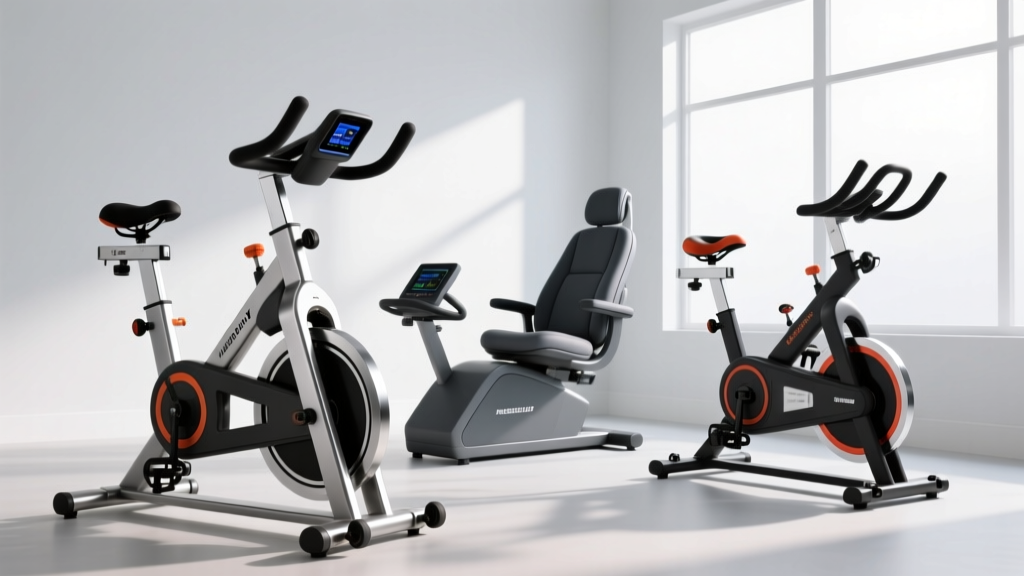
Rent to Own Treadmill No Credit Check? Try Stationary Bike Types
GXT Treadmill Stress Test: Clinical Buying Guide & Setup
Treadmill or Exercise Bike? Motor Size & Setup Guide

Under Desk Treadmill Office Review: Space Layouts & How to Fix Treadmill Belt Slipping to One Side

Treadmill Belt Slipping? Top Compact Portable Cardio Alternatives
