1 Hr Treadmill Workouts vs Stationary Bikes: Space Guide
Optimize home gym space for 1 hr treadmill workouts vs stationary bikes. Compare footprints, layouts, and upright, recumbent, and spin models for 2026.

The Spatial Reality of Home Endurance Training
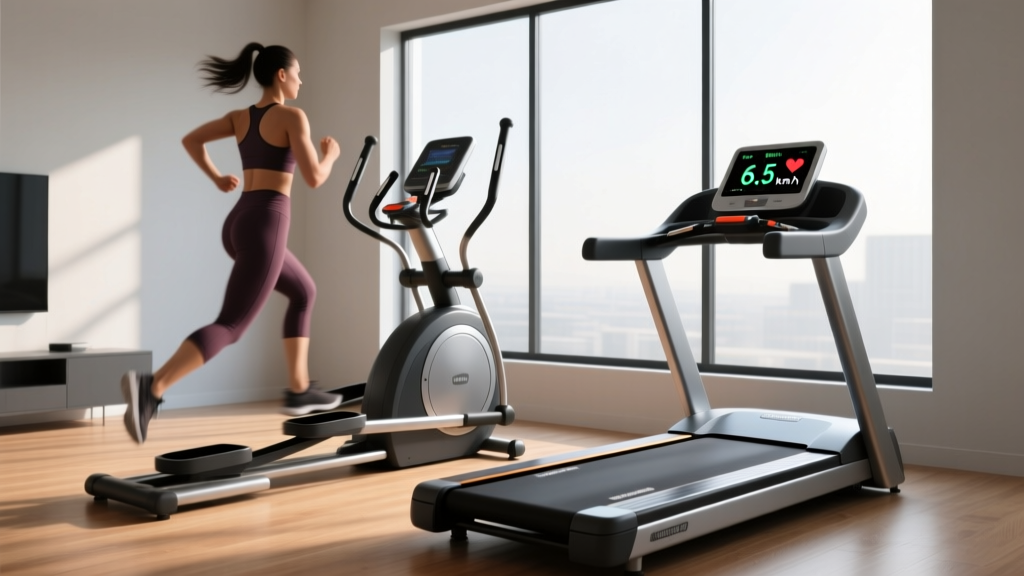
As home gym design evolves in 2026, the focus has shifted from simply cramming equipment into a spare bedroom to engineering dedicated endurance zones. For cardio enthusiasts, the gold standard for building aerobic base fitness often involves 1 hr treadmill workouts. However, dedicating a full hour to running or walking indoors requires serious spatial planning. If your home gym footprint is limited, you must weigh the massive spatial demands of a treadmill against highly efficient stationary bike types—including upright, recumbent, and spin models.
Designing a layout that accommodates 60-minute sweat sessions isn't just about the machine's physical dimensions; it is about safety envelopes, ceiling clearances, ventilation, and joint preservation. Below, we break down exactly how to optimize your floor plan for long-duration cardio, comparing the spatial reality of treadmills with the space-saving versatility of stationary bikes.
The 'Safety Envelope': Mapping 1 Hr Treadmill Workouts
When planning for 1 hr treadmill workouts, the biggest mistake homeowners make is measuring only the machine's static footprint. A premium treadmill like the NordicTrack Commercial 2450 measures roughly 80 inches long by 38 inches wide. However, the American Society for Testing and Materials (ASTM) recommends a minimum safety clearance zone to prevent severe injury in the event of a fall or emergency dismount.
Calculating Your Treadmill Zone
- Static Footprint: 80" L x 38" W (Approx. 21 sq. ft.)
- Rear Clearance: Minimum 36" to 48" behind the deck to allow for safe falling and emergency stops.
- Side Clearance: Minimum 24" on both sides for arm swing and mounting/dismounting.
- Total Required Zone: ~116" L x 86" W (Approx. 69 sq. ft.)
The Vertical Clearance Trap
Endurance runners often utilize incline training to simulate hills and reduce repetitive joint impact. When a treadmill deck inclines to 15%, the rear of the deck raises, but more importantly, the user's head height increases. A standard treadmill deck sits 8 to 10 inches off the floor. Add a 6-foot-tall runner, plus a 15% incline elevation, and you suddenly need a ceiling height of at least 8.5 feet to prevent head strikes during high-incline 1 hr treadmill workouts. If your gym is in a standard basement with 8-foot ceilings, a treadmill may be physically unviable for tall users.
Stationary Bike Types: The Space-Saving Endurance Alternatives
If your room cannot accommodate the 69-square-foot safety envelope of a treadmill, stationary bikes offer a compelling alternative for 60-minute cardio sessions. The key is selecting the right bike type for your specific spatial and ergonomic needs.
1. Spin Bikes (Indoor Cycling): The Micro-Footprint Powerhouse
Spin bikes, such as the Keiser M3i (retailing around $2,395 in 2026) or the Peloton Bike+, are the undisputed champions of space optimization. Designed for high-intensity interval training (HIIT) and grueling 1-hour endurance rides, they mimic the geometry of a road bike.
Space Profile: A typical spin bike requires a footprint of just 59" x 22" (9 sq. ft.). Because the user is seated and leaning forward, vertical ceiling clearance is virtually a non-issue, making spin bikes perfect for low-ceiling attics or basements. You only need 12 inches of side clearance for mounting.2. Upright Bikes: The Casual Endurance Compromise
Upright bikes like the Schwinn 800 offer a more relaxed, traditional seating position. They are ideal for users who want to read, watch a tablet, or do upper-body movements during a moderate 60-minute session. While slightly larger than a spin bike due to the wider console and seat post, they still consume less than half the floor space of a treadmill. They are best placed in multi-use rooms or home offices where a massive treadmill would dominate the visual aesthetic.
3. Recumbent Bikes: The Ergonomic Long-Haul Cruiser
For users dealing with lower back pain or recovering from injuries, the recumbent bike (e.g., Sole R92) is the only viable option for pain-free 1-hour sessions. The bucket seat and backrest provide lumbar support that treadmills and spin bikes cannot match. The spatial catch? Recumbent bikes have a long horizontal footprint (roughly 65" x 28"). While they save vertical space, they eat up horizontal floor space, requiring a layout similar to a rowing machine.
Footprint & Clearance Comparison Matrix
Use the table below to map your available floor space against the requirements of long-duration cardio machines.
| Machine Type | Example Model (2026) | Static Footprint | Total Safety Zone | Min. Ceiling Req. |
|---|---|---|---|---|
| Motorized Treadmill | NordicTrack 2450 | 21 sq. ft. | 69 sq. ft. | 8.5 - 9.5 ft. |
| Spin / Indoor Cycle | Keiser M3i | 9 sq. ft. | 16 sq. ft. | Standard (7+ ft.) |
| Upright Bike | Schwinn 800 | 11 sq. ft. | 20 sq. ft. | Standard (7+ ft.) |
| Recumbent Bike | Sole R92 | 13 sq. ft. | 24 sq. ft. | Standard (7+ ft.) |
The 60-Minute Sweat Factor: Infrastructure & Layout Design
Completing 1 hr treadmill workouts or 60-minute spin sessions generates massive amounts of heat, humidity, and power draw. Your layout must account for environmental infrastructure.
Electrical Zoning
A motorized treadmill drawing continuous power for 60 minutes, especially under the load of a 200+ lb runner on an incline, will pull significant amperage. Never plug a treadmill into a shared 15-amp circuit with other gym electronics (like a TV or space heater). Dedicate a 20-amp circuit exclusively to your treadmill zone to prevent breaker trips mid-stride. Spin and upright bikes, particularly those with magnetic resistance and low-draw consoles, can safely share standard circuits.
Thermal Management and Airflow
During a 1-hour indoor cardio session, the body can produce over 1,000 watts of metabolic heat. Position your treadmill or bike directly in the path of a high-velocity floor fan or a dedicated ductless mini-split HVAC vent. Avoid placing cardio machines in corners where air stagnates; instead, float the machine in the room with at least one side facing an open window or air return to facilitate cross-ventilation.
Impact-Resistant Flooring
For treadmill zones, EVA foam puzzle mats are insufficient for hour-long running sessions; they compress and cause the treadmill deck to wobble, leading to premature motor wear. Install 3/4-inch vulcanized rubber horse stall mats (typically $50-$70 per 4x6 sheet). For stationary bikes, a thinner 3/8-inch rubber mat is sufficient to catch sweat and protect hardwood floors from the concentrated weight of the bike's stabilizer feet.
Biomechanics and Joint Preservation for Hour-Long Sessions
Space optimization must never come at the cost of your physical health. When committing to 60-minute endurance blocks, the repetitive impact of running must be carefully managed. According to the American Heart Association, adults should aim for at least 150 minutes of moderate-intensity or 75 minutes of vigorous aerobic activity per week. A single 1-hour session fulfills a massive portion of this requirement, but the modality matters.
"While weight-bearing exercises like treadmill running are excellent for bone density, the repetitive ground reaction forces can lead to overuse injuries in the knees and shins if form degrades over a 60-minute session. Low-impact alternatives like cycling provide equivalent cardiovascular benefits without the joint compression." — Adapted from Mayo Clinic guidelines on aerobic exercise selection.
If your home gym layout forces you to choose between a treadmill and a bike, consider your injury history. If you require a treadmill for marathon specificity, ensure your room has the 69-square-foot envelope to allow for natural gait mechanics and arm swing without hitting walls. If you are strictly training for cardiovascular health and caloric expenditure, a spin bike offers a virtually identical VO2 max stimulus in a fraction of the space, with zero impact on your cartilage.
Final Verdict: Designing Your Room
Optimizing a home gym for long-duration cardio requires ruthless honesty about your spatial constraints. If you have a dedicated garage bay or a bonus room with 9-foot ceilings and 70 square feet of open floor space, a premium treadmill remains the king of weight-bearing endurance training. However, for apartments, basements, and multi-use rooms, modern spin and upright bikes deliver the exact same 60-minute cardiovascular adaptations while leaving you with enough square footage to actually enjoy the rest of your home.
More gear to consider
All reviews
Folding Treadmills for Small Spaces & The Treadmill Murder Trial
Why You Feel Dizzy After Walking on Treadmill: Setup & Noise Fixes

SuperRun Treadmill Care: Longevity Tips for Compact Portable Cardio

Step-by-Step Guide: Curved Manual vs Life Fitness Elevation Series Treadmill

2026 Trend: ProForm Carbon Pro 2000 Treadmill vs Compact Cardio Gear