
Syedee Leg Press Machine vs 45° Sleds: 2026 Buying Guide
Compare the Syedee leg press machine with traditional 45-degree sleds. Our 2026 guide covers biomechanics, pricing, dimensions, and space requirements.

The Biomechanical Divide: Horizontal vs. 45-Degree
When building out a comprehensive lower-body training station in 2026, the debate between horizontal and 45-degree leg press machines remains one of the most critical decisions for both home gym owners and commercial facility managers. The fundamental difference lies in the vector of resistance and its effect on spinal loading. Horizontal machines push the resistance straight back, completely eliminating axial spinal compression. Conversely, 45-degree plate-loaded sleds utilize gravity on an inclined track, which closely mimics the biomechanics of a barbell back squat but introduces a degree of shear force and requires rigorous core bracing to protect the lumbar spine.
According to the ExRx.net Horizontal Leg Press Directory, seated horizontal variations are highly recommended for individuals with pre-existing lower back pathologies or those recovering from spinal injuries. However, for pure hypertrophy and maximal mechanical tension, the 45-degree sled remains the undisputed king. In this guide, we will specifically analyze the increasingly popular Syedee leg press machine—a standout in the compact horizontal category—and compare it directly against traditional 45-degree plate-loaded behemoths.
Quick Decision Matrix
- Choose Horizontal (Syedee): If you have low ceiling clearance (under 8 feet), suffer from lumbar fatigue, prioritize a smaller footprint, or are building a commercial rehab/senior fitness wing.
- Choose 45-Degree Sled: If your primary goal is maximal load progression (800+ lbs), you have ample floor space and ceiling height, and you want to closely replicate squat mechanics for athletic carryover.
Deep Dive: The Syedee Leg Press Machine (Horizontal)
The Syedee leg press machine (specifically the 2026 SY-LP200X Pro-Seated model) has disrupted the home and boutique gym market by offering a commercial-grade horizontal pressing experience in a remarkably condensed footprint. Unlike massive plate-loaded horizontal sleds that require 10+ feet of floor space, the Syedee utilizes a sophisticated pin-loaded cable and pulley system with a 2:1 mechanical advantage.
Specs, Pricing, and Real-World Limitations
Retailing at approximately $689 to $749 depending on the retailer, the Syedee SY-LP200X features an 11-gauge steel frame and a 200-pound pin stack. Because of the 2:1 pulley ratio, the effective resistance at the footplate peaks at 400 pounds. While 400 pounds may seem inadequate for elite powerlifters, it is more than sufficient for 90% of the population when utilizing unilateral (single-leg) presses, pause reps, and slow eccentrics.
- Dimensions: 72" L x 32" W x 48" H
- Footprint: 16 Square Feet
- Weight: 315 lbs (Shipped)
- Seat Adjustability: 5-position ratcheting backpad to prevent posterior pelvic tilt.
The Limitation: The primary drawback of the Syedee leg press machine is the ceiling of its resistance. Once a user can comfortably press the entire 400-pound effective stack for sets of 15, progressive overload via traditional weight addition halts. Users must then rely on advanced intensity techniques like drop sets, 1.5 reps, or accommodating resistance bands to continue stimulating hypertrophy.
The 45-Degree Plate-Loaded Sled: The Gold Standard
For those who require limitless loading potential, the 45-degree leg press is non-negotiable. The ExRx.net 45-Degree Sled Biomechanics database highlights that the inclined track allows for a more natural hip flexion angle, reducing the risk of hip impingement at the bottom of the movement compared to poorly designed horizontal seats.
Top 2026 Models and Loading Potential
The benchmark for this category remains the Body-Solid Pro Club Line SLP500G. Priced at $1,899, this unit is a staple in commercial gyms. It features a 45-degree carriage that rides on four sealed linear bearings, ensuring a frictionless glide even when loaded with 1,000+ pounds of iron.
Another premium contender is the Hammer Strength HS-45 Linear Bearing Leg Press, often found in elite athletic facilities. With a price tag hovering around $3,800, it offers independent converging carriage arms, allowing each leg to work in its natural arc of motion, correcting bilateral imbalances that fixed horizontal sleds often mask.
Head-to-Head Comparison Matrix
| Feature | Syedee SY-LP200X (Horizontal) | Body-Solid SLP500G (45-Degree) |
|---|---|---|
| Resistance Type | Pin-Loaded (200lb stack / 400lb effective) | Plate-Loaded (1000+ lb capacity) |
| Spinal Compression | Near Zero (Fully supported horizontal torso) | Moderate (Requires active core bracing) |
| Footprint | 72" x 32" (Compact) | 83" x 34" (Requires plate storage wings) |
| Ceiling Clearance | 48" (Basement friendly) | 56"+ (Requires standard 8ft+ ceilings) |
| Approx. Price (2026) | $689 - $749 | $1,899 - $2,100 |
Spatial, Budget, and Floor Loading Constraints
One of the most overlooked aspects of purchasing heavy leg training equipment is structural floor loading. A fully loaded 45-degree sled can easily exceed 1,500 pounds (machine weight + user + plates). When concentrated on the footprint of the base rails, this generates immense Pounds per Square Foot (PSF) pressure. If you are installing a 45-degree sled on a second-floor residential space or a garage with compromised joists, you risk structural damage.
"For residential garage gyms built on standard 4-inch concrete slabs, both the Syedee and 45-degree sleds are perfectly safe. However, for basement gyms or upper-floor commercial spaces, the 315-pound Syedee horizontal unit distributes weight far more evenly and eliminates the dynamic shock-loading of dropping heavy sleds onto the safety catches." — Fitness Facility Structural Guidelines, 2025 Update.
Furthermore, the ACE Fitness Exercise Library emphasizes that proper machine alignment requires adequate clearance around the unit for safe loading and unloading of plates. A 45-degree sled requires at least 24 inches of lateral clearance on both sides for plate storage and handling, effectively doubling its functional footprint compared to the Syedee's self-contained pin stack.
Step-by-Step: Optimizing Your Horizontal Footprint
If you opt for the Syedee leg press machine to save space, follow this setup protocol to maximize biomechanical efficiency:
- Backpad Calibration: Adjust the ratcheting backpad to a 15-degree recline. A completely flat 0-degree seat forces the pelvis into a posterior tilt at deep flexion, rounding the lumbar spine.
- Foot Placement: Position feet shoulder-width apart. Because horizontal sleds do not have gravity pulling the carriage down a track, you must actively pull the weight back into the eccentric phase. Ensure your heels are firmly planted to engage the posterior chain.
- Safety Pin Setup: Unlike 45-degree sleds with side-mounted safety handles, the Syedee relies on the pin-stack's inherent friction and a manual lockout bar. Always set the secondary safety catch just below your maximum working range of motion.
Expert Troubleshooting & Form Cues
Regardless of whether you choose the Syedee horizontal model or a 45-degree plate-loaded sled, improper execution leads to joint degradation. Implement these expert troubleshooting cues:
- Knee Valgus (Caving In): If your knees cave inward during the concentric push, you are likely overloading the vastus lateralis while underutilizing the gluteus medius. Fix: Place a mini resistance band around your knees during warm-up sets to activate the abductors before heavy working sets.
- Hip Impingement at the Bottom: Common on horizontal machines when the knees travel too close to the chest. Fix: Widen your stance slightly and point your toes out at a 15-degree angle to clear the hip capsule, or limit the range of motion by 2 inches before the pelvis begins to lift off the pad.
- Asymmetrical Pressing: On fixed-carriage 45-degree sleds, a dominant leg will take over the load. Fix: Incorporate unilateral single-leg presses at the end of your workout to identify and correct left-to-right strength discrepancies.
Frequently Asked Questions
Can I build massive legs using only the Syedee leg press machine?
Yes, but it requires strategic programming. Since the Syedee caps out at an effective 400 lbs, you must utilize mechanical disadvantage techniques. Bulgarian split squats on the leg press (single leg), 3-second eccentrics, and pre-exhaustion with leg extensions will allow you to reach muscular failure well before hitting the 400-pound weight limit.
Which machine is better for knee rehabilitation?
Horizontal machines like the Syedee are generally preferred in early-stage rehab. The lack of axial loading and the ability to precisely control the pin-loaded resistance in 10-pound increments make it safer for patellar tendon recovery compared to the massive jumps in weight inherent to plate-loaded 45-degree sleds (which usually require adding 45lb or 25lb plates at a minimum).
Final Recommendations for Your 2026 Setup
The choice between the Syedee leg press machine and a traditional 45-degree sled ultimately hinges on your specific environmental constraints and loading requirements. If you are outfitting a home gym with low ceilings, prioritizing joint longevity, or operating on a budget under $800, the Syedee SY-LP200X is an engineering marvel that delivers exceptional hypertrophy stimulus without the spatial bloat. However, if you are an advanced lifter chasing 1,000-pound leg presses, or a commercial gym owner needing equipment that caters to elite athletes, investing the $1,900+ required for a Body-Solid or Hammer Strength 45-degree sled is a mandatory expenditure for long-term progressive overload.
More gear to consider
All reviews
Cable Leg Attachments & Unilateral Leg Press Machine Maintenance

Horizontal Leg Press Machine Calf Raises vs Standing & Seated

Calf Raises: Standing vs Seated Form & Leg Press Machine Images
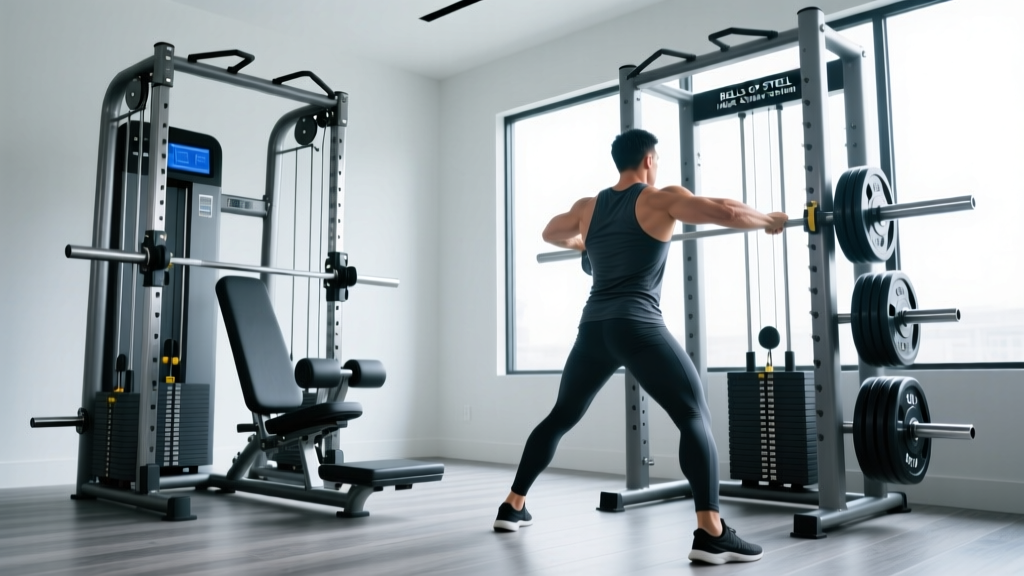
Titan Leg Press Machine vs. Bells of Steel: 2026 Home Gym Showdown

Leg Extension & Curl Buying Guide: How to Do Leg Presses Without a Machine
