
Sled vs Horizontal Leg Press: Which Builds More Muscle?
Sled vs horizontal leg press: discover which machine builds more quad mass, spares your lower back, and boosts athletic speed. Compare top 2026 models.

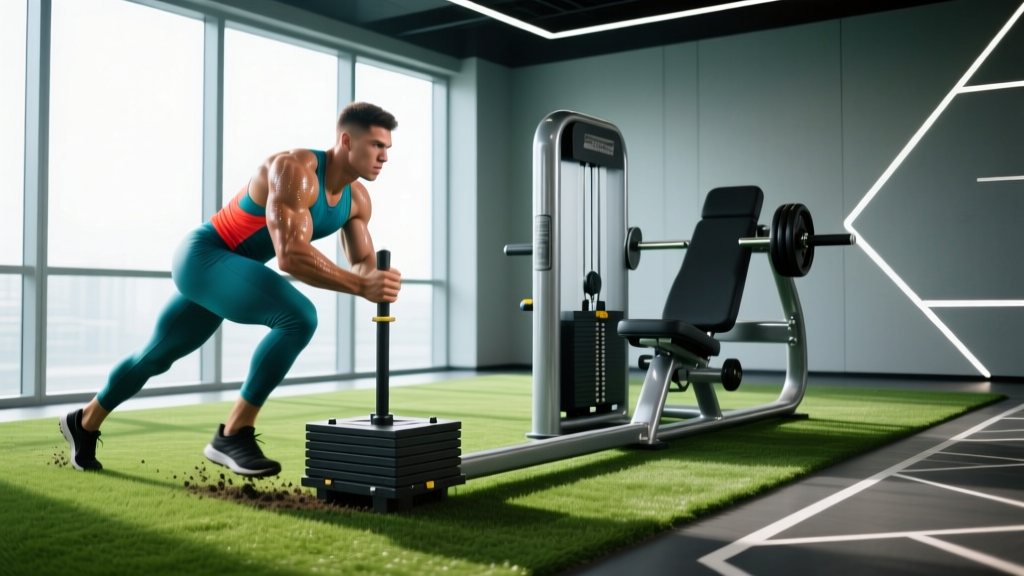
When building a lower-body training program, the debate of sled vs horizontal leg press frequently surfaces among lifters optimizing for quad hypertrophy and athletic power. To properly evaluate the sled vs horizontal leg press dilemma, we must first clarify the terminology that often confuses gym-goers and coaches alike. The term 'sled' in commercial gyms usually refers to the 45-degree plate-loaded leg press (the 'leg sled'), while in athletic facilities, it refers to the turf-pushing prowler. Conversely, the 'horizontal leg press' encompasses both the seated pin-loaded machines and the supine 'lay-down' leg press variations.
Understanding the biomechanical differences, spinal loading profiles, and specific hypertrophic stimuli of each machine is critical for programming. Whether you are a bodybuilder seeking maximum quad sweep or a field athlete needing horizontal force production, this 2026 guide breaks down the exact mechanics, equipment specs, and programming protocols you need to make the right choice for your goals.
Sled vs Horizontal Leg Press: Biomechanics and Muscle Activation
The core of the sled vs horizontal leg press comparison lies in the hip-to-torso angle and the direction of resistance. According to biomechanical analyses highlighted by Stronger By Science, the angle of the torso dictates not only the stretch placed on the glutes and hamstrings but also the sheer force applied to the lumbar spine.
- The 45-Degree Leg Sled: Your torso is reclined at roughly 45 degrees. Gravity pulls the carriage straight down, meaning you are pushing at an angle relative to gravity. This allows for massive absolute loading but increases the risk of lumbar flexion ('butt wink') at the bottom of the range of motion.
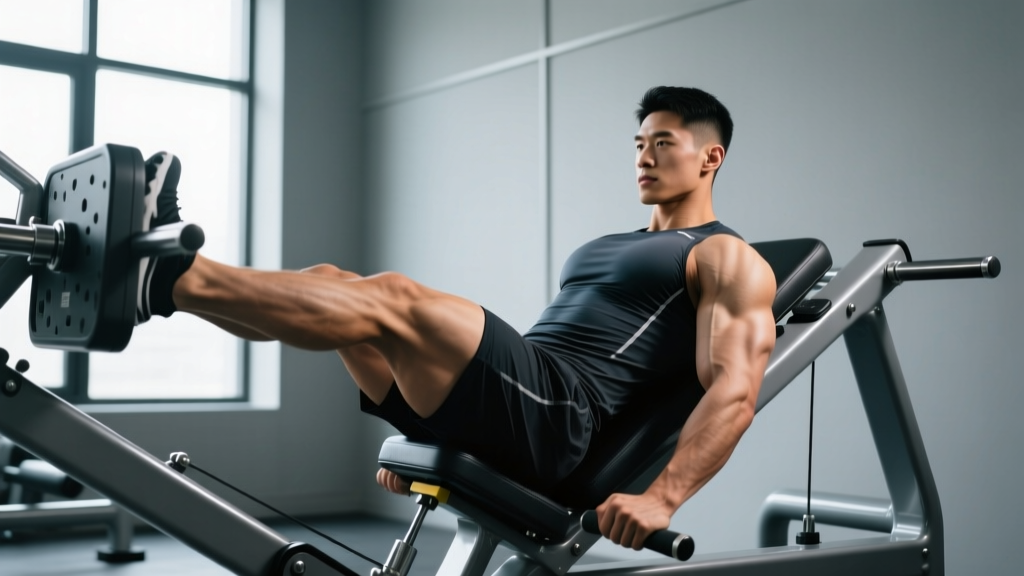
- The Horizontal / Lay-Down Leg Press: In a true lay-down (supine) or seated horizontal press, the resistance is pushed parallel to the floor or slightly upward via a cable/pulley system or weight stack. The torso is either fully flat or locked at 90-100 degrees. This drastically reduces axial spinal loading and isolates the quadriceps by limiting glute involvement.
| Feature | 45-Degree Leg Sled | Horizontal / Lay-Down Press | Athletic Sled Push (Prowler) |
|---|---|---|---|
| Primary Resistance Vector | Gravity + Plate Weight (Diagonal) | Pin-Loaded Stack / Hydraulic (Horizontal) | Friction + Added Mass (Horizontal) |
| Spinal Compression | Moderate to High | Low (especially supine) | Low (Neutral Standing Spine) |
| Quad Isolation | Moderate (High Glute Carryover) | High (Minimal Glute Stretch) | Low (Full Posterior Chain) |
| Max Load Capacity | Very High (1000+ lbs) | Moderate (Stack limits / Lever arms) | High (Limited by grip/friction) |
Equipment Breakdown: Top 2026 Machines and Pricing
If you are outfitting a home gym or commercial facility, the traditional leg sled vs leg press debate often comes down to footprint, budget, and maintenance. Here is how the top-tier 2026 models compare.
1. Rogue Fitness 45-Degree Leg Press (The 'Sled')
Priced around $2,850, the Rogue 45-Degree is the gold standard for plate-loaded sleds. It features a massive 1,000 lb weight horn capacity and a 30-degree footplate angle that accommodates deep knee flexion. The primary failure mode on cheaper sleds is the linear bearing track wearing down and causing the carriage to stick; Rogue uses high-grade UHMW plastic liners that require minimal lubrication and last for decades under heavy use.
2. Prime Fitness Seated & Lay-Down Leg Press (Horizontal)
Prime Fitness dominates the horizontal space with their adjustable resistance profile machines (starting around $4,200). Their seated horizontal press allows you to adjust the cam to target the quads at their most stretched or shortened positions. For the 'lay-down' variation, supine cable-driven leg presses from brands like Sorinex or custom Hammer Strength rigs cost between $3,500 and $5,000, offering unparalleled lumbar support for lifters with back injuries.
3. Sorinex Prowler (The Athletic Sled)
At roughly $850, the Sorinex Prowler is the benchmark for turf pushes. Unlike the stationary leg machines, this requires a 50-foot turf track. The friction coefficient of the turf combined with the sled's mass creates a concentric-only resistance curve, entirely eliminating the eccentric muscle damage associated with traditional leg presses.
Hypertrophy vs. Athletic Performance: Which Should You Choose?
When analyzing the sled push vs leg press for athletic transfer, the context of your sport dictates the tool. Field athletes (football, rugby, soccer) require immense horizontal force production to accelerate from a standstill. The prowler sled push mimics the exact joint angles and ground reaction forces of a sprint start. A 2024 study published in the Journal of Strength and Conditioning Research demonstrated that heavy sled pushes significantly improve 10-meter sprint times by increasing horizontal ground reaction forces without the central nervous system fatigue associated with heavy barbell squats.
Conversely, if your goal is pure muscle hypertrophy, the sled leg press vs horizontal leg press comparison heavily favors the horizontal or lay-down variations for isolation. Muscle growth requires high mechanical tension and stability. The horizontal pin-loaded leg press removes the need to stabilize a heavy, gravity-dependent carriage, allowing you to push closer to true muscular failure safely. The lay-down (supine) position further removes the hip flexors from the equation, forcing the vastus lateralis and rectus femoris to handle the entire load.
Spinal Loading and Injury Prevention
Lower back pain is the most common complaint among heavy leg pressers. Evaluating the horizontal leg press vs sled leg press from a physiotherapy perspective reveals why the 45-degree sled is often the culprit. As you descend into deep flexion on a 45-degree sled, the pelvis tends to rotate posteriorly. If the lumbar spine rounds under 800 lbs of load, the shear force on the L4-L5 discs is immense.
The horizontal lay-down leg press completely mitigates this risk. Because your back is flat against a horizontal pad and the resistance is pushed forward rather than up-and-back, the pelvis remains neutral throughout the entire range of motion. For lifters with a history of herniated discs or sciatica, the horizontal or supine leg press is not just an alternative; it is a mandatory substitution to maintain leg volume without aggravating spinal nerves. For more on joint-friendly exercise selection, refer to the exercise directories and biomechanical guidelines at ExRx.net.
Programming Protocols for Maximum Gains
To extract the maximum benefit from these machines, you must program them according to their unique resistance profiles.
Protocol A: 45-Degree Sled for Overload
- Exercise: 45-Degree Plate-Loaded Leg Sled
- Sets/Reps: 3 x 6-8
- RIR (Reps in Reserve): 1-2 (Stop before pelvic tilt occurs)
- Tempo: 3-0-1-0 (3-second eccentric to control the heavy load, explosive concentric)
- Foot Placement: Low and narrow on the platform to maximize knee flexion and quad stretch.
Protocol B: Horizontal / Lay-Down Press for Metabolic Stress
- Exercise: Pin-Loaded Horizontal Leg Press or Supine Cable Press
- Sets/Reps: 3 x 12-15 + 1 Drop Set
- RIR: 0 (Take to absolute technical failure)
- Tempo: 2-1-1-1 (1-second pause at the bottom stretch, 1-second peak contraction squeeze)
- Foot Placement: Shoulder-width, toes pointed slightly out to engage the vastus medialis (teardrop).
FAQ: Answering Your Leg Day Dilemmas
What are the main differences in a horizontal leg press vs sled leg press?
The primary difference is the resistance vector and spinal loading. A horizontal leg press pushes weight parallel to the floor (or via a seated/supine cable system), which minimizes axial loading on the spine and isolates the quads. A sled leg press (45-degree) pushes weight diagonally against gravity, allowing for heavier absolute loads but increasing the risk of lumbar flexion and lower back strain at the bottom of the movement.
How does a traditional sled push vs leg press impact athletic speed?
A traditional sled push (prowler on turf) directly translates to sprint acceleration by training horizontal force production and concentric power without eccentric muscle damage. A stationary leg press builds raw muscular cross-sectional area (hypertrophy) and general leg strength but lacks the specific ground reaction forces and coordination required to directly improve 10m to 30m sprint times.
Is the horizontal leg press vs sled leg press better for lower back pain?
Yes, the horizontal leg press—specifically the lay-down or supine variation—is vastly superior for lifters with lower back pain. The 45-degree sled leg press forces the hips into deep flexion under heavy loads, which often causes the pelvis to tuck and the lumbar spine to round, aggravating discs. The horizontal press keeps the spine neutral and supported, allowing for intense quad training without spinal shear.
Can I replace squats entirely with the leg sled vs leg press machines?
While both machines are exceptional for quad hypertrophy and spare the upper back from barbell compression, they do not fully replicate the core stabilization, adductor engagement, and full-body motor unit recruitment of a free-weight barbell squat. They should be used as primary hypertrophy drivers or secondary accessories, rather than complete replacements for athletic populations requiring 3D stability.
More gear to consider
All reviews
Best Home Gym Space Budget For Fitness: Smart Layouts, Real Costs, and Equipment That Delivers

Space Optimization: Power Cage vs Lifetime Leg Press Machine

2026 Leg Press Calf Raise Machine Showdown: Body-Solid vs Force USA

Hip Thrust Pads vs DIY Leg Press Machine: Budget Breakdown

Standing vs Seated Calf Raises: LA Fitness Leg Press Machine Mistakes
