
Incline Chest Press Machine Muscles Worked: Home Gym Guide
Discover the incline chest press machine muscles worked, plus a beginner-friendly step-by-step guide to choosing and using the best home gym equipment.

The Biomechanics: Incline Chest Press Machine Muscles Worked
When building a comprehensive chest day, understanding the specific incline chest press machine muscles worked is the key to targeted hypertrophy. Unlike the flat bench press, which distributes the load across the entire pectoralis major, the incline variation shifts the mechanical tension to the upper region of the chest. This is a critical distinction for home gym owners looking to develop a balanced, aesthetic, and functional physique without relying solely on flat movements.
Primary & Secondary Muscle Activation
- Clavicular Head of the Pectoralis Major (Upper Chest): The primary target. The incline angle places the muscle fibers in a direct line of pull against the resistance.
- Anterior Deltoid (Front Shoulders): Acts as a powerful synergist. The steeper the incline, the more the front delts take over the movement.
- Triceps Brachii: Responsible for the terminal lockout and elbow extension during the concentric pressing phase.
- Serratus Anterior & Core Stabilizers: Engaged isometrically to maintain scapular stability and spinal alignment against the back pad.
According to a landmark electromyography (EMG) study published in the Journal of Sports Science & Medicine by Lauver et al., an incline angle of 30 to 45 degrees is the biomechanical sweet spot. At 30 degrees, the clavicular head experiences maximum activation without excessive anterior deltoid compensation. However, when the angle exceeds 45 degrees, the movement transitions into a shoulder press, drastically reducing upper chest involvement. When configuring your chest training equipment for a home gym, ensuring your bench or machine allows for micro-adjustments within this 30-45 degree window is non-negotiable for optimal results.
Selecting Chest Training Equipment for Your Home Gym
The fitness equipment market in 2026 offers incredibly compact, high-tolerance options for residential spaces. You are no longer forced to buy commercial-grade, 800-pound selectorized machines that require a dedicated 10x10 foot room. Depending on your budget, ceiling height, and flooring constraints, here is how the top home gym chest configurations compare.
| Equipment Type | 2026 Model Example & Pricing | Footprint & Space Needs | Best For |
|---|---|---|---|
| Plate-Loaded Leverage Machine | Body-Solid GCLP100 (~$1,450) | 55" L x 45" W. Requires 8ft ceilings for full arm extension. | Lifters wanting a fixed, safe, commercial-style movement path without a spotter. |
| Adjustable Bench + Power Rack | REP Fitness AB-3100 2.0 (~$399) + Rack | Bench is 50" x 22". Must fit inside your existing squat rack footprint. | Versatility seekers who want to perform incline dumbbell, barbell, and Smith machine presses. |
| Functional Trainer (Cable Crossover) | Titan Fitness Functional Trainer (~$1,199) | Wall-mounted or freestanding. 85" W x 35" D. | Joint-friendly, constant-tension incline cable presses and flyes. |
For beginners setting up their first dedicated chest station, a high-quality adjustable FID (Flat/Incline/Decline) bench paired with a power rack or Smith machine is usually the most cost-effective route. Look for benches with a 1,000 lb+ weight capacity and a ladder-style adjustment mechanism, which prevents the back pad from collapsing under heavy eccentric loads.
Step-by-Step Execution for Beginners
Using an incline chest press machine or an incline barbell setup requires strict form to isolate the upper pecs and protect the rotator cuff. Follow this step-by-step protocol every time you sit down for your set.
- Set the Correct Angle: Adjust the back pad to exactly 30 degrees. If your machine only has preset notches and the first notch feels closer to 45 degrees, use a foam wedge or yoga block behind your lower back to artificially create a shallower, more chest-dominant incline.
- Establish Scapular Retraction: Before unracking the weight or releasing the safety catches, pinch your shoulder blades together and down. Imagine trying to hold a pencil between your shoulder blades. This creates a stable shelf and pushes the chest upward to meet the resistance.
- Dial in Your Grip Width: Whether using machine handles or a barbell, your grip should be slightly wider than shoulder-width. When the handles are at the bottom of the movement (closest to your chest), your forearms should be perfectly vertical, forming a 90-degree angle with the floor.
- The Concentric Press (Pushing): Drive the weight up explosively but under control. Exhale forcefully as you press. Do not lock out your elbows completely at the top; keeping a micro-bend maintains continuous tension on the pectoral muscles and prevents joint strain.
- The Eccentric Lowering (Negative): Lower the weight slowly over a count of 2 to 3 seconds. The eccentric phase causes the most micro-tears in the muscle fibers, which is the primary driver of hypertrophy. Stop when the handles or barbell are roughly one inch from your upper chest.
Troubleshooting Common Form Breakdowns
Even with the best chest training equipment for your home gym, poor biomechanics will result in shoulder pain and stalled progress. Use this troubleshooting matrix to diagnose and fix your form in real-time.
| Form Error | Why It Happens | The Quick Fix |
|---|---|---|
| Front Delt Burnout | Incline angle is too steep (over 45°) or elbows are flared too high. | Lower the bench angle. Tuck elbows slightly inward (about 45° from the torso). |
| Lower Back Arching | Trying to turn the incline press into a flat press to move more weight. | Keep glutes squeezed and feet planted flat. Drop the ego, drop the weight. |
| Wrist Pain at Lockout | Gripping the bar/handle too high in the palm, causing wrist extension. | Stack the weight directly over the heel of your hand and squeeze the grip tightly. |
Programming Your Home Gym Chest Day
Knowing the incline chest press machine muscles worked is only half the battle; programming the stimulus correctly dictates your growth. According to current hypertrophy guidelines supported by the National Strength and Conditioning Association (NSCA), beginners should aim for 10 to 15 total weekly working sets for the chest musculature, spread across 2 to 3 sessions.
Pro-Tip for Home Gym Owners: Because you don't have a spotter at home, utilize machines or Smith machines for your heaviest incline sets (6-8 rep range). Transition to incline dumbbell presses or cable crossovers for your higher-rep metabolic stress sets (12-15 rep range) where failure is safer to manage alone.
Start your workout with the incline press while your central nervous system is fresh. Perform 3 sets of 8-10 repetitions, leaving 1 to 2 Reps in Reserve (RIR). Rest 90 to 120 seconds between sets to allow for full ATP replenishment. Over a 6-week mesocycle, apply progressive overload by adding 2.5 to 5 pounds to the machine or barbell once you can comfortably hit the top of your rep range with perfect form. By respecting the biomechanics, investing in adjustable, space-saving equipment, and adhering to strict execution protocols, your home gym will yield upper chest development that rivals any commercial facility.
More gear to consider
All reviews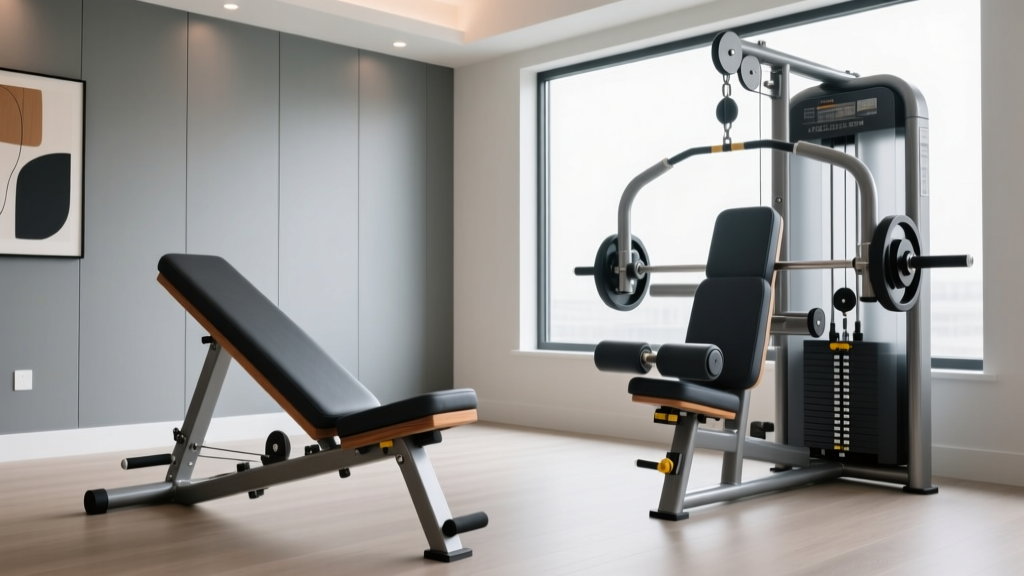
FID Bench vs Machine Chest Press Strength Standards: Space Guide
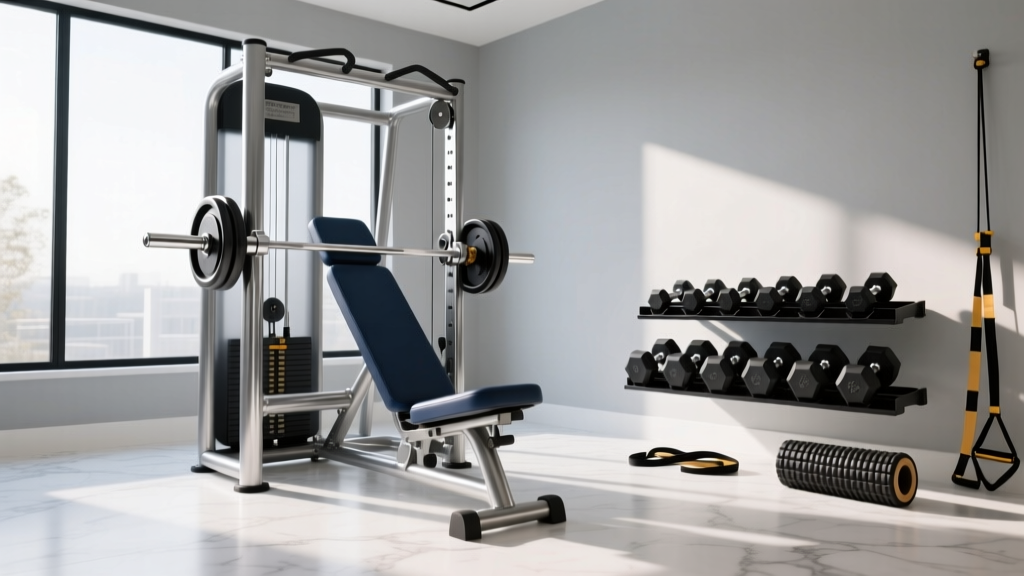
Plate Loaded Incline Chest Press Machine & Fly Equipment Trends
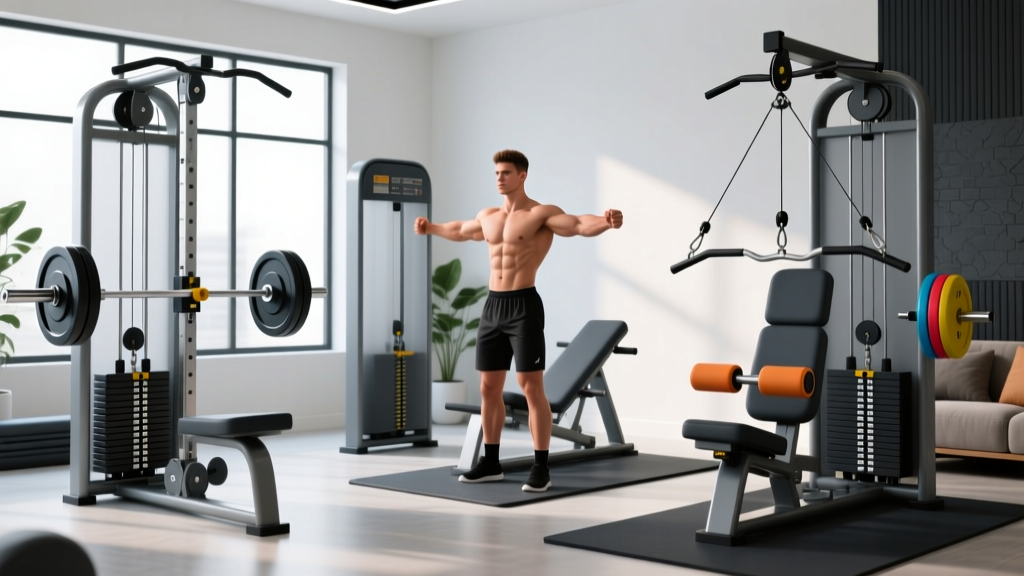
Chest Press Machine Types Compared: Fix Common Mistakes

Dumbbell vs Cable Fly Layouts vs Chest Press Machine Planet Fitness

Equip Body Back Tools Checklist: A Field-Tested, Ergonomic Readiness Protocol for Industrial and Clinical Settings
