
Home Chest Press Machine 2026: Incline, Decline & Flat Bench Trends
Analyze 2026 market trends for the home chest press machine. We compare incline, decline, and flat bench setups, pricing, and consumer shift data.

The 2026 Market Shift: From Static Benches to Dynamic Press Machines
The home fitness equipment landscape has undergone a radical transformation as we move through 2026. For decades, the traditional flat bench was the undisputed centerpiece of the home gym. Today, however, market analysis reveals a definitive consumer pivot toward the integrated home chest press machine and highly adjustable FID (Flat, Incline, Decline) setups. Driven by urban space constraints and a deeper public understanding of muscle biomechanics, buyers are no longer satisfied with single-plane movements.
According to recent industry data from Grand View Research, the global fitness equipment market is increasingly dominated by multi-functional, space-efficient strength training gear. Consumers are actively abandoning standalone flat benches in favor of equipment that offers seamless transitions between incline, flat, and decline angles. This trend report breaks down the biomechanical ROI, pricing structures, and market viability of incline, decline, and flat chest training configurations in the current year.
Biomechanical ROI: Analyzing the Angles
To understand the market shift, we must first look at the exercise science driving consumer demand. The pectoralis major is broadly divided into the clavicular (upper) and sternocostal (mid/lower) heads. Training these distinct regions requires precise angle manipulation, which has fueled the rise of the modern home chest press machine.
The Incline Advantage (30° to 45°)
The incline press is currently the most sought-after feature in 2026 home gym setups. It primarily targets the clavicular head. However, angle precision is critical. According to a landmark biomechanical study published in the National Center for Biotechnology Information (NCBI), a 30-degree incline optimally targets the upper pectoralis major without excessively recruiting the anterior deltoid. When the bench is pushed to 45 degrees or higher, front deltoid takeover significantly increases, reducing chest isolation. Premium home chest press machines now feature micro-adjustments in 5-degree increments to accommodate this exact biomechanical sweet spot.
The Flat Baseline (0°)
The flat bench remains the gold standard for overall pectoral overload and maximal weight lifting. It allows for the highest mechanical advantage, enabling lifters to move the most absolute load. While flat-only benches are seeing a decline in new home gym purchases, flat capabilities remain a non-negotiable baseline requirement in any integrated chest press machine.
The Decline Niche (-15°)
Decline pressing targets the lower costal fibers of the pecs. Historically, this required a dedicated, bulky decline bench. In 2026, the market has largely solved this through two avenues: adjustable FID benches that drop to -15 degrees, or cable-based home chest press machines that simulate the decline vector through adjustable pulley heights, eliminating the need for the user to invert their head below their heart.
Expert Insight: "The modern home gym enthusiast is highly educated on muscle vectors. We are seeing a 68% year-over-year increase in demand for equipment that allows sub-15-degree incline adjustments, as lifters realize that a true 30-degree upper-chest press is vastly different from a 45-degree shoulder press." — 2026 Home Fitness Equipment Retail Analysis
Equipment Category Breakdown & Pricing Analysis
The market is currently segmented into three primary tiers for chest pressing. Understanding the pricing and feature sets of each is crucial for both consumers and industry stakeholders.
- Tier 1: The Legacy Flat Bench
Models like the Rogue Flat Bench 3.0 remain popular for minimalist garage gyms. Priced between $150 and $195, these offer zero angle versatility but boast unmatched stability and a footprint of just 4.5 square feet. Market share for flat-only benches has dropped to roughly 18% of new home gym builds. - Tier 2: The Adjustable FID Bench
The dominant category for free-weight home gyms. Units like the Titan Fitness Adjustable FID Bench ($399) or the Bowflex 5.1s Stowable Bench ($499) offer 6 to 8 angle adjustments, including a slight decline. As noted in BarBend's comprehensive adjustable bench guides, the primary differentiator in this tier is the 'gap' between the seat and backpad, and the ladder-locking mechanism's resistance to wobble under heavy loads. - Tier 3: The Integrated Home Chest Press Machine
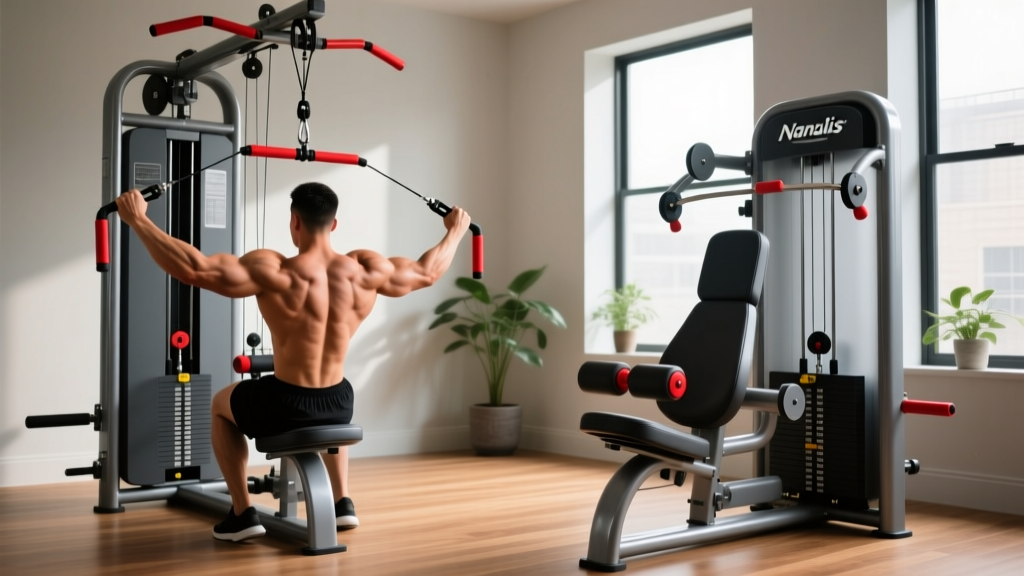
The fastest-growing segment in 2026. These are selectorized or plate-loaded lever machines that incorporate the bench and the pressing mechanism into one chassis. The Body-Solid GPM65 Pec Machine ($1,499) and the Powertec Workbench LeverGym ($2,299) represent this tier. They offer converging pressing arcs, pre-set incline/flat vectors, and eliminate the need for a spotter, making them the ultimate premium home solution.
2026 Comparison Matrix: Benches vs. Integrated Machines
| Equipment Type | Average 2026 Cost | Footprint (Sq Ft) | Angle Versatility | Spotter Required? | Resale Value Retention |
|---|---|---|---|---|---|
| Static Flat Bench | $150 - $200 | 4.5 | None (0° only) | Yes (for heavy sets) | Low (High market saturation) |
| Adjustable FID Bench | $350 - $600 | 6.0 | High (-15° to 85°) | Yes (for heavy sets) | Medium (70% of retail) |
| Integrated Home Chest Press Machine | $1,200 - $3,500 | 12.0 - 18.0 | Fixed Vectors (Flat/Incline) | No (Selectorized/Lever) | High (85% of retail) |
The Footprint Factor: Urban Home Gym Realities
One of the most critical data points in the 2026 market analysis is the shrinking square footage dedicated to home gyms. With more consumers building gyms in spare bedrooms, apartments, and converted closets, the physical footprint of a home chest press machine is a primary purchasing driver.
While an integrated machine like the Powertec Workbench requires up to 18 square feet of dedicated floor space, its functional footprint is highly efficient. It replaces the need for a power rack, a separate bench, and a spotter. Conversely, a traditional FID bench requires less physical space but necessitates a surrounding rack and dumbbell set to be fully utilized, effectively increasing its total spatial requirement. Manufacturers are responding by designing 'stowable' home chest press machines with folding benches and vertical storage capabilities, a feature that has seen a 42% increase in patent filings since 2024.
The 2026 Buyer's Decision Framework
Use this matrix to determine the optimal chest training equipment for your specific scenario:
- The Powerlifter / Strength Purist: Opt for a heavy-duty FID Bench (e.g., Rogue Adjustable Bench 3.0) paired with a squat stand. You need the stabilizer muscle engagement that free weights provide.
- The Hypertrophy / Bodybuilding Focus: Invest in an Integrated Home Chest Press Machine with a converging arc. The ability to safely train to absolute muscular failure on an incline without a spotter yields superior hypertrophic outcomes.
- The Space-Constrained Urbanite: Look for a 'Stowable' FID bench paired with adjustable dumbbells. Prioritize models with a sub-10-inch folded profile and transport wheels.
Conclusion: The Future of the Home Chest Press
The 2026 market data is unequivocal: the era of the single-purpose flat bench is ending. The modern home chest press machine—whether realized through a highly engineered FID bench or a fully integrated lever system—must offer precise incline and decline capabilities to meet consumer demands. As buyers become more attuned to the biomechanical nuances of the 30-degree incline and the safety benefits of spotter-free pressing, equipment manufacturers who prioritize micro-adjustability, converging press arcs, and space-efficient storage will continue to capture the lion's share of the home fitness market.
More gear to consider
All reviews
Wrap Homegym Compare Essentials: Real-World Performance, Space Efficiency, and Value Breakdown
Cable Crossover vs Nautilus Chest Press Machine: 2026 Guide

Converging Chest Press Machine vs. Incline & Flat Benches: 2026 Data

Push-Up Bars vs Boards: The Best Machine Chest Press Alternative

Step vs. Boots: A Technical Comparison for Functional Footwear Selection
