
2026 Titan vs Valor: Best Wall Mounted Lat Pulldown Machine
We compare the Titan and Valor wall mounted lat pulldown machines for home gyms. Discover specs, mounting tips, and which builds the best back in 2026.

The 2026 Home Gym Meta: Reclaiming Floor Space
As home gym real estate becomes increasingly premium in 2026, lifters are abandoning massive commercial-style selectorized stacks in favor of high-yield, space-saving alternatives. The undisputed king of this movement is the wall mounted lat pulldown machine. By utilizing vertical wall space rather than valuable floor footprint, these plate-loaded units allow you to isolate the latissimus dorsi with heavy resistance without sacrificing the square footage needed for deadlifts or Olympic lifts.
But not all wall-mounted units are engineered equally. A poorly designed carriage can bind under heavy loads, and subpar mounting hardware can literally rip the machine out of your drywall. Today, we are putting the two most popular budget-to-mid-tier contenders head-to-head: the Titan Fitness Wall Mount Lat Pulldown and the Valor Fitness CB-12 Wall Mount Lat Pulldown. We will dissect their biomechanics, structural integrity, and installation requirements to help you decide which machine deserves a permanent spot on your studs.
Contender 1: Titan Fitness Wall Mount Lat Pulldown
Titan Fitness has dominated the direct-to-consumer home gym market by reverse-engineering commercial staples and selling them at aggressive price points. Their wall-mounted lat pulldown machine is a masterclass in utilitarian design, retailing consistently around the $249 to $279 mark.
Build Quality and Carriage Travel
Titan utilizes 14-gauge steel for the main uprights and features a 1:1 pulley ratio. The carriage travels on a centralized steel guide rod rather than dual linear rails. While dual rails are smoother, Titan compensates by using high-density nylon pulleys with sealed cartridge bearings. This results in a surprisingly fluid cable path, even when loaded with 200+ lbs of bumper plates. The weight horn is angled slightly upward (roughly 5 degrees), a critical design choice that prevents plates from sliding off during explosive eccentric phases.
Limitations
The primary drawback of the Titan unit is the lack of an integrated knee-pad or seat bracket. You are forced to either kneel on the floor (which limits your range of motion and core stability) or rig a DIY knee-tuck solution using a standalone bench.
Contender 2: Valor Fitness CB-12 Wall Mount Lat Pulldown
Valor Fitness targets the entry-level home gym demographic, with the CB-12 frequently available between $179 and $199. It is a no-frills, bare-bones plate-loaded system designed purely for vertical pulling.
Build Quality and Ergonomics
The CB-12 is constructed from 12-gauge steel, making it slightly lighter than the Titan. It also operates on a 1:1 pulley ratio. However, the weight horn on the Valor is perfectly horizontal. If you are using standard 10lb or 25lb iron plates with large center holes, you must use a heavy-duty spring clip; otherwise, the plates will rattle and slide during the transition from the concentric to the eccentric portion of the lift.
Limitations
Valor uses standard plastic pulleys with basic bushings instead of sealed bearings. Over a 12-month period of heavy use, these bushings tend to develop flat spots if the cable is left under high tension, leading to a "sticky" feeling at the top of the pull. Furthermore, the 250 lb weight capacity is a hard limit; loading four 45lb plates plus the carriage will begin to warp the guide rod.
Head-to-Head Specification Matrix
| Feature | Titan Fitness Wall Mount | Valor Fitness CB-12 |
|---|---|---|
| Price Range (2026) | $249 - $279 | $179 - $199 |
| Steel Gauge | 14-Gauge | 12-Gauge |
| Max Weight Capacity | 400 lbs | 250 lbs |
| Pulley Ratio | 1:1 (Direct Force) | 1:1 (Direct Force) |
| Pulley Bearings | Sealed Cartridge | Standard Plastic Bushings |
| Weight Horn Angle | 5° Upward Tilt | Horizontal (Requires Clips) |
Biomechanics and the 1:1 Pulley Ratio
When transitioning from a commercial gym's 2:1 selectorized lat pulldown to a home gym's 1:1 wall mounted lat pulldown machine, the force curve changes dramatically. In a 1:1 system, if you load 100 lbs on the horn, you are pulling exactly 100 lbs of resistance. There is no mechanical advantage to assist you through the sticking point.
"Electromyographic analysis demonstrates that latissimus dorsi activation peaks during the initial 30 degrees of shoulder adduction. A 1:1 cable ratio demands strict eccentric control during this phase to prevent momentum from taking over the lift."
— Sperandei et al. (2013), Journal of Strength and Conditioning Research
Because the Titan and Valor both utilize a 1:1 ratio, the smoothness of the pulley is paramount. The Titan's sealed bearings allow for a seamless transition at the bottom of the movement, whereas the Valor's bushings can create micro-stutters that disrupt time-under-tension.
Critical Installation Protocol: Avoiding Catastrophic Failure
⚠️ Structural Warning: Never mount a wall mounted lat pulldown machine using drywall anchors, toggle bolts, or masonry plugs in hollow block. The dynamic downward force of a 200lb lat pulldown generates over 400lbs of withdrawal force on the top mounting brackets.Both the Titan and Valor machines require mounting directly into solid wood wall studs (minimum 2x4, preferably 2x6) or solid poured concrete. Here is the exact installation protocol recommended by structural engineers and carpentry experts to ensure your machine stays anchored.
Step-by-Step Wood Stud Installation
- Locate and Verify Studs: Use a magnetic stud finder to locate the center of two 16-inch on-center wood studs. Verify by drilling a 1/8" pilot hole to ensure you hit solid wood, not just drywall.
- Select the Right Fastener: Discard the cheap lag bolts included in the Valor box. Upgrade to structural screws. According to Simpson Strong-Tie Structural Fastener Guidelines, a 1/4" x 3" SDS structural screw provides over 400 lbs of withdrawal resistance per screw in standard Douglas Fir-Larch wood.
- Pre-Drill to Prevent Splitting: Drill a 7/32" pilot hole through the drywall and into the center of the stud to a depth of 3.5 inches. This prevents the structural screw from splitting the stud under high torque.
- Torque and Secure: Drive the screws using an impact driver set to a medium torque clutch setting. Stop when the washer is flush and tight against the steel bracket. Do not overtighten, which can strip the wood threads.
Maintenance and Edge Cases
Wall-mounted plate-loaded machines are generally low-maintenance, but they are not zero-maintenance. The most common failure mode for both the Titan and Valor is cable fraying at the carriage crimp.
Because the cable bends sharply as it routes through the top pulley and down to the carriage, the steel wire rope experiences immense shear stress. To extend the life of your cable:
- Unload the Machine: Never leave plates on the weight horn when the gym is not in use. Constant tension stretches the steel cable and accelerates metal fatigue at the crimp sleeve.
- Lubricate the Guide Rod: Every 90 days, wipe the Titan or Valor guide rod with a microfiber cloth and apply a light coat of PTFE (Teflon) dry lubricant. Avoid WD-40 or wet silicone sprays, as they attract dust and chalk, creating an abrasive paste that will ruin the carriage bushings.
- Inspect the Swivel: Check the carabiner swivel attachment point monthly. If the swivel seizes, the cable will twist upon itself during pronated-grip pulldowns, leading to immediate structural failure of the wire rope.
Final Verdict: Which Machine Builds the Best Back?
If you are outfitting a home gym in 2026 and need a dedicated vertical pulling station, the Titan Fitness Wall Mount Lat Pulldown is the definitive winner. While it costs roughly $70 more than the Valor CB-12, the upgrade in sealed bearings, the angled weight horn, and the higher 400lb weight capacity make it a lifetime piece of equipment. The Valor CB-12 is an acceptable stopgap for beginners strictly limited by a sub-$200 budget, but its horizontal weight horn and inferior bushings will quickly become a frustration as your lat strength progresses.
Pair the Titan with a heavy-duty adjustable bench, focus on strict eccentric control, and ensure your mounting hardware is up to structural code. Your lats will thank you, and your floor space will remain wide open for the heavy compound lifts that truly drive hypertrophy.
More gear to consider
All reviewsFoam FAQ Answered: Expert Insights on Density, ILD, Durability, and Real-World Performance
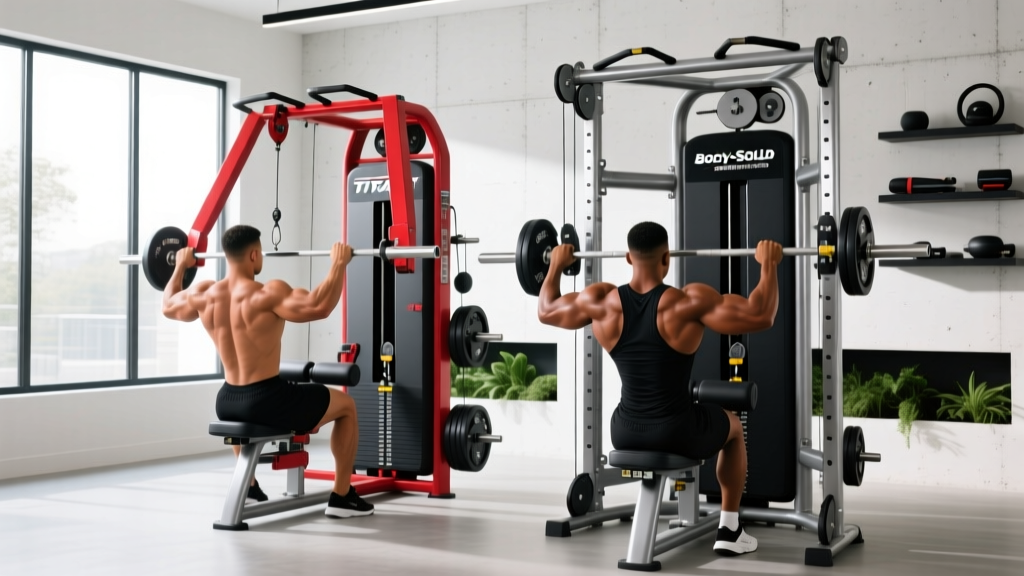
Titan vs Body-Solid Lat Pulldown Machine: 2026 Home Gym Guide

How to Use a Lat Pulldown Machine vs. Mounted Pull-Up Bars

How To Choose Therapy: A Practical, Evidence-Based Guide for Adults Seeking Effective Care
Smart Safety Tips: Evidence-Based Strategies for Real-World Protection
