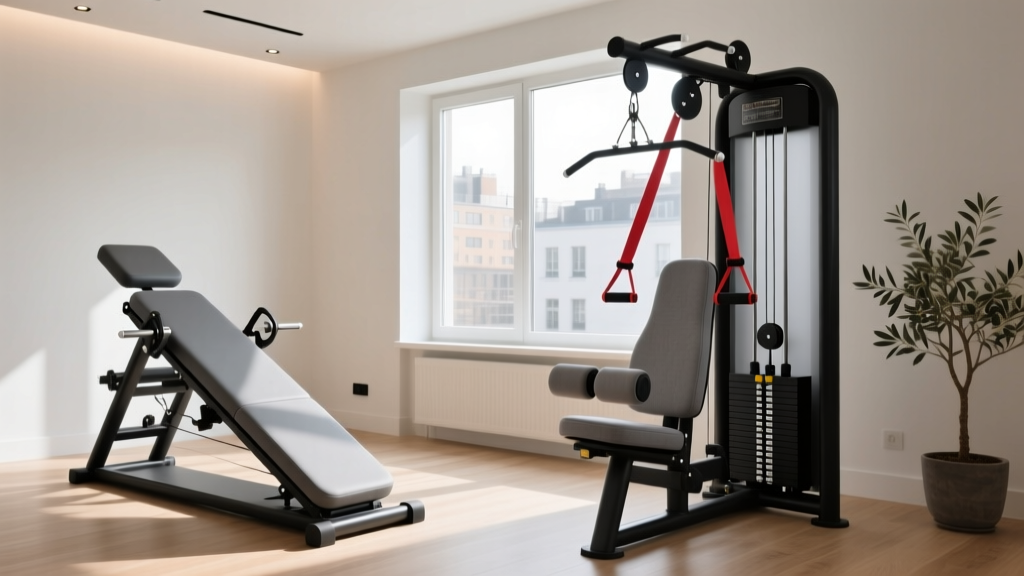
Inversion Table for Back Decompression & Seated Lat Pulldown Machine Care
Expert maintenance guide for your inversion table for back decompression and seated lat pulldown machine. Learn longevity tips, lubrication, and safety checks.

The Biomechanics of Spinal Decompression and Cable Tension
Building a resilient, pain-free back requires a dual approach: targeted hypertrophy to build the muscular corset of the lats and rhomboids, and active recovery to decompress the intervertebral discs. In the modern 2026 home gym, the two pillars of this protocol are the inversion table for back decompression and the seated lat pulldown machine. However, these pieces of equipment operate under extreme mechanical and biomechanical stress. An inversion table relies on gravity and pivot bearings to safely suspend up to 300 pounds of human mass, while a lat pulldown machine utilizes high-tension aircraft cables to move heavy weight stacks through repetitive planes of motion.
Neglecting the maintenance of either machine doesn't just result in annoying squeaks; it introduces catastrophic failure modes. According to Mayo Clinic's expert analysis on inversion tables, improper use or equipment failure during spinal traction can lead to severe joint strain or dangerous blood pressure spikes if a user cannot safely right themselves. Similarly, a snapped cable on a lat pulldown machine can cause severe whiplash or impact injuries. This comprehensive guide details the exact maintenance protocols, lubrication schedules, and failure-point inspections required to maximize the longevity of your back training and decompression equipment.
Inversion Table for Back Decompression: Critical Maintenance Protocols
Whether you are using a premium model like the Teeter EP-960 (retailing around $449 in 2026) or a budget-friendly Innova ITX9600 ($89), the fundamental physics of inversion therapy demand rigorous upkeep. The primary stress points are the rotational pivot bearings, the ankle locking mechanism, and the height adjustment assembly.
Pivot Point Lubrication and Bearing Care
The pivot bearings dictate how smoothly the table rotates and, more importantly, how predictably it returns to an upright position. Over time, factory grease dries out and attracts microscopic dust particles, turning into an abrasive paste that grinds down the bearing housing.
- The Wrong Lubricant: Never use standard WD-40 or petroleum-based oils on your inversion table's pivot points or nylon straps. Petroleum degrades nylon webbing and attracts heavy dust.
- The Right Lubricant: Use a 100% silicone spray or a dry PTFE (Teflon) lubricant. Apply a light mist directly into the pivot joint every 6 months. Wipe away excess immediately to prevent drips onto the bed surface.
Ankle Locking System and Foam Degradation
The U-shaped ankle lock and the surrounding EVA foam rollers bear the brunt of your body weight. Human sweat contains urea and sodium chloride, both of which are highly corrosive to metals and degrading to porous foams.
- Foam Care: Wipe down the ankle foam rollers with a damp microfiber cloth and a mild, non-bleach soap after heavy use. Harsh chemical cleaners will break down the cellular structure of the EVA foam, causing it to crumble and lose its grip.
- Metal Hardware: Inspect the spring-loaded release pin on the ankle lock. If the pin shows signs of hesitation or sticking, disassemble the housing, clean the internal spring with compressed air, and apply a drop of lightweight machine oil to the spring coil only.
Safety Tether Strap Inspection
The safety tether strap prevents the table from over-rotating past your desired inversion angle. Because this strap is typically made of woven nylon, it is highly susceptible to UV degradation. If your inversion table is stored near a sunlit window, the UV rays will cause micro-tears in the nylon fibers. Inspect the stitching at the swage points every 90 days. If you notice any fraying or color fading, replace the strap immediately. Teeter's official maintenance guidelines strongly advise against using third-party replacement straps, as the tensile strength ratings must exactly match the table's specific torque requirements.
Seated Lat Pulldown Machine: Preserving Cable and Pulley Integrity
While the inversion table manages static gravitational loads, the seated lat pulldown machine manages dynamic kinetic loads. High-end models like the Body-Solid GLM83 ($1,195) or the Titan Fitness Lat Pulldown ($899) use commercial-grade components, but they still require meticulous care to maintain a smooth 1:1 weight ratio and prevent catastrophic cable snaps.
Aircraft Cable Inspection and Swage Fitting Checks
The lifeline of any seated lat pulldown machine is its cable. Most reputable manufacturers use a 3/16-inch or 1/4-inch 7x19 strand aircraft cable, which boasts a tensile strength exceeding 2,000 pounds. However, the cable rarely snaps in the middle; it fails at the swage fittings (the crimped metal sleeves that create loops at the ends).
CRITICAL INSPECTION PROTOCOL: Run a bare finger lightly along the entire length of the cable once a month. You are feeling for 'fish-hooks'—single broken wire strands that poke out from the main cable bundle. If you feel even one broken strand, the cable's structural integrity is compromised and must be replaced immediately. Additionally, check the swage fittings for rust or deformation. A rusted swage indicates moisture has penetrated the crimp, weakening the metal from the inside out.Pulley Bearings and Guide Rod Maintenance
The pulleys on a lat pulldown machine rotate thousands of times per workout. Older machines used unsealed metal pulleys, but modern 2026 models utilize glass-filled nylon or aircraft aluminum pulleys with sealed ball bearings. If a pulley begins to squeak or wobble, the sealed bearing has likely failed. Do not attempt to lubricate a sealed bearing; replace the entire pulley wheel to ensure the cable tracks perfectly and avoids premature fraying.
For machines with a weight stack, the linear bearings that slide up and down the guide rods are a major friction point. Wipe the chrome guide rods down with a dry cloth weekly to remove dust and chalk. Every three months, apply a PTFE-based dry lubricant to the rods. Avoid silicone sprays on guide rods, as the tackiness of silicone will bind with gym chalk and dead skin cells, creating a thick sludge that will eventually seize the linear bearings.
Comparative Maintenance Matrix
To streamline your home gym upkeep, refer to this matrix detailing the specific maintenance actions required for both pieces of back equipment.
| Component | Inversion Table Action | Seated Lat Pulldown Action | Frequency |
|---|---|---|---|
| Primary Moving Joints | Apply 100% Silicone Spray to pivot bearings | Inspect sealed pulley bearings for wobble/squeak | Every 6 Months |
| Tension Elements | Check nylon safety tether for UV micro-tears | Run bare finger over aircraft cable for fish-hooks | Monthly |
| Load-Bearing Foam | Wipe ankle rollers with mild soap/water | Wipe down seat and thigh pads with antibacterial spray | Weekly |
| Metal Guide/Hardware | Compressed air clean on height-adjustment spring pin | Wipe guide rods and apply PTFE dry lubricant | Every 3 Months |
| Fasteners & Bolts | Torque check all hex bolts on the main A-frame | Torque check swage fittings and pop-pins | Bi-Annually |
Environmental Factors: Humidity, Sweat, and Metal Oxidation
The environment in which you store your back training equipment plays a massive role in its lifespan. Basements and garages are notorious for fluctuating humidity levels. When humidity exceeds 60%, the exposed chrome on lat pulldown guide rods and the steel joints on inversion tables become highly susceptible to surface oxidation (rust).
Furthermore, the chlorides present in human sweat are incredibly aggressive. If sweat drips onto the metal frame of your inversion table or the weight stack of your seated lat pulldown machine and is left to dry, it will eat through powder-coated finishes in a matter of months. To combat this, maintain a dehumidifier in your gym space to keep ambient moisture below 50%, and keep a spray bottle of a 50/50 water and white vinegar solution on hand to neutralize sweat spots on metal frames immediately after your workout. For a deeper dive into spinal load management and equipment biomechanics, ExRx.net's spinal biomechanics directory provides excellent anatomical context for why smooth, well-maintained equipment is vital for injury prevention.
Troubleshooting Common Failure Modes in Back Equipment
Even with rigorous maintenance, mechanical issues can arise. Here is how to diagnose and fix the most common problems associated with back decompression and training gear.
Inversion Table Sticks During Return
Symptom: The table does not smoothly return to the upright position when you shift your weight forward, requiring you to use your arms to pull yourself up.
Diagnosis: The pivot bearings are either contaminated with grit, or the table's height adjustment is set incorrectly for your center of gravity.
Solution: First, verify your height setting on the telescopic tube. If the table is set too long for your torso, your center of gravity will remain below the pivot point, making return impossible. If the height is correct, disassemble the pivot housing, clean the bearings with a degreaser, and reapply a dry PTFE lubricant.
Lat Pulldown Cable Slips or Jerks
Symptom: The weight stack feels 'jerky' on the eccentric (return) portion of the movement, or the cable slips off the pulley track.
Diagnosis: The cable has stretched over time (a natural occurrence with steel wire rope under heavy loads), resulting in a lack of tension, or a pulley wheel is misaligned.
Solution: Most seated lat pulldown machines feature a tensioning bolt at the top of the weight stack or near the bottom pulley. Tighten the tensioning bolt by 2-3 turns to remove the slack. If the cable continues to derail, use a laser level or a plumb line to ensure all pulleys are perfectly aligned in the same vertical plane. A misalignment of even 3 degrees will cause the cable to climb the pulley flange and jump the track.
By treating your inversion table for back decompression and your seated lat pulldown machine not just as gym equipment, but as precision biomechanical tools, you ensure they remain safe, effective, and durable for decades of back-building and spinal relief.
More gear to consider
All reviews
Single Arm Lat Pulldown Machine vs Landmine T-Bar: 2026 Budget Guide

Matrix Lat Pulldown Machine vs T-Bar Landmine: Budget Breakdown

Cybex Lat Pulldown Machine vs Rogue: Home Gym Showdown

Lat Pulldown Cable Machine & Hyperextension Bench: Fix Common Mistakes

How To Choose Essentials: A Practical, Evidence-Based Guide for Functional Fitness and Daily Movement
