
Chest Supported Row & Lat Pulldown Machine PF Space Guide
Optimize your home gym layout with the best chest supported row and lat pulldown machine PF options. Space-saving dimensions, clearances, and 2026 picks.

The Footprint Dilemma: Combining Chest Supported Rows and Lat Pulldowns
Designing a high-performance home gym in 2026 often means battling severe spatial constraints. Back training requires heavy loads and specific biomechanical angles, traditionally demanding multiple massive machines. A dedicated chest supported row machine and a standalone lat pulldown can easily consume 40 square feet of floor space. For garage gyms and spare bedrooms, this is a non-starter.
This is where the lat pulldown machine pf (Power Frame) configuration becomes a game-changer. By integrating a chest supported row and a lat pulldown into a single plate-loaded functional (PF) footprint, lifters can access both vertical and horizontal pulling mechanics without sacrificing valuable square footage. In this guide, we break down the exact dimensions, layout blueprints, and spatial clearances required to integrate these combo units into tight spaces.
Decoding the 'PF' Advantage for Back Training
When fitness enthusiasts search for a lat pulldown machine pf setup, they are typically looking at Plate-loaded Functional or Power Frame rigs. Unlike selectorized machines that use weight stacks (which add 12 to 18 inches of depth to the machine's rear), PF units utilize plate horns. This design choice drastically reduces the machine's overall depth, making it the undisputed king of space optimization.
Space Metric Breakdown: Combo vs. Standalone
- Standalone Selectorized Chest Row: ~62' L x 48' W (20.6 sq ft)
- Standalone Selectorized Lat Pulldown: ~48' L x 36' W (12 sq ft)
- Combo Plate-Loaded PF Unit: ~50' L x 44' W (15.2 sq ft)
Result: A 52% reduction in total floor space consumption while retaining 100% of the exercise utility.
2026 Chest Supported Row & Lat Pulldown Machine PF Options
Not all combo units are created equal when it comes to spatial efficiency. Below is a comparison of the top plate-loaded combo units available in 2026, specifically evaluated for their footprint and ergonomic adjustability.
| Model / Brand | Footprint (L x W) | Ceiling Req. | Est. Price (2026) |
|---|---|---|---|
| Rogue Fitness Lat Pulldown / Low Row Combo | 47' x 53' | 96' | $1,450 - $1,600 |
| Titan Fitness Plate Loaded Lat Pulldown and Low Row | 50' x 44' | 92' | $699 - $799 |
| Rep Fitness PR-5000 Lat Row Attachment (Power Rack PF) | 32' x 47' | 90' | $499 (Attachment) |
For pure space optimization, the Rep Fitness PR-5000 attachment is the most efficient, as it converts an existing power rack into a chest supported row and lat pulldown machine pf hybrid, requiring zero additional floor footprint beyond your existing rack.
Layout Blueprint: Integrating the PF Unit into a 10x10 Room
Placing the machine in the room is only half the battle; operational clearance is where most home gym designs fail. According to equipment spacing guidelines highlighted by the American College of Sports Medicine (ACSM), you must account for the user's body length and the loading of weight plates.
The 360-Degree Clearance Rule
- Rear Clearance (Plate Loading): You need a minimum of 24 inches behind the plate horns. Standard 45lb Olympic plates have a diameter of 17.7 inches. If you place the machine flush against a wall, you cannot load plates. Leave 24' to allow for plate sliding and hand clearance.
- Front Clearance (User Entry): Allocate 30 inches in front of the chest pad. This allows the user to step in, adjust the seat, and sit down without hitting a wall or another rack.
- Side Clearance (Cable Sweep): When performing wide-grip lat pulldowns, the cables angle outward. Maintain 12 inches of lateral clearance on both sides to prevent cable friction against adjacent walls.
Expert Insight: 'When mapping out a chest supported row, the pivot point of the chest pad is critical. If your PF unit features an adjustable chest pad, ensure you have vertical clearance above the pad's highest setting, otherwise the user's head will strike the top pulley housing during steep incline rows.' - Garage Gym Reviews Equipment Analysis (Source)
Ergonomic & Clearance Failure Modes in Small Spaces
When optimizing for space, lifters often push machines too close to walls or ceilings, leading to mechanical and ergonomic failure modes. Here is what to watch out for when installing your chest supported row machine options:
Ceiling Strike Failure
Standard residential ceilings are 96' (8 feet). The top pulley housing on most PF lat pulldowns adds 8 to 12 inches to the machine's height. If you are over 6'0' tall, your hands will physically hit the ceiling at the top of the lat pulldown range of motion. Fix: Opt for low-profile pulley housings or install the machine in a room with 9-foot ceilings.
Knee Interference Edge Case
On compact combo units, the seat track is often shortened to save depth. If the seat cannot slide far enough back, taller users (6'2'+) will experience knee interference with the main frame during the chest supported row. Fix: Verify the 'max seat-to-pad distance' spec before purchasing.
Biomechanics and Spatial Trade-offs
According to biomechanical analyses on ExRx.net, a true chest supported row requires the torso to be angled between 30 and 45 degrees to optimally target the rhomboids and mid-traps without lower back involvement. Some ultra-compact 'combo' machines force a completely upright 90-degree torso to save horizontal space, which shifts the load to the lats rather than the mid-back.
When evaluating your chest supported row machine options, always check the angle of the chest pad. If space optimization forces you into a 90-degree upright pad, you are no longer doing a true chest supported mid-back row; you are doing a high-cable horizontal pull. Ensure your chosen PF unit offers at least a 45-degree pad incline.
Final Verdict on Space Optimization
Integrating a chest supported row and lat pulldown machine pf configuration is the smartest layout decision for space-constrained home gyms in 2026. By prioritizing plate-loaded functional designs over selectorized weight stacks, you reclaim up to 50% of your floor space. Just remember to respect the 24-inch rear loading clearance and verify your ceiling height against your personal wingspan to avoid operational bottlenecks.
More gear to consider
All reviews
2026 Titan vs Valor: Best Wall Mounted Lat Pulldown Machine

Chest Row & Lat Pulldown Gym Machine: Space-Saving Layout Guide
How to Do Lat Pulldowns Without a Machine: Landmine T-Bar Budget Fix

Pull-Up Bar Types vs Lat Pulldown Machine for Back: 2026 Guide
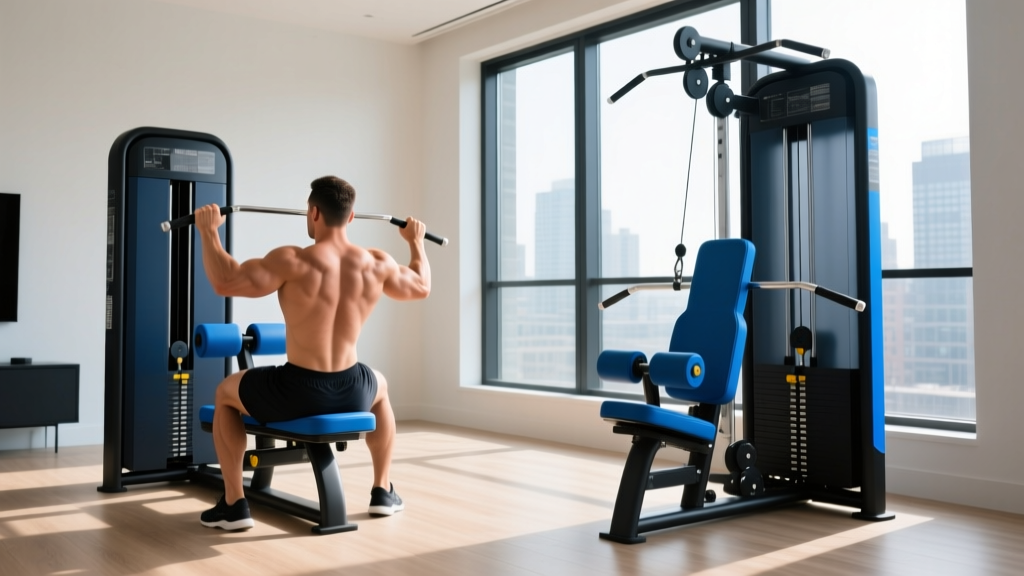
Install Guide: Seated Rows & Lat Pulldown Machine Workouts Setup
