
Space-Saving Chest Supported Row & Lat Pulldown Low Row Machine
Optimize your home gym layout with our guide to chest supported row options and lat pulldown low row machine combos. Compare footprints and 2026 pricing.

Designing a high-density back-training zone in a compact home gym requires a ruthless approach to spatial efficiency. The back is a complex, multi-planar muscle group that demands both vertical and horizontal pulling angles for complete development. However, accommodating the necessary equipment often leads to severe footprint bloat. For garage gym owners and commercial studio designers in 2026, the ultimate layout challenge is integrating comprehensive chest supported row machine options without sacrificing the vertical pulling mechanics of a dedicated lat pulldown station.
When outfitting a tight space, selecting a versatile lat pulldown low row machine that also accepts chest-supported attachments is the most effective way to consolidate square footage. This guide breaks down the exact dimensions, biomechanical advantages, and layout blueprints for merging these two critical back-training modalities into a single, space-optimized footprint.
The Spatial Dilemma: Vertical vs. Horizontal Pulling
Vertical pulling (lat pulldowns) requires significant overhead clearance and a stable thigh-lock mechanism, while horizontal pulling (seated rows) demands a long cable travel path and floor space for the seat track. Historically, purchasing a standalone selectorized chest-supported row and a separate lat pulldown machine would consume anywhere from 25 to 40 square feet of dedicated floor space, not including the required user clearance zones.
💡 The 2026 Space-Saving Rule of Thumb: To maximize a sub-200 sq. ft. home gym, prioritize modular functional trainers or combo units that utilize a single weight stack and dual-cable pulley system. A well-designed combo unit reduces the total equipment footprint by up to 45% compared to buying standalone selectorized machines.2026 Footprint & Clearance Matrix
Not all machines are created equal when it comes to spatial demands. Below is a comparative analysis of the top configurations available this year, focusing on base footprint, operational clearance, and ceiling requirements.
| Machine Configuration | Base Footprint (L x W) | Operating Length | Ceiling Req. | 2026 Est. Cost |
|---|---|---|---|---|
| REP Fitness PR-5000 V3 Combo (w/ Chest Pad) | 53" x 53" | 85" | 84" Min. | $1,698 |
| Rogue Monster Lat Pulldown / Low Row | 47" x 53" | 82" | 90" Min. | $2,150+ |
| Titan Fitness Plate-Loaded Chest Row (Standalone) | 48" x 28" | 65" | 72" Min. | $499 |
Top Chest Supported Row Options for Tight Layouts
When evaluating chest supported row machine options, you generally have two routes: the modular attachment route or the plate-loaded standalone route. Your choice depends heavily on your ceiling height and whether you already own a lat pulldown low row machine.
Option 1: The Modular Attachment Route (Selectorized)
The most popular space-saving method in 2026 is utilizing a high-end modular rack attachment. The REP Fitness PR-5000 V3 Lat Pulldown/Low Row, for instance, offers a dedicated Chest Supported Row attachment that pins directly into the uprights. This transforms a vertical pulling station into a horizontal mid-back blaster in under 60 seconds.
- Pros: Utilizes a single 200lb or 300lb weight stack; 2:1 cable ratio provides smooth, micro-loadable resistance; eliminates the need to store loose bumper plates near the machine.
- Cons: The 84-inch ceiling requirement for the pulldown function makes this a non-starter for basements with low joists.
- Spatial Insight: Because the chest pad folds or slides out of the way, the machine's 'parked' footprint remains identical to its base dimensions, preserving walkway space when not in use.
Option 2: The Plate-Loaded Standalone
If your ceiling is too low for a lat pulldown, or you prefer the raw feel of plate-loaded resistance, a standalone unit like the Titan Fitness Plate-Loaded Chest Supported Row is ideal. Without a towering weight stack, the overall height drops below 60 inches.
- Pros: Can be placed under standard 8-foot ceilings; allows for unlimited weight progression; significantly cheaper upfront cost.
- Cons: Requires a 3-foot 'loading zone' on the sides of the machine for plate storage and handling, effectively negating the footprint savings of the shorter tower.
Biomechanics in a Box: Why the Chest Pad Matters
From a kinesiological standpoint, the chest-supported row is invaluable for isolating the rhomboids, mid-traps, and rear deltoids without the limiting factor of lumbar erector fatigue. According to biomechanical analyses detailed by the National Center for Biotechnology Information (NCBI), removing the need for postural stabilization allows lifters to achieve significantly higher electromyography (EMG) activation in the target musculature compared to bent-over barbell rows.
Expert Layout Tip: When positioning your machine, ensure you have at least 18 inches of lateral clearance on both sides of the seat. Lifters frequently adjust their grip width from a narrow neutral grip to a wide pronated grip. If your machine is shoved into a corner, wide-grip elbow travel will result in drywall damage or restricted range of motion.
The angle of the chest pad is equally critical. The best modular attachments offer a multi-position pivot, allowing the pad to sit between 30 and 45 degrees. A 30-degree incline biases the upper back and rear delts, while a more upright 45-degree angle shifts the focus to the lats and lower traps. Ensure the machine you select features a gas-assist or easy-pin adjustment mechanism; if changing the pad angle is a hassle, users will inevitably stick to a single, sub-optimal setting.
Layout Blueprint: Integrating Your Back Station
Proper placement of your back-training equipment is just as important as the machine you buy. Follow this step-by-step spatial planning guide to integrate your setup seamlessly:
- Map the Cable Travel Path: A standard low row requires the weight stack to travel up to 30 inches. Ensure your machine is not placed flush against a wall where the stack might bottom out or scrape the drywall. Leave a minimum 4-inch buffer behind the weight tower.
- Establish the 'Dismount Zone': Users need space to safely exit the machine, especially after a heavy set of lat pulldowns where the thigh pad is tightly engaged. Leave a 24-inch semi-circle clearance in front of the seat.
- Consolidate Plate Storage: If using a plate-loaded chest row, integrate a vertical plate tree directly behind or adjacent to the machine's loading horns. This prevents plates from being scattered across the gym floor, which is a primary cause of spatial clutter and tripping hazards.
- Lighting and Mirror Placement: Mount a shatterproof gym mirror on the wall directly facing the user's lateral profile. This allows for real-time form correction (checking for spinal flexion or shoulder shrugging) without requiring the spatial footprint of an open room.
Maintenance & Cable Tension in Compact Spaces
Compact home gyms, particularly garage setups, are prone to dust accumulation and temperature fluctuations, which can severely impact the lifespan of your equipment's moving parts. The pulleys and guide rods on a lat pulldown low row machine require specific attention.
For machines utilizing a 2:1 cable ratio, the physical length of the cable is nearly double that of a 1:1 system. This means there is more surface area exposed to airborne dust and humidity. In 2026, premium manufacturers have shifted toward sealed, aircraft-grade aluminum pulleys with internal bearings rather than open nylon bushings. If your layout places the machine near a garage door or an unsealed window, commit to wiping down the guide rods with a silicone-based lubricant every 90 days. Avoid WD-40, which attracts grit and creates a grinding paste that will destroy the linear bearings inside the weight stack carriage.
Final Verdict: Which Setup Fits Your Square Footage?
If your ceiling clearance exceeds 84 inches and your budget allows, a modular selectorized lat pulldown low row machine with a dedicated chest-supported attachment is the undisputed king of space optimization. It consolidates two massive movement patterns into a single 20-square-foot operational zone, eliminates the need for loose plate storage, and provides a smooth, adjustable resistance curve that is vital for joint longevity.
However, if you are designing a basement gym with low ceilings or have a strict budget under $600, a standalone plate-loaded chest-supported row paired with a simple doorway pull-up bar remains a highly effective, low-profile alternative. By respecting the clearance metrics and biomechanical requirements outlined above, you can build a world-class back-training station without sacrificing the usable floor space of your home.
More gear to consider
All reviews
Rogue Lat Pulldown Machine Layouts & Chest Supported Row Options
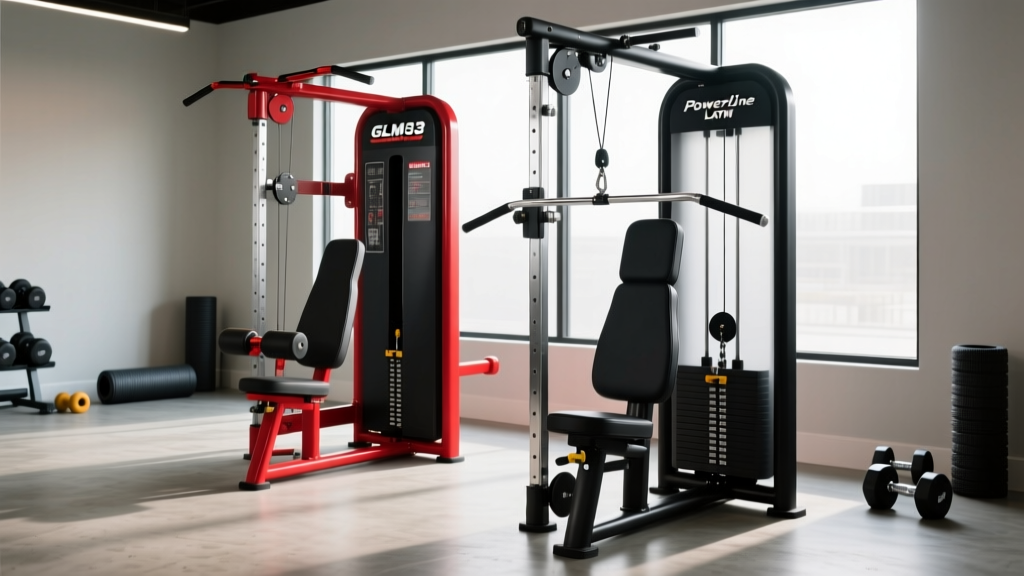
Body-Solid Lat Pulldown Machine Showdown: GLM83 vs LATM

Pull-Up Bar Types vs Lat Pulldown Machine for Back: 2026 Guide

2026 Trends: Lat Pulldown and Seated Row Machine Lumbar Support

How to Use a Lat Pulldown Machine vs. Mounted Pull-Up Bars
