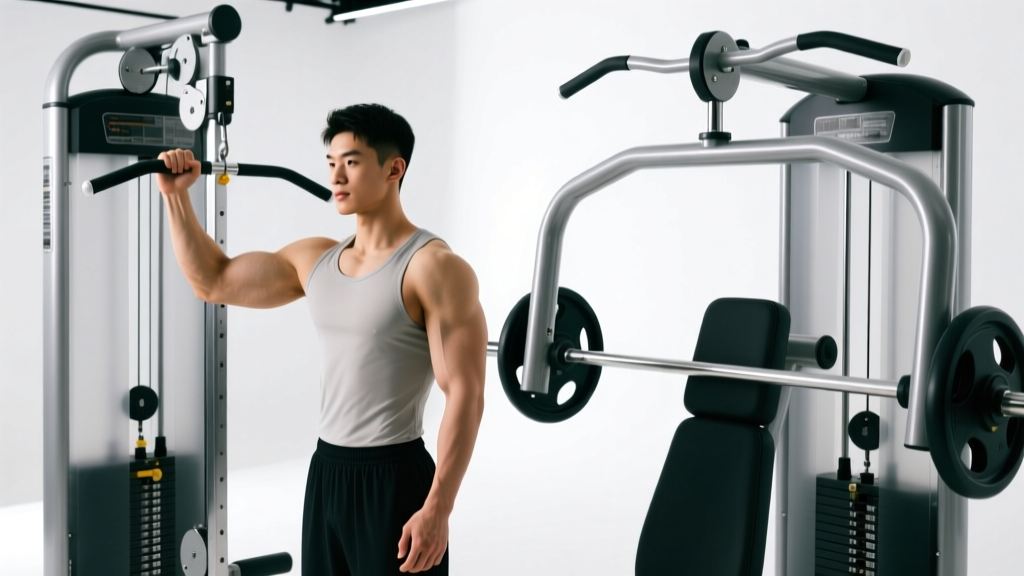
Shoulder Press Machine vs Chest Press Machine: Grip Guide
Discover how the shoulder press machine vs chest press machine impacts forearm fatigue, plus a beginner step-by-step grip training guide and gear reviews.

When beginners hit the weight room, they often obsess over the prime movers—the pectorals for a chest press or the deltoids for a shoulder press. However, the most common point of failure isn't the target muscle; it is the grip. If your hands and forearms give out before your chest or shoulders do, you are leaving massive gains on the table. This is especially true when analyzing the biomechanical differences between the shoulder press machine vs chest press machine.
In this beginner-friendly, step-by-step guide, we will break down exactly how these two compound movements tax your forearm flexors and extensors differently. Then, we will provide a targeted forearm and grip strength training equipment protocol to ensure your grip never bottlenecks your pressing power again.
⚠️ Beginner Warning: The Grip BottleneckAccording to Mayo Clinic's research on handgrip strength, grip capacity is not just a localized muscle metric; it is a profound indicator of overall neuromuscular efficiency and central nervous system fatigue. Training grip in isolation prevents systemic CNS burnout during heavy compound lifts.
The Biomechanics: Shoulder Press Machine vs Chest Press Machine
To build a targeted forearm routine, you must first understand why your grip fails on specific machines. When comparing the shoulder press machine vs chest press machine, the direction of the resistance vector completely changes the stabilization demands on the flexor digitorum profundus and flexor carpi radialis.
| Feature | Shoulder Press Machine | Chest Press Machine |
|---|---|---|
| Resistance Vector | Vertical (Gravity pulls down and slightly back) | Horizontal (Gravity pulls straight down into palm) |
| Wrist Angle | Requires 10°-15° extension to stack joints | Neutral to slight extension |
| Forearm Fatigue Rate | High (Extensors work overtime to prevent wrist flexion) | Moderate (Load transfers directly through metacarpals) |
| Common Failure Point | Wrist buckling backward at lockout | Fingers peeling open at the bottom of the ROM |
As ExRx.net's kinesiology directory for forearm musculature outlines, the wrist extensors are significantly smaller and weaker than the wrist flexors. On a shoulder press machine, if the handle sits too far forward in your palm, your wrist extensors must fire continuously to prevent the weight from crushing your wrist backward. On a chest press machine, the primary grip challenge is simply closing the hand tightly enough to prevent the handles from slipping through sweaty palms.
Step-by-Step Beginner Forearm & Grip Routine
To fortify your grip for both vertical and horizontal pressing, implement this 15-minute finisher routine twice a week, ideally on your upper-body push days.
- Step 1: The Warm-Up (Towel Wrings)
Grab a thick, damp gym towel. Wring it out as hard as possible in one direction for 10 seconds, then reverse your grip and wring it the other way for 10 seconds. Repeat 3 times. This lubricates the carpal joints and activates the forearm pronators and supinators. - Step 2: Thick Bar Isometric Holds
Using a pair of fat grip attachments on dumbbells, hold the weights at your sides for time. Aim for 3 sets of 30–45 seconds. This directly mimics the crushing grip required at the bottom of a chest press machine. - Step 3: Wrist Roller Extensions
Using a dedicated wrist roller, extend your arms straight out in front of you. Roll the weight up and down using only your wrist extensors. Perform 3 sets of 10 reps. This bulletproofs the extensors against the backward-buckling effect of the shoulder press machine. - Step 4: Decompression Dead Hangs
Finish with 2 sets of a 60-second dead hang from a standard 1.25-inch pull-up bar. This decompresses the spine while forcing the flexor digitorum to support your entire body weight.
Essential Grip & Forearm Equipment (2026 Buyer's Breakdown)
You cannot build elite grip strength without the right tools. As of early 2026, the market is flooded with cheap plastic knockoffs. Here are the exact, industry-standard tools you need to invest in for lasting durability and precise progression.
-
IronMind Captains of Crush (CoC) No. 1 ($28.95)
The Gold Standard for Crushing Grip. The CoC No. 1 requires 140 lbs of pressure to close. It is the exact bridge between beginner and intermediate grip strength. Pro Tip: Do not buy the "Sport" or "Trainer" versions from big-box stores; the knurling on the aircraft-grade aluminum handles of the official IronMind model is what builds callus tolerance. -
Fat Gripz Original ($34.95)
The Best Pressing Accessory. These snap onto standard Olympic barbells and dumbbells, expanding the handle diameter from 1.1 inches to 2.25 inches. Using these during your accessory tricep extensions or dumbbell presses forces your forearm flexors to adapt to a wider grip, making standard machine handles feel like toys. -
Rogue Fitness Wrist Roller with Loading Pin ($45.00)
Targeted Extensor/Flexor Isolation. Machined from UHMW plastic and steel, this roller won't chew up your knuckles like cheap wooden alternatives. Pair it with a standard 10lb or 25lb plate.
"Grip strength is not merely a localized metric; it is a profound indicator of overall neuromuscular efficiency, biological aging, and even cardiovascular health biomarkers."
Troubleshooting Common Grip & Forearm Failures
Beginners often push through grip pain, leading to chronic issues. Here is how to troubleshoot the most common edge cases encountered when upgrading your forearm training.
Edge Case 1: Medial Epicondylitis (Golfer's Elbow)
The Symptom: A sharp, burning pain on the inside of the elbow, especially when gripping the chest press machine handles tightly at the bottom of the movement.
The Fix: Your wrist flexors are overactive and your extensors are weak. Immediately halt heavy crushing grip work (like the Captains of Crush). Switch to high-rep, low-weight wrist extensions (3 sets of 25 reps with a 5lb dumbbell) and massage the flexor belly to release tension on the common flexor tendon.
Edge Case 2: Callus Tearing on Knurled Handles
The Symptom: The skin at the base of your fingers rips open during heavy shoulder press machine sets, exposing raw dermis and ruining your training week.
The Fix: You are gripping the bar too high up in your hand. The bar should rest exactly at the callus line (where the fingers meet the palm), not in the middle of the palm where the skin folds and pinches. Additionally, use a pumice stone in the shower twice a week to keep calluses flat and level with the surrounding skin.
Edge Case 3: Wrist Buckling on Vertical Presses
The Symptom: Your wrists bend backward at a 30-degree angle when locking out the shoulder press machine, causing joint pain and power leakage.
The Fix: You lack active wrist extension strength. Incorporate the wrist roller extensions mentioned in the step-by-step routine above, and consciously practice "stacking" your wrists by squeezing the handle so hard that your knuckles turn white, forcing the carpal bones into a neutral, stacked alignment.
Final Thoughts on Pressing and Grip Synergy
Understanding the biomechanical nuances of the shoulder press machine vs chest press machine is the first step toward breaking through your upper-body plateaus. By recognizing that vertical pressing taxes your wrist extensors and horizontal pressing taxes your crushing grip, you can deploy the correct forearm training equipment to fortify your weak links. Invest in the IronMind CoC, Fat Gripz, and a quality wrist roller, follow the step-by-step routine consistently, and watch your pressing numbers soar as your grip finally catches up to your prime movers.
More gear to consider
All reviews
Unilateral Bicep Curl Machine & Preacher Bench Setup Guide

Reverse Bicep Curl Machine Attachments: 2026 Budget & Value Guide
Training for Infrared: A Tactical Operator’s Guide to Thermal Detection, Avoidance, and Countermeasures

Cupping for Vibration: Evidence-Based Protocols for Reducing Mechanical Oscillation in Musculoskeletal Tissue

Overhead Bicep Curl Machine vs Free Weights: 2026 Market Trends
