
Reverse Bicep Curl Machine Attachments: 2026 Budget & Value Guide
Discover how to replicate a reverse bicep curl machine using cable attachments. We break down 2026 pricing, ROI, and the best budget gear for arm growth.

The Economics of Arm Isolation: Dedicated Machine vs. Cable Attachments
When lifters search for a dedicated reverse bicep curl machine, they are typically chasing one specific physiological outcome: targeted hypertrophy of the brachioradialis and brachialis muscles. These forearm and upper arm muscles are crucial for overall arm thickness and pulling strength. However, the commercial fitness equipment market in 2026 presents a harsh financial reality. A high-quality, selectorized reverse bicep curl machine from premium brands like Prime Fitness or Hammer Strength will set a home gym owner back anywhere from $2,800 to $4,500. Even plate-loaded leverage machines rarely dip below $900.
For the budget-conscious lifter or home gym builder, dropping thousands on a single-movement machine is a poor allocation of capital. The smarter, high-ROI alternative? Utilizing a standard dual-cable functional trainer or lat pulldown tower paired with specialized cable machine arm exercise attachments. By selecting the correct handles, bars, and grip modifiers, you can perfectly replicate—and in some cases, exceed—the biomechanical benefits of a fixed-path reverse bicep curl machine for less than $150.
2026 Attachment Budget Breakdown: Replicating the Reverse Curl
To build a cost-effective arm arsenal, we must evaluate attachments not just by their upfront price, but by their durability, biomechanical alignment, and cost-per-exercise ratio. Below is our 2026 market analysis of the most effective cable attachments for reverse curls and adjacent arm movements.
| Attachment Type | Recommended 2026 Model | Avg. Price | Primary Target | Value Score (1-10) |
|---|---|---|---|---|
| Cable EZ Curl Bar | Rogue Fitness Ohio EZ (Cable) | $95.00 | Brachioradialis, Biceps | 9.5 |
| Short Straight Bar | Titan Fitness 20" Straight Bar | $42.00 | Forearms, Brachialis | 7.0 |
| Thick Grip Adaptors | Fat Gripz Pro (Pair) | $28.00 | Forearm Flexors, Grip | 9.0 |
| Tri-Cable Rope | Gymreapers Tricep/Forearm Rope | $34.00 | Brachialis, Triceps | 8.5 |
The Straight Bar vs. EZ Curl Bar Dilemma for Reverse Curls
A common mistake lifters make when trying to mimic a reverse bicep curl machine is defaulting to a standard straight bar attachment. While a straight bar enforces a fully pronated (palms-down) grip, it ignores the natural carrying angle of the human arm. According to kinesiological data mapped by ExRx.net, forcing the wrist into maximum pronation while under heavy cable tension places immense shearing force on the medial epicondyle and the distal radioulnar joint.
The Value Fix: Invest in a high-quality Cable EZ Curl Bar. The 15-to-30-degree angled grips of an EZ bar allow for a semi-pronated grip. This slight deviation drastically reduces wrist strain while maintaining near-identical electromyography (EMG) activation in the brachioradialis. A 2018 study published in the Journal of Sports Science & Medicine (NCBI) confirmed that slight grip variations do not significantly diminish brachioradialis activation but heavily mitigate joint stress, allowing for greater progressive overload over a training cycle.
Beyond Reverse Curls: Maximizing ROI on Cable Arm Attachments
To justify the budget breakdown, your cable attachments must offer versatility. A dedicated reverse bicep curl machine does exactly one thing. Your cable attachments must do many. Here is how to stretch your budget across multiple arm-training modalities:
- The Tri-Cable Rope ($34): Unlike standard two-strand ropes, a tri-cable rope features a third, shorter center strand. While famous for tricep pushdowns, using a tri-cable rope for 'cross-body hammer curls' or 'pronated rope pull-throughs' isolates the brachialis with a freedom of movement no fixed machine can match.
- Thick Grip Adaptors ($28): Slipping Fat Gripz onto a standard D-handle or straight bar instantly transforms a basic cable curl into a grip-and-forearm destroyer. This mimics the thick-bar implements used by strongman athletes, forcing the forearm flexors and extensors into isometric overdrive.
- Rotating D-Handles ($45/pair): Essential for supinating curls and hammer curls. The ability of the handle to rotate freely on the carabiner ensures the cable's line of pull never torques your wrist out of alignment.
FitGearPulse Expert Insight: Never buy cable attachments with fixed, stamped-steel D-rings. In 2026, the industry standard for premium attachments is a sealed, needle-bearing swivel. If the attachment doesn't rotate 360 degrees independently of the carabiner, the cable will bind during the concentric phase of a reverse curl, artificially limiting your strength and causing premature wrist fatigue.
Hidden Costs and Failure Modes in Budget Cable Gear
When executing a budget breakdown, we must account for the 'hidden costs' of cheap manufacturing. The Amazon and AliExpress marketplaces are flooded with $15 straight bars and $10 rope attachments. While tempting, these introduce critical failure modes that ruin the training stimulus.
1. Knurling Aggressiveness and Tear-Out
Cheap bars often feature 'mountain peak' knurling that is aggressively deep but poorly machined. During high-repetition cable work, where sweat acts as a lubricant, this sharp knurling acts like a cheese grater on your calluses. Premium bars in the $40–$90 range use a medium-depth 'volcano' knurl pattern that provides secure grip friction without tearing the epidermis. Replacing torn hands costs you training days, which is a massive hidden cost.
2. Bushing vs. Bearing Sleeves
If you are buying a cable EZ curl bar, check the sleeve rotation. The sleeves (where the cable carabiner attaches) must spin freely. Budget bars use cheap plastic bushings that warp and seize after 50 hours of use. Once the sleeve seizes, the bar acts as a lever against the cable pulley, causing the wire rope to fray and eventually snap. Always verify that your chosen attachment uses bronze bushings or, ideally, needle bearings for the swivel mechanism.
3. Carabiner Shear Strength
Many budget attachments come with included carabiners. Discard them immediately. Standard stamped carabiners have a shear strength rating of barely 150 lbs. When performing heavy eccentric reverse curls, the dynamic force can easily exceed this, leading to catastrophic metal failure. Allocate $15 of your budget to purchase a pair of rated, locking alloy steel carabiners (minimum 25kN rating) from a climbing or heavy-duty rigging supplier.
The FitGearPulse Verdict: Building Your $150 Arm Arsenal
Attempting to source, finance, and fit a dedicated reverse bicep curl machine into a home or garage gym is a luxury most cannot justify. The spatial footprint alone (often exceeding 4x5 feet) is prohibitive.
By pivoting to a cable machine arm exercise attachments strategy, you achieve superior versatility. For a total budget of roughly $145, you can acquire a premium Cable EZ Curl Bar ($95), a pair of Thick Grip Adaptors ($28), and heavy-duty locking carabiners ($15). This combination allows you to perform semi-pronated reverse curls, thick-bar static holds, and hammer curls, targeting the brachioradialis, brachialis, and forearm flexors with variable resistance curves that a static machine simply cannot provide.
Ultimately, muscle tissue does not recognize the brand name or the price tag of the equipment; it only recognizes mechanical tension and progressive overload. By understanding the biomechanics of the pronated grip and investing in high-quality, rotating cable attachments, you can build massive, functional arms without liquidating your savings account.
Frequently Asked Questions (FAQ)
Can I use a lat pulldown bar for reverse bicep curls on a cable machine?
While physically possible, lat pulldown bars are typically too wide (48+ inches) and feature extreme bends at the ends. This wide grip alters the line of pull, shifting tension away from the brachioradialis and placing undue stress on the AC joint. Stick to 20-to-28-inch dedicated curl bars.
How do I set the pulley height for cable reverse curls?
For optimal brachioradialis isolation, set the pulley to the lowest position. Keep your elbows pinned to your sides and pull the bar toward your upper chest. This mimics the fixed pad of a preacher-style reverse bicep curl machine by removing shoulder momentum from the equation.
Are rope attachments better than metal bars for reverse curls?
According to the American Council on Exercise (ACE), ropes allow for a greater range of motion at the top of the movement (pulling the hands apart). However, metal bars allow for significantly higher absolute load. For pure hypertrophy and overload, the EZ curl bar is superior; for metabolic finishers and joint-friendly pumping, the rope is ideal.
More gear to consider
All reviews
Theragun Safety Tips: Evidence-Based Guidance from a Certified Equip Body Arms Specialist

2026 Market Trends: The Biceps Curls Machine vs Free Weights
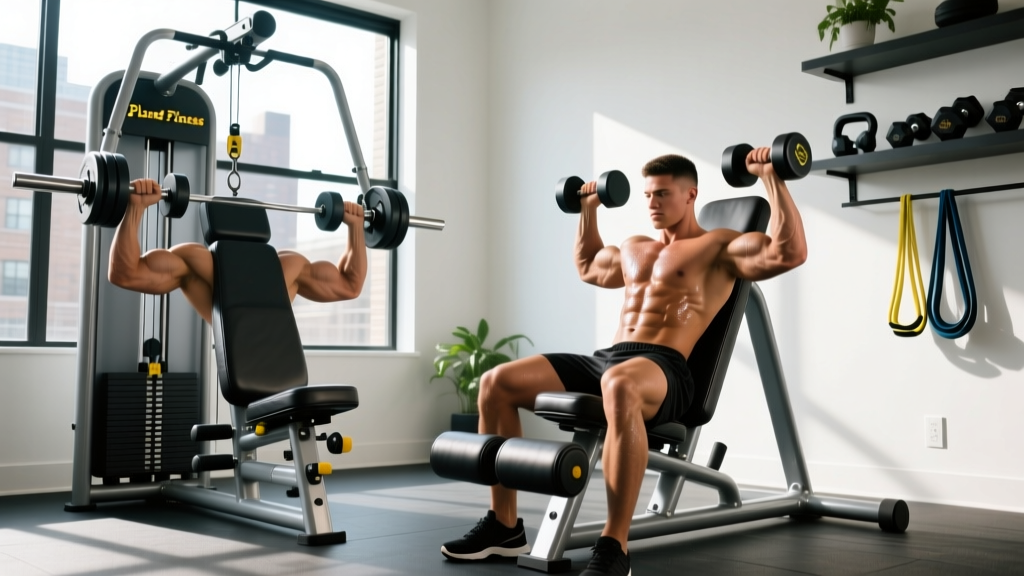
Preacher Bench Setup: Planet Fitness Biceps Curl Machine vs Home Gear
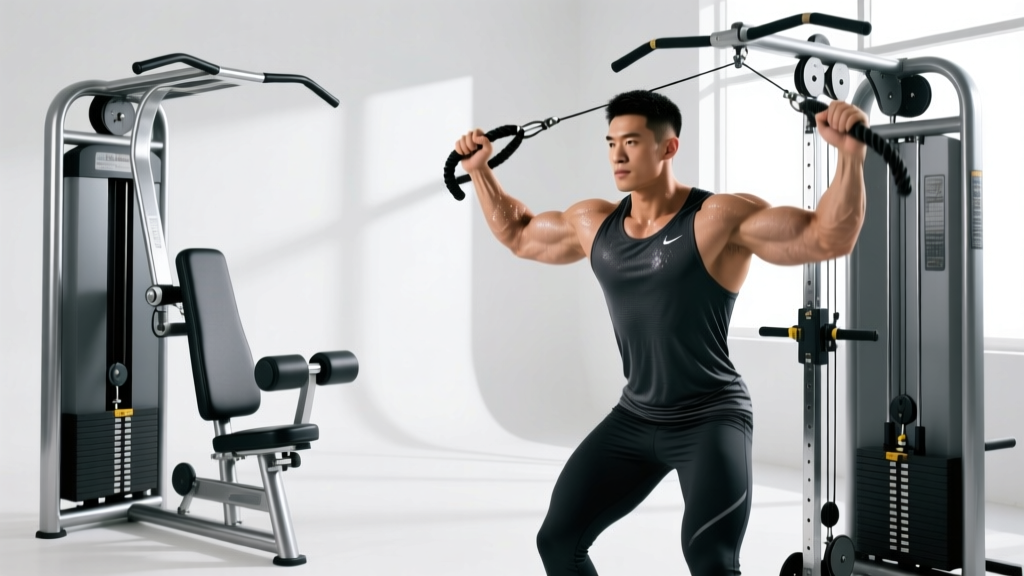
Bicep Curl Machines vs Cable Machine Rope Curls (2026 Guide)
