
2026 Market Trends: The Biceps Curls Machine vs Free Weights
Discover 2026 market trends analyzing the shift from traditional dumbbell and barbell equipment to advanced biceps curls machines in commercial and home gyms.

The 2026 Arm Training Equipment Landscape
The commercial and high-end residential fitness markets are undergoing a significant structural shift in 2026. Historically, the foundation of arm development relied almost exclusively on traditional dumbbell and barbell arm training equipment. However, recent capital expenditure data reveals a decisive pivot toward biomechanically optimized isolation stations. Specifically, the modern biceps curls machine has evolved from a supplementary bodybuilding tool into a primary retention driver for premium fitness facilities.
This trend report analyzes the market dynamics driving this shift, comparing the ROI, floor-space efficiency, and biomechanical superiority of advanced curl machines against the foundational, yet increasingly commoditized, free-weight sector. According to recent facility utilization audits published by Club Industry, boutique and mid-market gyms are actively reducing their expansive dumbbell footprints by up to 18% to accommodate specialized, joint-friendly isolation equipment.
Market Share Shift: Dumbbells, Barbells, and Machines
To understand the current purchasing behavior of gym owners and serious home-gym builders, we must look at the hard metrics of equipment acquisition. While free weights remain a staple for compound movements, the isolation category is being dominated by engineered steel.
| Equipment Category | Average Unit Cost (2026) | Footprint (Sq Ft) | Maintenance Cycle | Biomechanical Isolation |
|---|---|---|---|---|
| Urethane Dumbbell Set (5-50 lbs) | $1,800 - $2,600 | 12 (with rack) | 5+ Years | Low (Stabilizer dependent) |
| Olympic Barbell & EZ Curl Bar | $550 - $900 | 16 (with bench) | 10+ Years | Moderate (Grip/Wrist limited) |
| Selectorized Biceps Curls Machine | $3,400 - $4,800 | 14 | 2-3 Years (Cables) | High (Cam-driven) |
| Plate-Loaded Iso-Lateral Machine | $2,900 - $3,800 | 16 | 5+ Years (Pivot bearings) | High (Converging arc) |
As the data illustrates, the upfront capital required for a premium biceps curls machine is substantially higher than a set of free weights. Yet, the market continues to favor the machine. Why? The answer lies in member retention, injury mitigation, and the 'time-under-tension' efficiency that modern consumers demand.
The Biomechanical Advantage Driving Machine Sales
The primary catalyst for the surge in machine sales is the evolution of cam profiles and pivot-point engineering. Traditional dumbbell and barbell arm training equipment suffers from a fundamental flaw: the resistance curve does not match the human strength curve. When performing a standing barbell curl, the movement is easiest at the bottom and hardest at the 90-degree midpoint, leaving the biceps under-stimulated at the peak contraction.
Conversely, top-tier 2026 models, such as the Hammer Strength Iso-Lateral Bicep Curl or the Arsenal Strength Prime series, utilize a precision-milled cam that increases resistance exactly where the muscle is strongest. Furthermore, these machines feature a converging arc of motion. This means the handles move inward as the user curls, mimicking the natural anatomical function of the biceps brachii (which supinates and flexes the forearm). This level of targeted hypertrophy is virtually impossible to replicate with a standard straight barbell.
Industry Insight: The Health & Fitness Association Data
According to global retention reports from the Health & Fitness Association (formerly IHRSA), facilities that invest in specialized, biomechanically correct isolation equipment see a 12% higher retention rate among the 35-55 demographic. This cohort prioritizes joint longevity and controlled hypertrophy over the ego-lifting often associated with heavy free-weight zones.
Commercial Gym ROI: Free Weight Racks vs. Selectorized Stations
For commercial gym owners, the decision between expanding a free-weight zone or purchasing a fleet of isolation machines comes down to throughput and liability.
- Throughput and Turnover: A dumbbell rack requires users to select weights, carry them to a bench, and perform their sets, often leading to 'equipment hoarding' during peak hours. A selectorized biceps curls machine eliminates this friction. Users simply move a pin, resulting in faster turnover and higher hourly utilization rates.
- Liability and Injury Mitigation: Heavy barbell curls and dumbbell preacher curls place immense shear force on the distal biceps tendon and the anterior deltoid. Machines with padded arm rests and fixed movement paths drastically reduce the risk of tendon tears and lower back swinging, lowering the facility's liability profile.
- Onboarding Friction: Novice gym members are often intimidated by the free-weight zone. A well-placed, intuitively designed machine lowers the barrier to entry, encouraging novice members to train arms consistently without fear of improper form.
The Home Gym Micro-Trend: Plate-Loaded Hybrids
While commercial spaces lean heavily toward expensive selectorized (pin-loaded) machines, the high-end home gym market in 2026 is embracing a hybrid approach. Enthusiasts who already own thousands of dollars in Olympic plates and traditional dumbbell and barbell arm training equipment are opting for plate-loaded biceps curl attachments.
Brands like Rogue Fitness have capitalized on this by offering heavy-duty, 11-gauge steel bicep curler attachments that mount directly to existing power racks. Priced between $350 and $600, these attachments provide the biomechanical isolation of a $4,000 commercial machine by utilizing the user's existing barbell plates. This represents a massive disruption in the residential market, allowing home-gym builders to achieve commercial-grade arm isolation without sacrificing the floor space required for a standalone machine.
Sourcing and Supply Chain Realities in 2026
Gym owners must also factor in the current manufacturing landscape. The lead times for premium selectorized machines from top-tier brands (like Life Fitness and Matrix) currently average 10 to 14 weeks due to the complex sourcing of aerospace-grade aluminum cams and specialized polyurethane upholstery. In contrast, standard urethane dumbbells and Olympic barbells are largely commoditized, with overseas supply chains fully stabilized, allowing for immediate fulfillment. Buyers must plan their facility layouts and capital deployments a full quarter in advance if they intend to anchor their arm-training zones with modern machinery.
Strategic Purchasing Framework for Facility Managers
If you are outfitting a new facility or upgrading an existing floor plan in 2026, use this decision matrix to allocate your arm-training budget effectively:
- The 70/30 Rule: Dedicate 70% of your arm-training floor space to high-quality, ergonomic dumbbells and multi-grip barbells for functional and compound movements. Allocate the remaining 30% to high-ROI isolation stations, specifically a preacher-style biceps curls machine and a tricep dip/extension station.
- Prioritize Pivot Alignment: When auditing machine models, physically test the elbow pivot point. If the machine's axis of rotation does not perfectly align with the user's lateral epicondyle (the bony prominence on the outside of the elbow), reject the model. Misaligned pivots cause elbow shear and will result in negative member feedback.
- Invest in Converging Geometry: Avoid fixed-bar straight curl machines. Only purchase iso-lateral or converging-arc machines that allow the user's hands to naturally supinate and move toward the midline of the body during the concentric phase of the lift.
Conclusion: The Hybrid Future of Arm Training
The narrative that machines will entirely replace free weights is false; however, the market has definitively spoken regarding isolation work. Traditional dumbbell and barbell arm training equipment will forever remain the bedrock of raw strength and functional stabilizer development. Yet, for targeted hypertrophy, joint preservation, and optimal facility throughput, the engineered biceps curls machine has claimed the throne. As we move through 2026, the most successful fitness facilities are not those that choose one over the other, but those that seamlessly integrate the raw authenticity of free weights with the biomechanical precision of modern isolation technology.
More gear to consider
All reviews
Best Equip Body Arms for Tools: Precision, Ergonomics, and Industrial Reliability

How To Start a Home Gym Setup: A Practical, Space-Smart Guide for Beginners

EZ Bar vs Straight Bar & Dumbbell Shoulder Press Mistakes Fixed
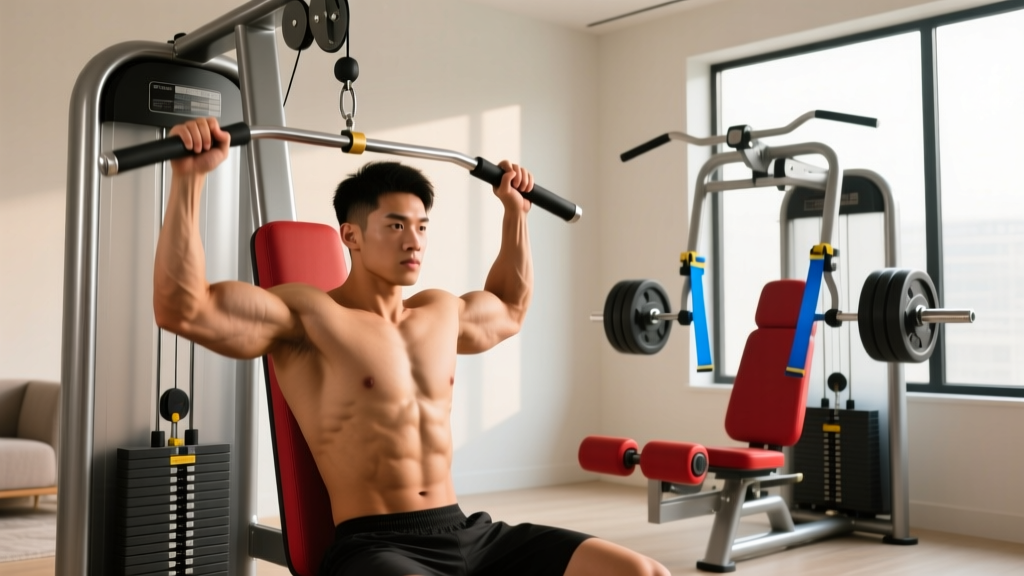
Shoulder Press Machine Maintenance & How to Use Bicep Curl Machine

12 Practical DIY Beginner Ideas for Body Arms Enthusiasts
