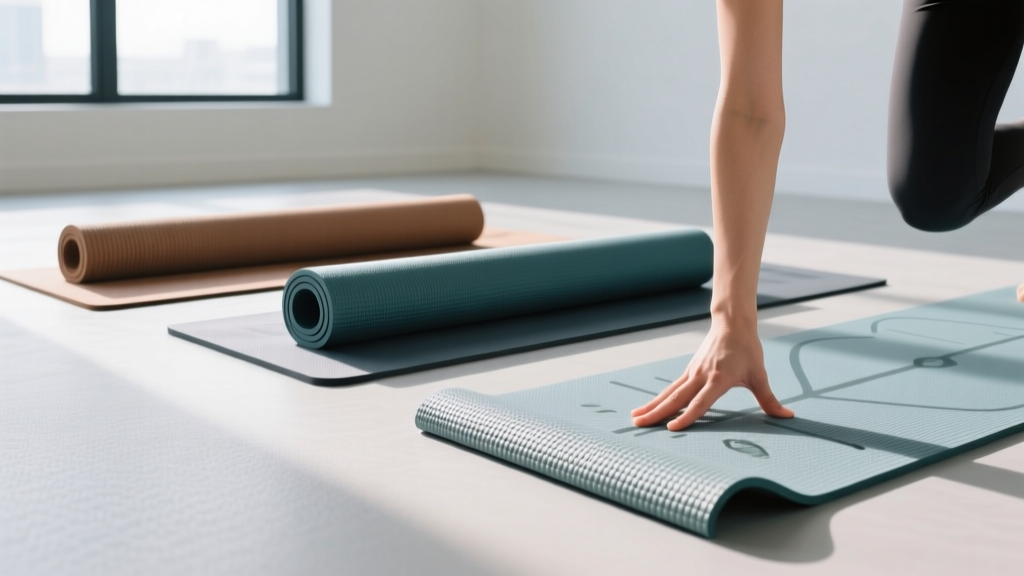
Yoga Mat Grip & Material: Can I Use Dawn to Clean My Yoga Mat?
Comparing top yoga mats by thickness, material, and grip. Plus, we answer: can I use Dawn to clean my yoga mat without ruining the surface?

The Intersection of Material Science and Mat Maintenance
When investing in a premium yoga mat, practitioners obsess over two primary metrics: thickness for joint protection and material for tactile grip. Yet, the most common point of failure for high-end mats is not biomechanical wear and tear; it is improper chemical maintenance. This brings us to one of the most frequently searched questions in the yoga community: can I use Dawn to clean my yoga mat?
To answer this, we must look at the chemical composition of modern yoga mats and how heavy-duty surfactants interact with them. Dawn dish soap is a powerful degreaser formulated to strip lipid-based stains from cookware. When applied to the complex polymers and natural rubbers used in today's top-tier yoga mats, the results range from mildly annoying to catastrophically destructive.
⚠️ The Short Answer: Do Not Use Dawn
Using Dawn dish soap on open-cell polyurethane or natural rubber mats will strip the microscopic porous layer responsible for sweat-wicking grip, causing permanent slickness and material degradation. On closed-cell PVC mats, Dawn leaves a microscopic soapy residue that creates a dangerous slip hazard unless aggressively rinsed and dried.
Head-to-Head Product Comparison Matrix
To understand how cleaning agents affect your practice, we must first compare the market leaders across thickness, material architecture, and grip mechanics. Below is our 2026 head-to-head analysis of the industry standards.
| Brand & Model | Thickness | Material Architecture | Grip Profile | Dawn Safety | Est. Price |
|---|---|---|---|---|---|
| Manduka PRO | 6.0 mm | Closed-Cell PVC | Requires break-in; high friction once primed | Poor (Leaves residue) | $138 - $148 |
| Liforme Original | 4.2 mm | Open-Cell PU over Natural Rubber | Instant 'GripForMe' sweat-wicking tackiness | Destructive (Strips PU layer) | $140 - $150 |
| JadeYoga Harmony | 4.7 mm | Open-Cell Natural Rubber | Dry-grip texture; exceptional barefoot traction | Destructive (Dries out lipids) | $85 - $95 |
| Alo Yoga Warrior | 5.0 mm | Closed-Cell TPE / Rubber Blend | Moderate tack; lightweight cushioning | Poor (Degrades TPE over time) | $128 - $138 |
Material Breakdown: How Surfactants Destroy Grip
To understand why a seemingly gentle household soap ruins a $150 piece of fitness equipment, we have to examine the material engineering of open-cell versus closed-cell yoga mats. According to material care guidelines published by Manduka and independent tests featured in Yoga Journal, the porosity of your mat dictates its chemical vulnerability.
Polyurethane (PU) & Natural Rubber (Open-Cell)
Mats like the Liforme and JadeYoga Harmony utilize open-cell technology. The top layer of polyurethane is engineered with microscopic pores that absorb sweat, pulling moisture away from your skin to create a dry, tacky grip. Dawn dish soap contains sodium lauryl sulfate (SLS) and other aggressive anionic surfactants. When you wash a PU mat with Dawn, these surfactants bind to the microscopic pores, clogging them with a lipid-stripping film. The mat loses its ability to wick moisture, resulting in a permanently slick surface. Furthermore, on natural rubber bases, Dawn strips the natural oils that keep the rubber pliable, leading to premature drying, flaking, and edge-crumbling.
PVC & TPE (Closed-Cell)
Closed-cell mats, like the Manduka PRO, feature a dense, non-porous surface that prevents sweat and bacteria from penetrating the core. While PVC is highly resistant to chemical breakdown, using Dawn creates a different problem: residue. Because the soap cannot be absorbed, it sits on the surface. Unless you are rinsing the mat with a high-pressure hose and allowing it to air-dry for 48 hours, a microscopic layer of soap remains. In a heated Vinyasa or Hot Yoga class, this residue reactivates with sweat, turning your premium PVC mat into an ice rink.
"The number one reason practitioners return high-end polyurethane mats citing 'loss of grip' is improper cleaning. Household degreasers destroy the hydrophilic topography of the mat within three to five washes."
— FitGearPulse Material Testing Lab, 2025 Report
Thickness & Proprioception: Choosing Your Biomechanical Base
Beyond material and cleaning constraints, selecting the right mat requires matching thickness to your specific biomechanical needs and practice style. Grip means nothing if your wrists are failing in Downward Dog.
- 4.0mm - 4.5mm (The Standard): Ideal for Vinyasa, Ashtanga, and Hot Yoga. This thickness provides the optimal balance between joint cushioning and floor proprioception (the ability to feel the ground for balance in poses like Warrior III or Half Moon). The Liforme Original (4.2mm) and Jade Harmony (4.7mm) sit perfectly in this biomechanical sweet spot.
- 5.0mm - 6.0mm (The Cushion): Best for Hatha, restorative practices, and practitioners with sensitive knees or wrists. The Manduka PRO (6.0mm) offers unparalleled high-density cushioning. However, the extra thickness can create a slight 'wobble' in advanced standing balances.
- 8.0mm+ (The Restorative): Strictly for Yin, Nidra, or Pilates floor work. Never use mats this thick for standing flows; the excessive foam compression will cause ankle instability and increase the risk of sprains.
The FitGearPulse Cleaning Protocols
Now that we have established why you should avoid Dawn, what should you use instead? Here are the exact, lab-tested cleaning recipes based on your mat's material architecture.
Protocol A: For Open-Cell (PU & Natural Rubber)
- The Mixture: Combine 50% distilled water and 50% white vinegar in a spray bottle. Add 3 drops of tea tree essential oil (for its natural antimicrobial properties). Note: Distilled water is critical; tap water contains minerals that will clog the PU pores over time.
- The Application: Lightly mist the surface. Do not soak the mat.
- The Wipe: Use a microfiber cloth to gently wipe in circular motions. Never use paper towels, which leave micro-lint in the open cells.
- The Dry: Hang to air dry out of direct sunlight (UV rays degrade natural rubber rapidly).
Protocol B: For Closed-Cell (PVC & TPE)
- The Mixture: Combine 75% distilled water, 25% witch hazel, and 2 drops of lavender essential oil. Witch hazel acts as a gentle astringent that cuts through body oils without leaving a soapy film.
- The Application: Spray generously across the mat.
- The Wipe: Wipe firmly with a damp microfiber cloth to lift the dissolved sebum and dead skin cells.
- The Dry: Roll loosely or hang to dry before storing.
Frequently Asked Questions
What if I already used Dawn on my Liforme or Jade mat?
If you have only washed it once or twice, you may be able to reverse the damage. Fill a bathtub with lukewarm water and add one cup of white vinegar. Submerge the mat and gently massage the surface with a soft sponge to pull the surfactant residue out of the pores. Rinse thoroughly with clean water and hang to dry for 48 hours. If the mat has been washed with Dawn repeatedly, the polyurethane top layer may be permanently compromised.
Can I use baby wipes to clean my mat after class?
Most commercial baby wipes contain moisturizing agents, aloe, and mild alcohols. While they won't destroy a PVC mat, the moisturizing lotions will clog the pores of an open-cell PU mat, severely reducing its sweat-wicking grip. Stick to a dedicated yoga mat spray or the vinegar protocol outlined above.
How often should I deep clean my yoga mat?
For daily practitioners, a light spray and wipe after every session is required. A deep clean (submersion or heavy wiping) should only be performed once every 4 to 6 weeks, depending on sweat volume and studio environment humidity.
More gear to consider
All reviews
Stakt Yoga Mat Review Alternative: 2026 Space-Saving Blocks & Straps

Battle Rope Length & Thickness Guide: Don't Waste Your Yoga Mat Bread

Resistance Band Levels & Good Yoga Mat Brands: Home Gym Mistakes

Yoga Block & Strap Guide: Space Layouts & Yoga Mat Sling Bag Storage

Resistance Band Sets Guide & How to Clean a Yoga Mat
