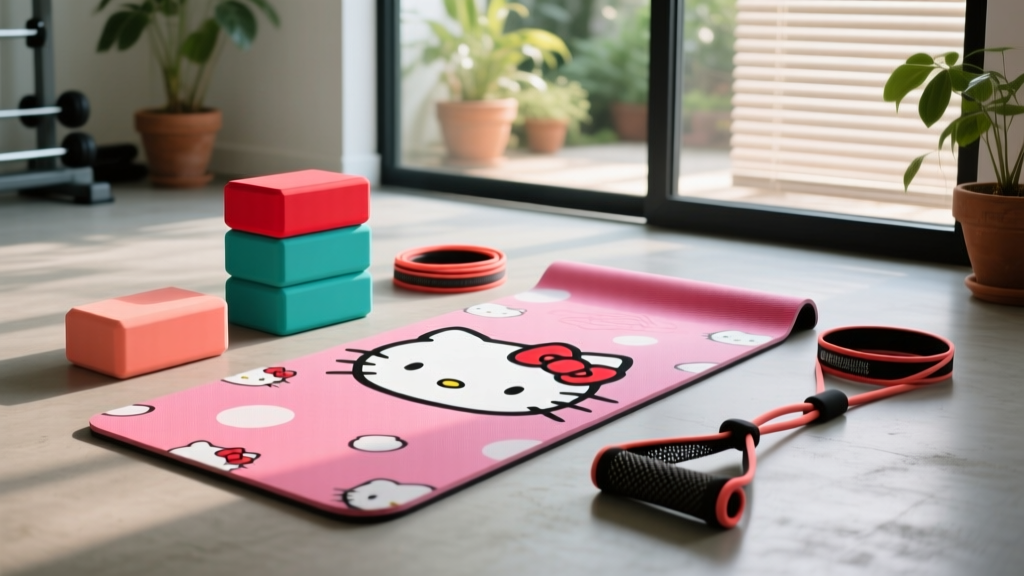
Yoga Block & Strap Guide: Caring for Your Hello Kitty Yoga Mat
Discover our yoga block and strap buying guide, plus expert maintenance tips to keep your gear and Hello Kitty yoga mat in pristine condition for years.

Building a Long-Lasting Home Studio Kit
Curating a home yoga space in 2026 goes far beyond simply unrolling a mat. While your centerpiece might be a vibrant, officially licensed hello kitty yoga mat that brings joy and personality to your practice, the unsung heroes of your alignment and longevity are your props. A well-chosen yoga block and strap buying guide focuses not just on immediate comfort, but on material science, failure modes, and long-term durability. Furthermore, knowing how to properly maintain these accessories—especially character-printed mats made from sensitive polymers—is critical to protecting your investment.
Below, we break down exactly what to look for when purchasing blocks and straps for maximum lifespan, followed by a meticulous maintenance protocol for your entire kit.
The Yoga Block Buying Guide: Material & Durability Breakdown
Yoga blocks are essential for bringing the floor closer to you, ensuring proper alignment without straining. However, not all blocks are engineered to withstand years of compressive load. When shopping, pay close attention to material density and structural integrity.
1. High-Density EVA Foam
Ethylene-vinyl acetate (EVA) foam is the most popular choice due to its lightweight nature and forgiving surface. The critical metric here is density. Cheap foam blocks (often found in big-box stores for under $8) have a density of around 40-50 kg/m³. These will permanently compress and lose their structural integrity within six months of regular use. For longevity, seek out high-density EVA foam rated between 80-100 kg/m³ (such as the Manduka ProBlock, retailing around $22-$26). These retain their exact 4x6x9-inch dimensions for years, even under the full body weight of advanced arm balances.
2. Natural Cork
Cork blocks (typically $15-$22) are heavier (2-3 lbs) and offer superior grip when your hands are sweaty. Cork is naturally antimicrobial, which reduces odor buildup. The primary failure mode for cork is edge chipping if dropped repeatedly on hard surfaces like concrete or tile. To maximize lifespan, cork blocks should only be used on carpeted areas or directly on top of your mat.
3. Bamboo and Hardwood
Bamboo blocks ($25-$35) are virtually indestructible regarding compression, but they lack grip and can be painful during restorative poses where the block supports your spine or head. They are best reserved for advanced practitioners needing an unyielding surface for balance poses.
| Material | Avg. Price | Weight | Lifespan | Primary Failure Mode |
|---|---|---|---|---|
| Low-Density EVA | $6 - $10 | 0.5 lbs | 6-12 Months | Permanent compression warping |
| High-Density EVA | $18 - $26 | 1.2 lbs | 5+ Years | Surface peeling (rare) |
| Natural Cork | $15 - $22 | 2.5 lbs | 3-5 Years | Edge chipping / crumbling |
| Bamboo | $25 - $35 | 1.8 lbs | 10+ Years | Slippery surface wear |
Selecting the Right Yoga Strap for Longevity
A yoga strap acts as an arm extender, crucial for hamstring stretches and shoulder openers. According to Yoga Journal's comprehensive prop guide, the right strap can safely deepen stretches without compromising joint integrity. When buying, evaluate the webbing and the hardware.
Webbing Materials: Cotton vs. Nylon
- Unbleached Cotton: The gold standard for longevity and comfort. Cotton is soft on the hands, prevents friction burns during tight binds, and absorbs sweat. Look for a thickness of at least 1.5 mm. Price range: $12-$18.
- Nylon: Highly durable and resistant to mildew, but nylon can cause severe friction burns if pulled quickly through the hardware. It also tends to fray at the cut edges after 2-3 years of use.
Hardware: The D-Ring vs. The Buckle
Always opt for zinc-alloy or stainless steel D-rings over plastic quick-release buckles. Plastic buckles are a notorious failure point; the cam mechanism snaps under high tension (such as during a tight seated forward fold), rendering the strap useless. Furthermore, inspect the stitching where the webbing loops through the D-ring. It must feature bar-tack stitching—a dense, zigzag reinforcement pattern that distributes tension and prevents the thread from unraveling over time.
Expert Tip: Strap Length Selection
While 8-foot straps are standard, taller practitioners (over 5'8") or those with limited shoulder mobility should invest in a 10-foot strap. The extra 24 inches prevents the dangerous habit of rounding the upper back to make the ends meet, preserving your thoracic spine health over decades of practice.
Maintenance Care: Prolonging the Life of Your Props
Buying durable gear is only half the battle. Proper maintenance prevents material degradation, bacterial growth, and structural failure.
Cleaning Yoga Blocks
- EVA Foam: Wipe down weekly with a damp microfiber cloth. For deep cleaning, use a mild dish soap solution. Never submerge foam blocks in water; they act like sponges and will trap moisture, leading to internal mold growth.
- Cork: Cork is naturally antimicrobial, but it still collects skin oils. Wipe with a cloth lightly dampened with a 50/50 mix of distilled water and witch hazel. Avoid essential oils on cork, as the lipids can break down the natural suberin (waxy substance) in the cork, causing it to crumble prematurely.
Washing Yoga Straps
Cotton straps absorb sweat, dead skin, and bacteria. Wash your cotton strap every 4-6 weeks. Place it inside a mesh laundry bag (to prevent the metal D-rings from banging against your washing machine drum and damaging the glass). Wash on a cold, gentle cycle with a mild, fragrance-free detergent. Never put yoga straps in the dryer. The high heat will shrink the cotton webbing and weaken the bar-tack stitching. Hang it to air dry in a well-ventilated area.
Specialized Care for Your Hello Kitty Yoga Mat
Character-themed fitness gear, particularly a licensed hello kitty yoga mat, requires specialized care to preserve both the structural polymer and the vibrant Sanrio graphics. Most novelty and character mats are manufactured using TPE (Thermoplastic Elastomer) or lightweight PVC to keep costs accessible and colors bright.
Warning: The Essential Oil Danger
Many popular DIY yoga mat sprays rely on tea tree, lavender, or eucalyptus essential oils for their antibacterial properties. However, essential oils are highly lipophilic and will actively break down the molecular bonds in TPE mats. Using oil-based sprays on your Hello Kitty mat will cause the polymer to degrade, become gummy, and eventually cause the printed character design to peel and flake off.
Step-by-Step Mat Maintenance Protocol
To keep your mat hygienic and the graphics pristine, follow Manduka's official care guidelines adapted for sensitive printed surfaces:
- The Cleaning Solution: Mix 3 parts distilled water with 1 part white vinegar, and add a single drop of gentle, oil-free baby shampoo. This cuts through body oils without attacking the TPE/PVC polymer or the ink used for the Hello Kitty design.
- Application: Lightly mist the mat. Do not soak it. Wipe immediately with a clean, lint-free microfiber towel using circular motions.
- Drying: Hang the mat over a shower rod or specialized mat hanger. Never fold it while damp, as this will create permanent creases that weaken the material along the fold lines.
- UV Protection: UV radiation is the enemy of printed mats. Prolonged exposure to direct sunlight will fade the Hello Kitty graphics within weeks and cause the mat edges to curl and crack. Always store your mat in an opaque bag or a dark closet.
Troubleshooting Common Prop Degradation
| Issue | Root Cause | Actionable Solution |
|---|---|---|
| Strap D-Ring Slipping | Webbing stretched or hardware bent | Retire the strap immediately. Do not attempt to bend the metal back, as it compromises the alloy's tensile strength. |
| Cork Block Flaking | Low humidity or harsh chemical cleaners | Wipe with a slightly damp cloth and store in a room with 40-50% ambient humidity. Avoid alcohol-based sprays. |
| Mat Graphics Peeling | Essential oil exposure or rolling too tightly | Switch to an oil-free cleaner. Roll the mat loosely with the graphic side facing outward to prevent the print from cracking on the inside fold. |
Frequently Asked Questions
Can I use a yoga strap as a suspension trainer?
No. Yoga straps are designed for static tension and linear pulling. They are not rated for dynamic, multi-directional bodyweight suspension (like TRX systems). The D-ring stitching will fail under dynamic shear forces, posing a severe injury risk.
How often should I replace my EVA foam blocks?
If you purchased high-density blocks and maintain them properly, they should last 5 to 7 years. If you notice the block rocking on a flat surface, the foam has compressed unevenly, and it is time to replace it to ensure proper joint alignment.
Is it safe to share my cotton strap at a public studio?
From a hygiene perspective, sharing porous cotton straps is not recommended. Cotton absorbs sweat and skin flora. If you must use studio props, opt for nylon straps which can be wiped down with a disinfectant, or bring your own personal strap to every session.
More gear to consider
All reviews
Beyond the Normal Yoga Mat Size: 2026 Block & Strap Budget Guide

Foam Roller Density & Size Guide: Crochet Yoga Mat Strap Pairings

Medicine Ball Weight Guide: How Often Should I Clean My Yoga Mat?

Battle Rope Length & Thickness Guide: Plus DIY Yoga Mat Strap Hack

2026 Pilates Accessories Guide: The Lululemon Pink Yoga Mat Trend
