
Which Side of Yoga Mat Is Up? Space-Saving Pilates Accessories Guide
Discover which side of yoga mat is up for Pilates, plus expert layout designs and space-saving accessory guides for compact home studios in 2026.

The Foundation: Which Side of Yoga Mat Is Up for Pilates?
Before you can optimize your home studio layout or invest in high-end apparatuses, you must master the foundational footprint of any floor routine: the mat. A surprisingly common question among practitioners transitioning from general fitness to dedicated Pilates is, which side of yoga mat is up? The answer is not universal; it depends entirely on the material science of your specific mat and the biomechanical demands of Pilates.
Pilates requires a delicate balance between barefoot traction and the ability to execute controlled, frictionless glides during exercises like the 'Teaser' or 'Leg Pull Front.' Here is how to determine the correct orientation based on material composition:
- Closed-Cell PVC Mats (e.g., Manduka PRO): These mats feature a dense, moisture-resistant surface. The smooth side faces up, while the textured, slightly tacky side faces down to grip the hardwood or carpet. Because the top is smooth, practitioners often use a microfiber suede towel for sweat absorption during intense reformer-to-mat transitions.
- Open-Cell Polyurethane Mats (e.g., Liforme or JadeYoga): These are designed for immediate, aggressive grip. The highly textured, porous side faces up to absorb moisture and lock in barefoot traction. The smoother, woven backing faces down to protect your floors.
- Dual-Layer TPE Mats: Many mid-range thermal plastic elastomer mats feature a geometric pattern on one side and a ripple texture on the other. The geometric patterned side typically faces up for ergonomic alignment cues, while the ripple side grips the floor.
For dedicated Pilates, a thickness of 4mm to 6mm is optimal. Thicker mats (8mm+) compromise the spinal feedback required for articulation exercises like the 'Roll Up,' a standard emphasized by the Pilates Method Alliance (PMA) for maintaining neutral spine awareness.
Spatial Mapping: Designing the Compact Pilates Studio
Once your mat is correctly oriented, the next challenge in home studio design is spatial mapping. According to ergonomic guidelines referenced by the American Council on Exercise (ACE), a safe and effective home gym requires specific clearance zones to prevent joint impingement against walls and furniture.
When designing a space-optimized Pilates layout, divide your room into three distinct zones:
- The Mat Zone (The Core): Requires a minimum footprint of 8 feet by 4 feet. Ensure 2 feet of lateral clearance on both sides for arm sweeps and 'Swimming' extensions.
- The Apparatus Zone: If utilizing a reformer, standard models require a 9' x 3' footprint. However, for space optimization, you must account for the 'spring tension radius'—the area where limbs extend beyond the carriage.
- The Transition & Storage Zone: A 2-foot vertical wall space dedicated to hanging resistance bands, jumpboards, and vertically stored mats.
In a standard 10x10 spare bedroom, placing a foldable reformer against the longest wall and utilizing the opposite wall for a vertical springboard creates a 'corridor flow' that maximizes usable square footage without feeling claustrophobic.
2026 Space-Saving Pilates Accessories Matrix
Investing in the right accessories can transform a cramped bedroom into a fully functional clinical Pilates environment. Below is a comparison of top-tier, space-conscious equipment available this year.
| Accessory / Apparatus | Active Footprint | Storage Footprint | Avg. Cost (2026) |
|---|---|---|---|
| Merrithew At Home SPX Reformer | 86" L x 23" W | Vertical stand required | $3,850 |
| Balanced Body Allegro 2 FOLD | 82" L x 22" W | 24" L x 22" W (Folded) | $5,400 |
| Wall-Mounted Pilates Tower | 4" D x 24" W (Wall) | Zero floor space | $850 - $1,200 |
| Stamina AeroPilates Premier | 77" L x 21" W | Folds flat to 18" H | $650 |
| Balanced Body Magic Circle | 14" Diameter | Hangs flat on wall | $48 |
The Vertical Advantage: Wall-Mounted Towers
For apartments where a traditional reformer is physically impossible, a wall-mounted Pilates Tower (or Springboard) is the ultimate spatial hack. Brands like Balanced Body and Merrithew manufacture springboards that mount directly to wall studs, requiring only 4 inches of depth. These units feature push-through bars, roll-down bars, and safety chains, allowing you to perform over 80% of the traditional Cadillac repertoire. Installation Note: You must mount these into wooden or metal studs using 3/8-inch lag bolts; drywall anchors will fail under the dynamic tension of a 150lb practitioner performing assisted pull-ups or heavy spring leg work.
Micro-Accessories for Macro Results
When floor space is at a premium, micro-accessories provide the resistance and proprioceptive feedback of larger machines. Keep a dedicated canvas basket in your transition zone stocked with:
- The Magic Circle (Pilates Ring): Essential for inner-thigh activation and chest expansion. Stores completely flat.
- Toe Correctors: Small, spring-loaded wooden devices that correct foot supination and pronation. They take up less space than a coffee mug but are vital for footwork articulation.
- Spine Correctors (Barrels): While traditional barrels are bulky, modern high-density EVA foam mini-barrels provide thoracic extension support and can be slid under a bed or sofa when not in use.
- Resistance Bands with Door Anchors: A heavy-duty latex loop band system anchored to a door hinge mimics the variable spring tension of a reformer carriage for arm series and standing leg work.
Environmental Control and Equipment Storage
Space optimization is not just about where you put your equipment, but how you store it to prevent material degradation. PVC and TPE mats are highly susceptible to UV degradation and plasticizer leaching. If your optimized layout places your mat storage near a south-facing window, direct sunlight will cause the mat to dry out, crack, and lose its foundational grip within six months.
Best Practices for Compact Storage:
- Vertical Mat Racks: Store mats vertically in a shaded corner. Rolling them loosely and standing them upright prevents permanent creasing and allows the open-cell pores to breathe, preventing bacterial buildup.
- Humidity Control: If your home studio is in a basement or garage, maintain ambient humidity between 40% and 50%. Metal springs on reformers and towers will oxidize and squeak if humidity exceeds 60%, while leather straps will mold.
- Under-Carriage Clearance: If using a non-folding reformer, utilize the 10-inch clearance beneath the frame to store flat accessories like jumpboards, boxing straps, and yoga blocks, keeping the visual footprint of the room entirely clear.
By understanding the fundamental orientation of your mat and strategically selecting space-saving apparatuses, you can engineer a home Pilates environment that rivals commercial studios, regardless of your square footage limitations.
More gear to consider
All reviews
Pull-Up Assist Band Sizing Mistakes & Brentwood Yoga Mat Setup Tips

Battle Rope Sizing & Alo Yoga Mat Home Gym Layout Guide

Home Gym Budget: Lululemon Yoga Mat 5mm, BOSU vs Stability Ball
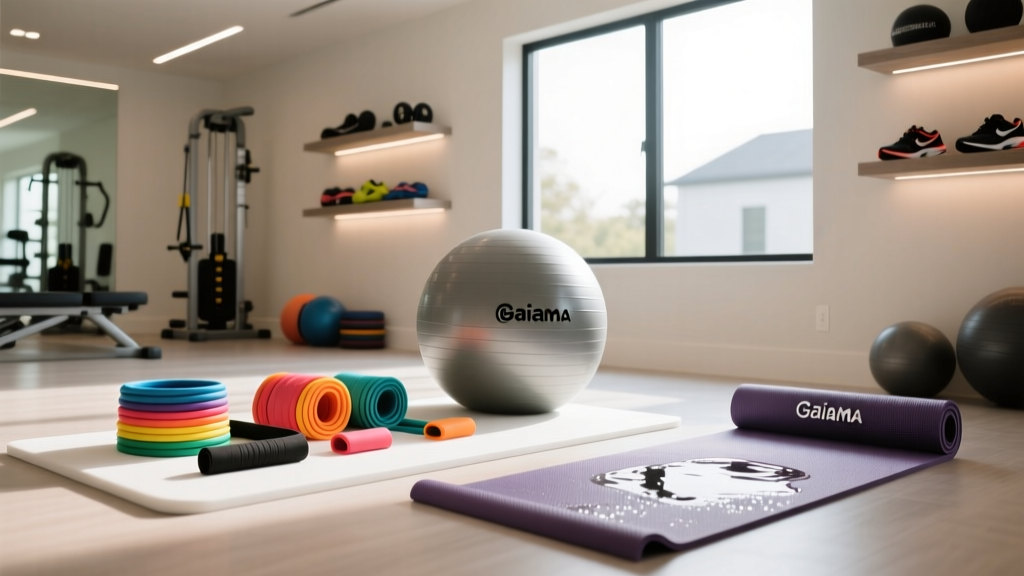
Exercise Ball Size Guide & Gaiam Yoga Mat Wash Review

Setup Guide: Speed, Weighted & Beaded Ropes on a Burgundy Yoga Mat
