Foam Roller Density Guide: Plus, Can You Wash Yoga Mats & Rollers?
Master foam roller density and size selection for your recovery routine. Plus, get our step-by-step guide answering: can you wash yoga mats and rollers?

Stepping into the world of fitness recovery can feel overwhelming. Between deciphering the right gear for myofascial release and figuring out how to keep your equipment sanitary, beginners often make costly mistakes. According to the American Council on Exercise (ACE), using the correct foam roller density is critical for improving flexibility and reducing delayed onset muscle soreness (DOMS) without causing tissue bruising. But selecting the gear is only half the battle; maintaining it is where most novices fail.
This comprehensive, step-by-step guide will walk you through exact foam roller density and size selection based on your experience level. Then, we will tackle one of the most common hygiene questions in the fitness community: can you wash yoga mats and foam rollers safely without degrading the materials?
Step 1: Sizing Your Foam Roller for Targeted Relief
Foam rollers generally range from 12 inches to 36 inches in length. Your choice should be dictated by your primary use case, storage space, and the specific muscle groups you intend to target. A study published by the National Institutes of Health (NIH) highlights that roller length directly impacts spinal alignment and bilateral muscle engagement during thoracic extensions.
| Roller Length | Best Use Case | Ideal For | Avg. Price Range |
|---|---|---|---|
| 12-Inch | Targeted areas (calves, arms, neck) | Travelers, physical therapy patients | $12 - $25 |
| 18-Inch | Standard full-body rolling, quads, lats | Most beginners, home gym users | $20 - $35 |
| 24 to 36-Inch | Spinal alignment, full back, bilateral leg work | Pilates practitioners, tall athletes | $30 - $60 |
Step 2: Decoding Foam Roller Density (The Core Framework)
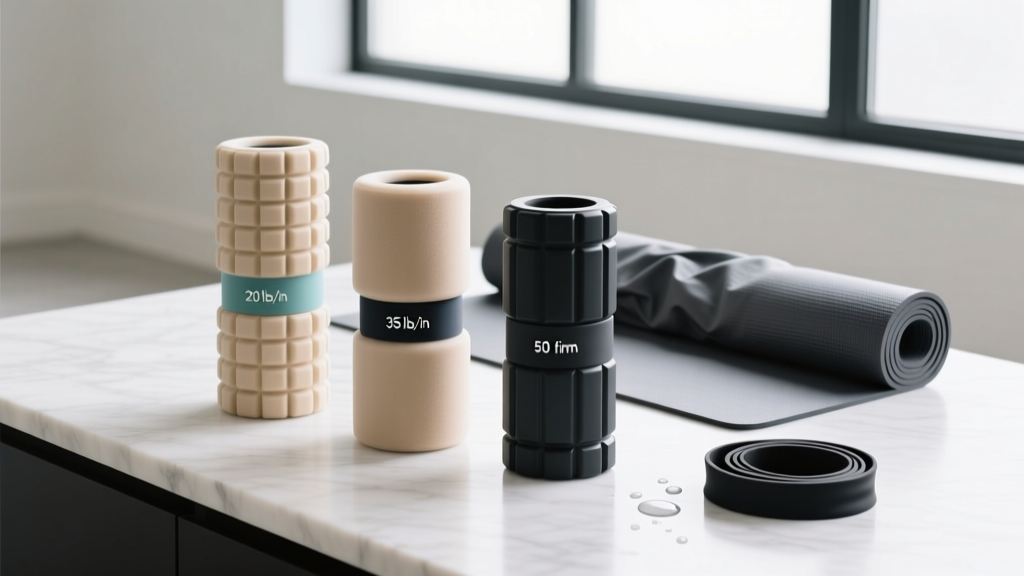
Density dictates how deeply the roller penetrates your muscle fascia. Choosing a density that is too firm for your current pain tolerance can trigger a stretch reflex, causing your muscles to tense up rather than release. Here is the breakdown of the three primary density tiers:
1. Soft Density (Low-Density EVA Foam)
- Color Code: Typically White
- Material: Polyethylene (PE) or soft Ethylene-Vinyl Acetate (EVA)
- Best For: Rehabilitation, seniors, and highly sensitive beginners.
- Failure Mode: Soft EVA foam compresses and loses its shape after 3 to 6 months of heavy use, requiring frequent replacement.
2. Medium Density (Standard EVA Foam)
- Color Code: Typically Blue or Red
- Material: Compressed EVA
- Best For: General wellness, yoga practitioners, and moderate muscle tension.
- Top Pick: OPTP PRO-ROLLER Soft/Medium ($30 - $40).
3. Firm Density (Expanded Polypropylene - EPP)
- Color Code: Typically Black
- Material: EPP or high-density EVA
- Best For: Athletes, deep tissue massage, and breaking up severe adhesions.
- Top Pick: TriggerPoint GRID 13' ($35 - $45) or RumbleRoller ($45 - $70).
- Failure Mode: EPP is virtually indestructible and retains its shape for years, but the extreme hardness can cause bruising on bony prominences like the IT band or shins if used incorrectly.
Step 3: Gear Hygiene - Can You Wash Yoga Mats and Rollers?
Once you have selected your gear, maintenance becomes paramount. Gym environments are breeding grounds for Staphylococcus aureus and dermatophytes (fungi). The Cleveland Clinic strongly advises sanitizing personal fitness gear to prevent staph infections and fungal rashes. But can you wash yoga mats and foam rollers the same way you wash gym clothes? The short answer is no. The method depends entirely on the material's cellular structure.
The Science of Mat Porosity: Open-Cell vs. Closed-Cell
To answer 'can you wash yoga mats' accurately, you must identify your mat type:
- Closed-Cell Mats (e.g., Manduka PRO, PVC mats): These feature a sealed surface that repels moisture and bacteria. You should never submerge them in water or run them through a washing machine, as water can get trapped in the rolling crevices and breed mold.
- Open-Cell Mats (e.g., Jade Harmony, Liforme, Natural Rubber): These are porous and absorb sweat to provide grip. They require gentle, specialized cleaning and should never be soaked in harsh chemicals, which will break down the natural rubber.
Step-by-Step: How to Safely Wash Your Yoga Mat
- For Closed-Cell Mats: Mix 3 parts water with 1 part white vinegar or witch hazel in a spray bottle. Add 3 drops of tea tree essential oil for its natural antimicrobial properties. Spray the mat lightly, wipe with a microfiber cloth, and let it air dry completely before rolling.
- For Open-Cell Mats: Use a specialized, pH-balanced mat wash (like Manduka Natural Rubber Mat Wash). Spray a damp cloth—not the mat directly—and gently wipe the surface. Submerging natural rubber in a bathtub will destroy its structural integrity.
- Deep Cleaning (Monthly): Lay the mat flat on a clean towel. Use a mild, fragrance-free dish soap diluted in warm water. Wipe gently, then use a clean, wet cloth to 'rinse' the soap off. Air dry in a shaded area (UV light degrades rubber and PVC).
How to Clean Your Foam Roller
Foam rollers, particularly textured ones like the TriggerPoint GRID, trap dead skin cells and sweat in their crevices. Because most are made of closed-cell EPP or EVA, they are relatively easy to sanitize.
- Mix a solution of warm water and a few drops of gentle antibacterial dish soap.
- Dip a microfiber cloth into the solution and wring it out until it is only damp.
- Wipe down the entire surface of the roller, paying special attention to the textured grooves.
- Follow up with a cloth dampened in plain water to remove soap residue.
- Stand the roller upright or place it on a dry towel to air dry completely.
Common Beginner Mistakes to Avoid
When integrating foam rolling and mat maintenance into your routine, avoid these critical pitfalls:
- Rolling Directly on Joints: Never roll directly over your kneecaps, elbows, or lower lumbar spine. Focus on the muscle bellies and tendons.
- Machine Washing Mats: The agitation of a washing machine will tear open-cell rubber mats apart and ruin the structural integrity of foam rollers.
- Ignoring Pain Signals: Foam rolling should feel like a 'good hurt' (similar to a deep tissue massage). If you experience sharp, shooting, or nerve-like pain, you are likely pressing on a nerve bundle or bursa and must stop immediately.
'Recovery gear is an investment in your mobility. Treat your foam rollers and yoga mats with the same sanitary care you would give your daily clothing, and they will support your fitness journey for years.' — Fitness Equipment Maintenance Guidelines, FitGearPulse
Frequently Asked Questions (FAQ)
Can I put my yoga mat in the washing machine?
No. While some thin, cotton-based travel mats might survive a gentle cycle, 95% of modern PVC, TPE, and natural rubber yoga mats will be destroyed by the agitation and heat of a washing machine.
How often should I clean my foam roller?
Wipe down your foam roller with a damp, soapy cloth after every heavy sweat session. Perform a deeper sanitizing wipe-down with a vinegar solution once a week.
Is a textured roller better than a smooth one for beginners?
Not necessarily. Smooth rollers provide uniform pressure and are generally more forgiving for beginners. Textured rollers (with grids or knobs) are designed for advanced trigger-point therapy and can be overly aggressive for unconditioned tissue.
Final Thoughts
Selecting the right foam roller density and size is the foundation of an effective at-home recovery protocol. Start with an 18-inch, medium-density EVA roller to safely ease into myofascial release. Equally important is understanding the nuances of gear hygiene. Now that you know exactly how to answer the question, 'can you wash yoga mats and rollers safely,' you can protect your investment and your skin. Consistency in both your rolling routine and your cleaning habits will yield the best long-term mobility results.
More gear to consider
All reviews
Resistance Band Setup: Levels, Anchors & Bag With Yoga Mat Holder

Medicine Ball Weight Guide & Setup: Yoga Mat Clas Ohlson Test

Speed, Weighted & Beaded Jump Rope Troubleshooting + Yoga Mat Scrunchie Hacks

2026 Budget: Stability Ball vs BOSU Ball & Bulk Yoga Mats Value

Pull-Up Assist Band Sizing & The Difference Between Yoga Mats
